 Kanger Glass-ceramic Co., Ltd.
An induction hob pulsing on and off can be normal low-power control, but regular heating intervals and an unexpected shutdown are different observations. Check whether the selected setting remains active, whether the pan is recognized, and whether cooking continues between the apparent pulses. Compare the behavior with your exact model’s instructions. A flashing fault code, repeated loss of pan detection, or a hob that switches itself off needs a different check from an otherwise stable simmer. The glass-ceramic surface alone does not reveal which condition is occurring.
What a pulse tells you
Induction transfers energy through an electromagnetic interaction with suitable cookware. The appliance electronics control the input; the glass panel provides the cooking surface. Some designs produce lower output settings by alternating periods of power delivery and pauses. A user may notice these intervals as changes in bubbling or sound rather than a steadily weaker effect.
EICO’s explanation of low-setting pulsing describes this behavior for its equipment. It supports the possibility of normal control, without establishing a universal pulse length, acceptable noise, or simmer performance. Do not transfer one model’s description to every appliance.
The US Department of Energy induction overview explains the electromagnetic heating principle and compatible cookware. A magnet check screens a pan base; it cannot qualify the full pan-and-hob combination or prove every interruption normal.
Separate heat, sound and the display
Record what the food does, what you hear, and what the controls display separately. Bubbles can continue after input falls because the pan and contents retain heat. A change in bubbling may reflect food movement or the recipe rather than an electronic fault. A short audio recording cannot identify delivered power.
A click, hum or fan sound may accompany operation without corresponding to lost cooking performance. If sound is the main concern, use the induction hob noise guide. Keeping sound and power-control observations separate makes a service report more useful.
Watch whether the setting stays visible, alternates with another indicator, flashes a pan symbol, or disappears. Do not assign a universal meaning to a letter. Similar symbols have different meanings across brands. A photograph without the model number loses that context.
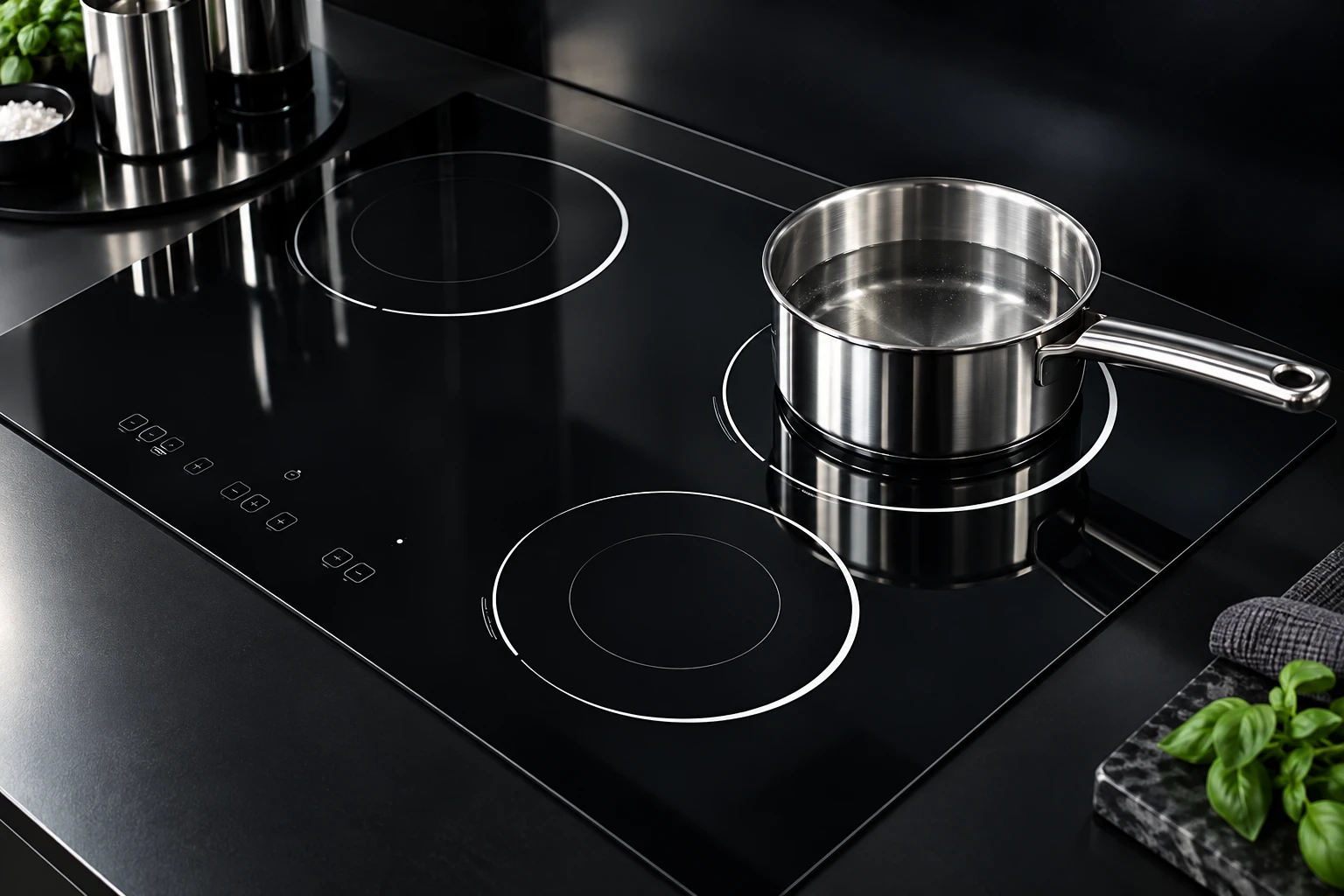
Describe the pattern before diagnosing it
| Observation | Possible category | Check |
|---|---|---|
| Regular intervals at low settings; control remains selected | Possible normal modulation | Model instructions and cooking result |
| Pan symbol flashes when the pot moves | Recognition interruption | Compatible base, size and centering |
| Output changes only with another zone | Possible power management | Shared-power groups in the manual |
| Display shuts down or shows a fault | Error or protective event | Code, timing and service instructions |
| Sound changes with stable cooking | Possible operating noise | Sound guidance and cookware dependence |
This table organizes observations. It does not establish a fault, authorize a repair, or declare an appliance safe. More than one condition may be present during the same cooking session.
Check cookware without a hazardous experiment
Use a pan accepted for the selected zone. Check its base when cool and separate from the appliance: it should be clean, appropriately flat and induction-compatible. Rim diameter may differ from the effective magnetic area underneath. A large-looking pot is not automatically a match for a particular zone.
For ordinary cooking observation, keep the pan centered and use food or liquid as the appliance instructions require. Do not operate an empty pan as a diagnostic experiment. Do not use a warped pan to provoke intermittent detection or insert an adapter plate unless the manufacturer specifically allows it.
If the appliance is otherwise safe to operate, a second known-compatible pan may provide a comparison during permitted use. Change one variable at a time. Base construction, fill quantity, starting temperature, lid position and zone all influence the result. A change with cookware is evidence about the combination, not proof that either product is defective.
For a pan repeatedly disappearing from the display, use the separate pan-detection checklist. An intermittent pan symbol does not justify replacing the glass.
Compare low-power behavior fairly
Do not compare two appliances using the same printed number as though it meant equal watts or pan temperature. Numbered settings are controls, not transferable measurement scales. The same applies to simmer, keep-warm and automatic modes: read the intended use for the actual model.
During ordinary permitted cooking, record the setting, pan, contents, approximate quantity and visible behavior. A statement such as “the display stayed at three while bubbling rose and fell” is more informative than “the stove kept failing.” Do not claim a cycle period unless you measured it, and do not turn a casual observation into an efficiency test.
Judge the practical cooking task as well. A sauce needing adjustment is different from complete shutdown. Different pans store and distribute heat differently, so a cookware change can alter the result while electronic control remains unchanged. Use suitable settings for the food rather than trying to force a particular bubble pattern.
When the pattern needs service
Stop observations if you see cracked glass, smell burning, encounter smoke or sparking, or experience an electrical trip. Follow the appliance’s stopping instructions and arrange qualified assessment. Do not open the enclosure, cover vents, bypass sensors or repeatedly reset a protective trip.
KitchenAid’s shutdown checklist distinguishes overheating, ventilation, cookware and control-area obstructions. These are categories to check against the correct manual, not a diagnosis of your appliance. Its numerical limits do not transfer to other models.
If the whole hob switches off, record whether one or several zones were running, whether a timer was active and what the display showed before and after. Preserve the sequence for service. Do not dismantle cabinetry to inspect electrical connections or restart an appliance merely to reproduce a dangerous symptom.
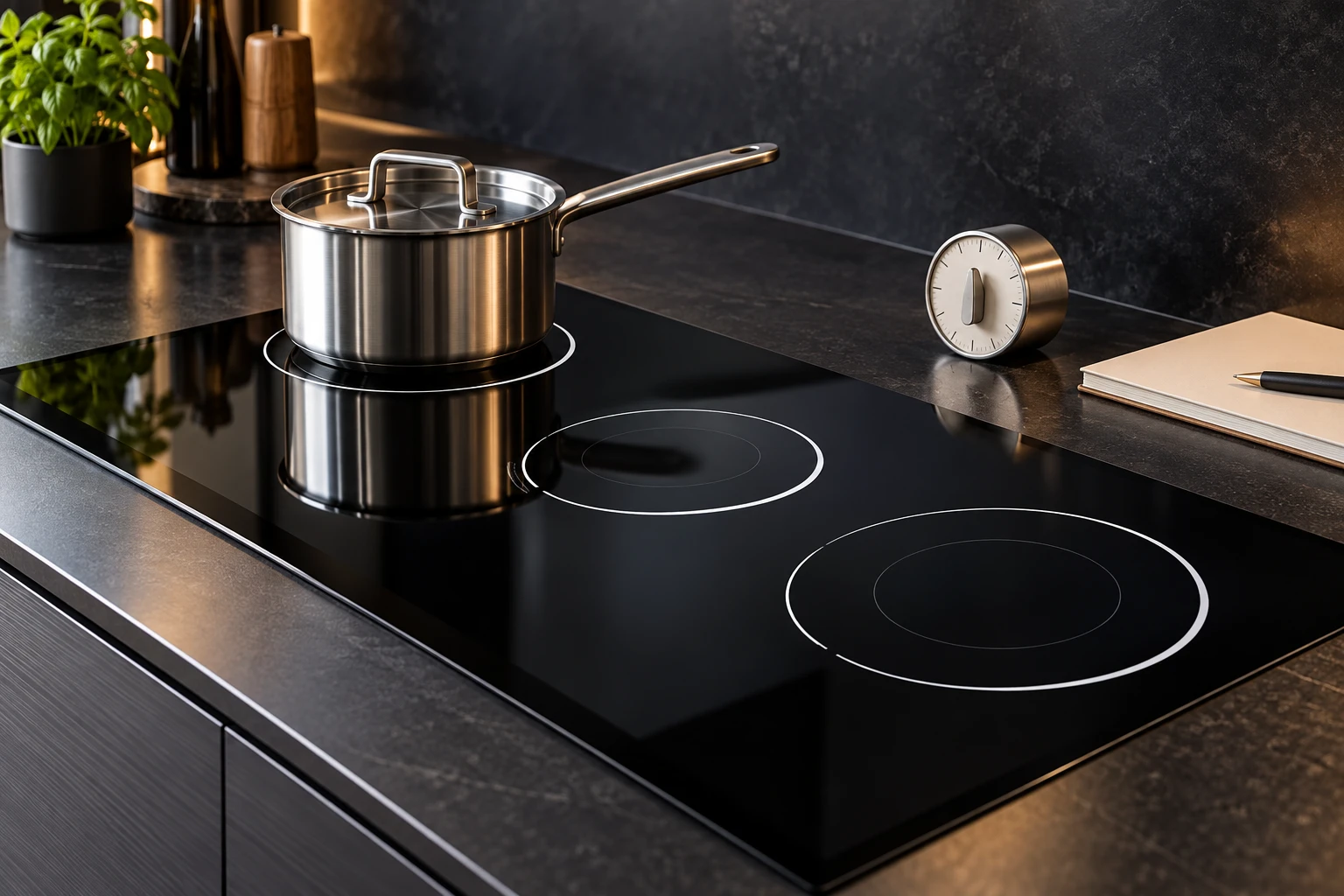
The panel and controller have different roles
Kanger’s black glass-ceramic panels are appliance components. Material selection considers the glass-ceramic grade, print, geometry, assembly and intended operating environment. The control algorithm, cookware sensing, cooling and installed supply belong to the complete appliance design.
A surface mark or pulsing sound does not establish that the panel caused the heating pattern. Conversely, a correct panel drawing does not demonstrate acceptable simmer performance. Read the ceramic cooktop glass overview for material context, and keep appliance performance in its own validation plan.
Make the observation useful for a comparison
Start with a clear question: did the setting remain selected, did the pan stay recognized, or did another zone change the result? Keep an observation sheet with separate spaces for the display, food behavior, sound and user action. This prevents a later summary from merging several different events into one supposed fault.
If you compare two ordinary cooking sessions, note differences rather than hiding them. A covered pot and an uncovered pot are different conditions. So are a small quantity of liquid and a nearly full saucepan. A room-temperature pan and one already used for cooking do not have the same starting state. These distinctions explain why two clips may look different without establishing a controller defect.
Do not use a handheld reading of the shiny glass as a substitute for a validated pan-temperature measurement. Reflections, surface properties and the instrument method affect interpretation. For an engineering evaluation, define the sensor, location and measurement method in advance and have qualified personnel assess the setup. For a household service report, a factual description of normal use is sufficient; no improvised temperature experiment is required.
What an OEM simmer review should record
Define a repeatable cooking task instead of an unqualified promise such as perfect low heat. Record the approved cookware set, base sizes, quantities, starting conditions and selected modes. Explain how the review distinguishes expected modulation from recognition loss, power sharing, automatic switch-off and an error.
Include user-visible behavior: whether a selection remains active, how output limits are signaled, and what the user should do next. Maintain the connection between relevant control revisions and evaluation records. A supplier cannot replace this appliance-level work with a generic material certificate.
For field complaints, ask for a continuous clip showing pan and display together only during ordinary safe use. Preserve the user’s exact words before assigning a category. Deliberately overheating an empty pan to obtain a clearer recording is not an appropriate validation method.
Further learning: induction and cookware
The neutral educational video explains induction heating and cookware interaction. It is background for understanding why the pan matters, not a repair procedure or measurement of your appliance’s pulse control. Follow the manufacturer for operating and service decisions.
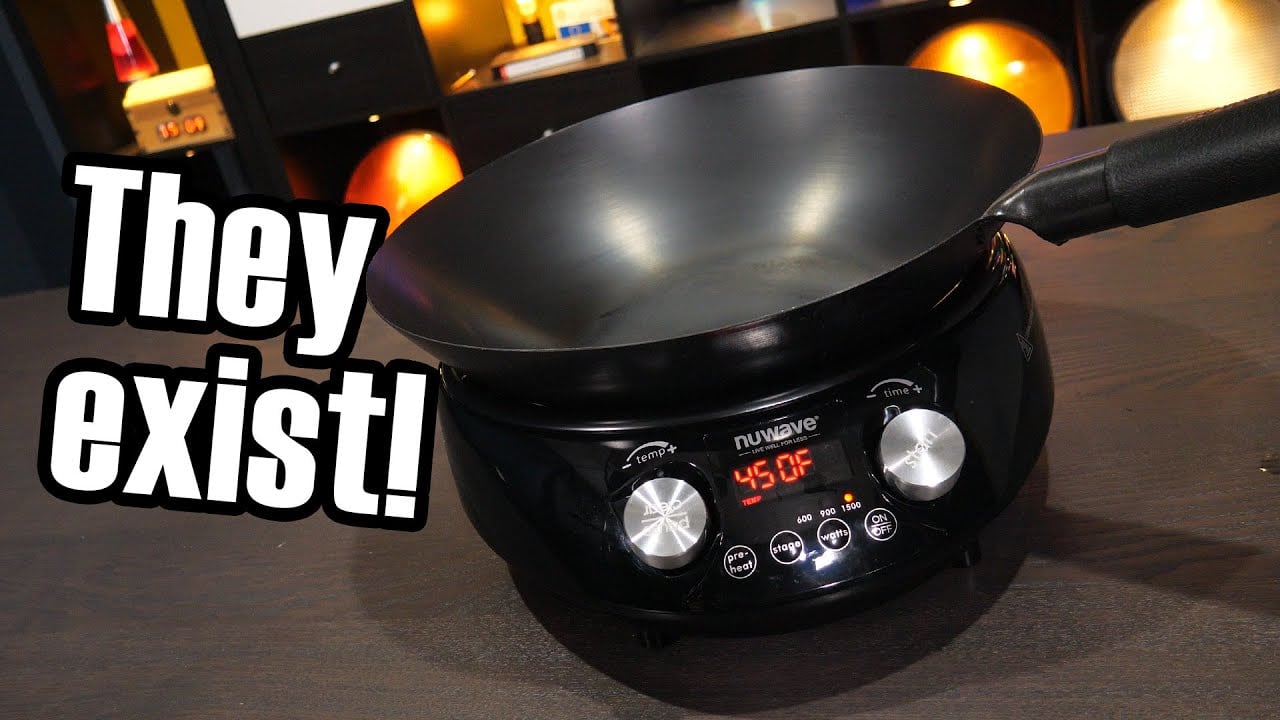
Video: Induction cooking – but what about woks?, Technology Connections. Open the educational video on YouTube.
Frequently asked questions
Is every induction hob supposed to pulse?
No universal pattern applies. Some models modulate low output in noticeable intervals. Distinguish stable modulation from lost recognition, errors and shutdown using the correct instructions.
Does pulsing mean the glass needs replacement?
No. Pulsing alone does not identify a glass defect. The complete appliance and cookware combination needs assessment before a cause is assigned.
Should I raise the setting until pulsing stops?
Choose settings suitable for the food and appliance. Raising output merely to change the visible pattern can overheat the contents and does not diagnose the behavior.
What should I record for service?
Record the model, zone, pan, setting, contents, display pattern and code, together with any second-zone use. Describe sound and heating separately.


