 Kanger Glass-ceramic Co., Ltd.
An induction hob buzzing noise can come from normal interaction between the magnetic field and cookware, especially at higher power. It can also come from a cooling fan or a loose accessory. The useful first question is whether the sound follows a particular pan, a power setting, or one cooking zone. A buzzing sound alone does not prove that the glass-ceramic panel needs replacing. Stop using the appliance and follow its service instructions if the sound accompanies a cracked surface, burning smell, repeated shutdown, electrical fault, or another warning. The checks below are observations for an intact appliance, not instructions to open it.
Why a pan can make sound on an intact glass surface
Induction heats suitable cookware through an electromagnetic field. The glass-ceramic top separates the cookware from the equipment underneath and provides the working surface; it is not the part that makes every pan silent. The US Department of Energy’s explanation of induction cooking describes heating in the cookware itself. That distinction matters when deciding whether an audible vibration is a material defect, a cookware interaction, or something that needs appliance service.
Layered pan bases, lids and handles can respond differently during cooking. An appliance manufacturer’s instructions may list humming, whistling and fan sounds as expected under particular conditions. For example, the normal-operation noise section in this Bosch manual links some noises to power and cookware construction. It is evidence for the mechanisms described there, not permission to treat every unfamiliar sound on every model as harmless. Your own model’s manual remains the relevant guide.
Do not confuse the words glass, ceramic and induction when describing a fault. Similar-looking black tops can be used over different heating systems. A radiant cooker and an induction cooker do not heat the pan in the same way. Our comparison of induction and infrared panel requirements explains why the complete appliance configuration needs to be identified before drawing conclusions about its surface.
Describe the sound before changing anything
Write down whether the noise is a low hum, a rapid click, a rattle, a whistle or moving air. Record when it begins and ends: immediately at switch-on, only after selecting a high setting, during steady cooking, or after the controls are switched off. A short description is more useful to a service team than saying the glass is noisy. Include the model, zone, pan and displayed setting so another person can understand what actually happened.
Listen from a normal working position without leaning into a hot appliance or moving it. Keep the cooker installed and ventilated as its instructions require. A phone recording can preserve the pattern, but automatic gain control and microphone position can make a quiet sound seem loud. Do not use an uncalibrated recording as proof that a product exceeds a noise limit. There is no universal acceptable decibel number established by this article.
| Observed pattern | Useful next observation | What it cannot prove |
|---|---|---|
| Hum mainly at high power | Compare the same filled pan at a lower suitable cooking setting | That every high-power noise is normal |
| Noise follows one pan | Compare another approved pan under similar conditions | That the glass panel is faulty |
| Rattle near a lid or handle | Check the cool accessory according to its instructions | That touching hot parts is safe |
| Airflow continues after cooking | Check the manual’s cooling-fan description | That ventilation may be blocked |
| New sound with warnings or damage | Stop and arrange the model’s approved service process | That another cooking trial is appropriate |
This is a qualitative observation table, not a diagnostic code list. The appliance manual and the condition of the installed unit determine which checks are allowed. Where the instructions do not explain the pattern, ask the manufacturer rather than extending the test yourself.
Compare cookware without running an empty-pan test
If the appliance is intact and its instructions allow normal use, compare two suitable pans during an ordinary water-heating or cooking task. Both should be clean, dry outside, stable and appropriate for the selected zone. Use the same zone and a comparable amount of water or food, and stay within each pan’s operating instructions. Never deliberately overheat an empty pan to reproduce a whistle or buzz. A sound description in a manual is not an instruction to create the condition.
Change one factor at a time. If you change the pan, zone, power and food quantity together, you will not know which difference mattered. Start with cookware because the question is whether the sound follows it. Note whether the sound appears with both pans or only one. This comparison helps communicate the symptom; it does not establish that a pan is defective or certify the appliance as safe.
Do not insert a cloth, paper towel, silicone sheet or improvised pad between the pan and cooktop to dampen the sound unless the appliance manufacturer expressly approves that exact accessory and use. An unsuitable layer can change heat transfer, cover controls or create another hazard. Likewise, do not press down on cookware, hold a vibrating handle near heat, or add weights to the top. The purpose is a controlled observation within normal use.
Check centering, pan condition and removable accessories
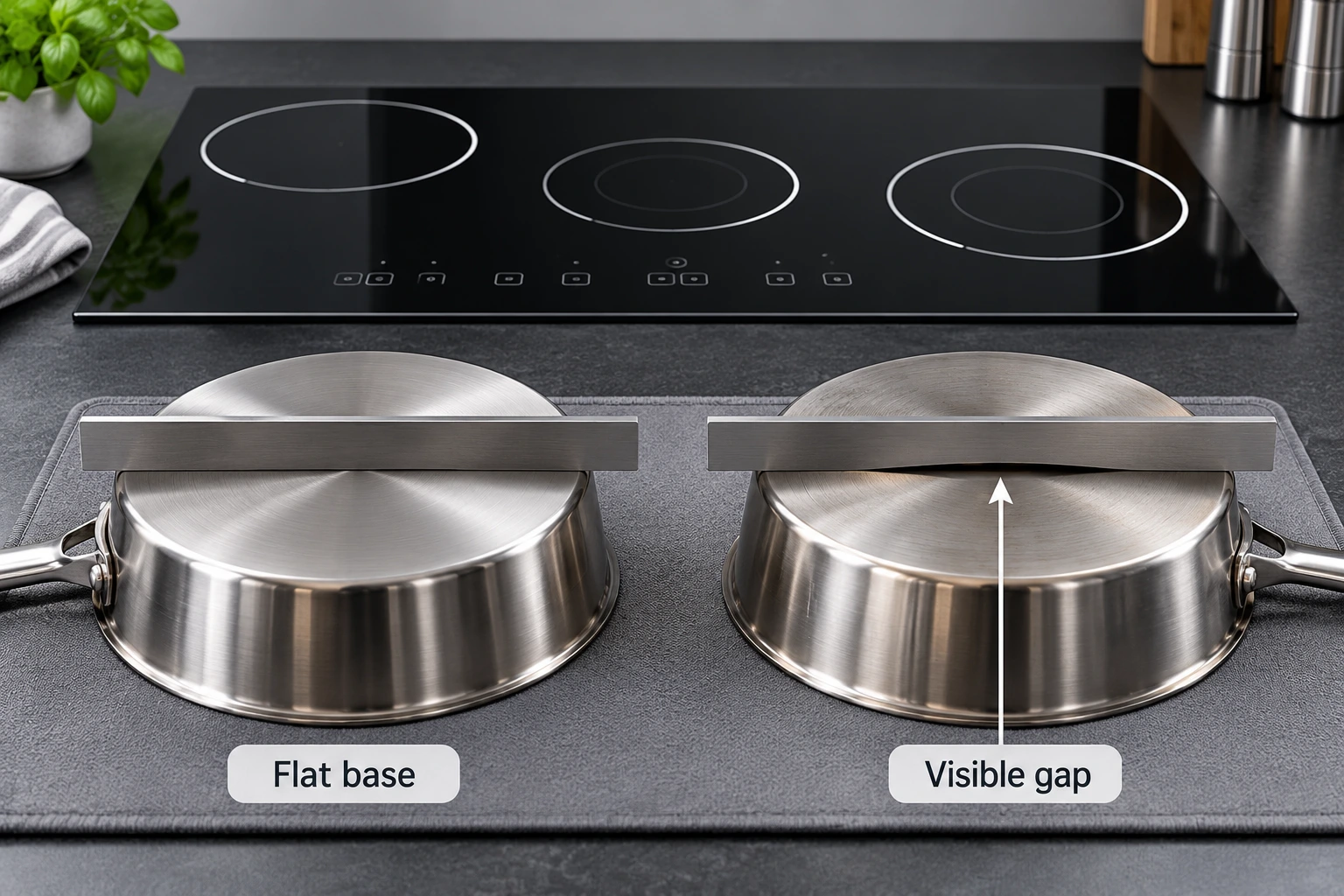
When everything is cool, inspect the pan base for debris and visible damage. Check that the pan is stable on a suitable flat surface according to the cookware instructions. A rocking pan, damaged handle or loose lid should be addressed through the cookware maker’s guidance. Do not try to straighten a pan on the glass or use the cooktop as a workbench. A visually smooth base still needs to meet the appliance’s compatibility requirements. With the pan cool and its instructions permitting, a straightedge can help document a visible base gap. This observation sets no flatness tolerance and does not establish a noise cause.
Center cookware within the zone or flexible cooking area specified by the manual. The outside diameter of a pan is not always the same as its effective magnetic base. Size and detection are related questions, but the sound alone cannot establish whether the base meets the appliance’s minimum size. If heating starts and stops or the display reports a missing pan, use the separate pan-detection checklist rather than assuming buzzing and non-detection have the same cause.
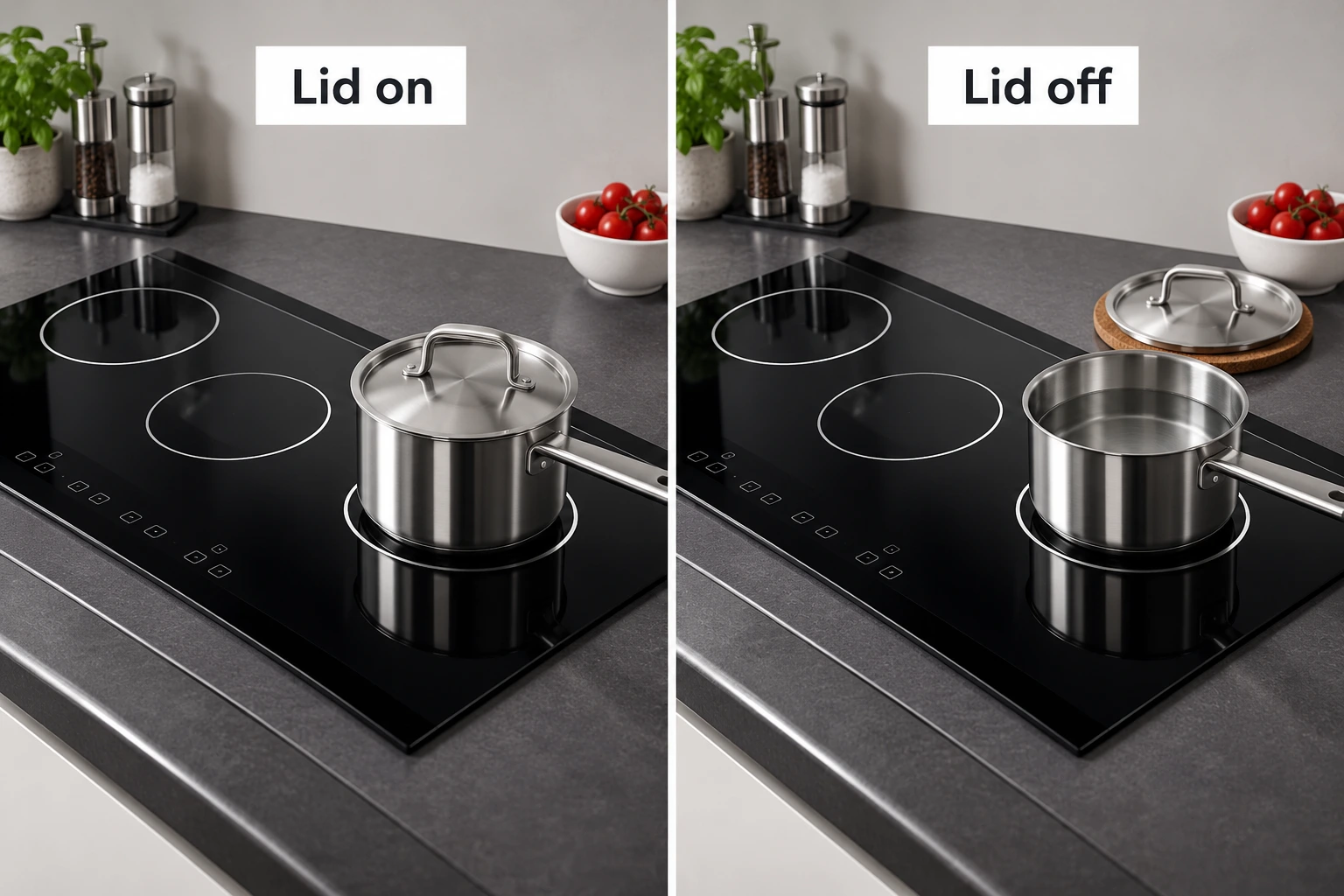
Check removable accessories only after they have cooled. A lid can rattle independently of the pan base. Record whether normal cooking with an appropriate alternative lid changes the sound, if the cookware instructions permit that use. Avoid tightening handles or dismantling parts while hot. A service request should distinguish an accessory noise from a sound that remains with several suitable cookware combinations.
Separate fan behavior from cookware vibration
A cooling fan can sound different from vibration at the pan. Its timing can also differ: airflow may continue after cooking while the appliance manages internal temperature. Read the model’s explanation before deciding that continued sound means the heating zone remains energized. Residual heat is a separate issue, so continue to respect hot-surface indicators and the normal cooling instructions even after cooking power is off.
Keep installed ventilation paths clear as specified by the manufacturer. Do not remove covers, reach through openings, disconnect a fan or change the surrounding cabinetry as a troubleshooting experiment. An unfamiliar fan sound, repeated overheating indication or unexplained shutdown belongs in a service report. The Department of Energy research presentation on induction systems also illustrates that induction is an engineered system; surface appearance does not describe all of its electrical and thermal behavior.
When to stop and request professional help
Stop the comparison immediately if you notice a crack, smoke, burning odor, an electrical warning, repeated protective shutdown, unexpected control behavior or a sound your manual says requires attention. Follow the appliance’s instructions for switching off and isolating it. Do not touch suspect damaged areas or keep operating it to obtain a better recording. If safe isolation is unclear, contact a qualified service provider.
Prepare a short service note with the model and serial information, the sound pattern, affected zone, cookware used, setting, load and any display message. Explain whether the symptom followed a pan or stayed with a zone. Include a photograph of the cool surface and a recording from a normal position if safely available. Avoid diagnosing a coil, board, fan or glass defect yourself; clear observations let the qualified team choose the next check.
What panel buyers should document during appliance trials
For OEM buyers, acoustic complaints need a repeatable appliance-level trial rather than an informal judgment of a loose glass sample. Define the approved cookware, load, installation, ambient background, operating sequence and recording position. Keep the panel drawing revision and appliance configuration with the test record. If an acoustic acceptance limit is required, the responsible engineering team should specify a suitable method and calibrated equipment.
Kanger’s black heat-resistant glass-ceramic cooktop product is the relevant surface-material reference for this discussion. A photograph does not establish the noise, electrical performance or certification of an assembled cooker. Request the actual material and drawing data for your project. Keep cleaning and handling records separate from appliance noise observations so marks or cleaning changes are not confused with acoustic evidence.
Further learning: induction heating
The educational video below explains induction heating as background. It does not diagnose the sound from a particular appliance or establish a safe noise threshold.
Video: How Induction Heating works ?, Tracing Science. Open the educational video on YouTube.
Frequently asked questions
Does buzzing mean the glass is cracked?
No. Buzzing alone does not establish a crack or a glass defect. Inspect only a cool surface safely; visible cracking or other warning signs require the appliance’s stop-use and service procedure.
Will thicker glass stop induction noise?
There is no basis for that general promise. Panel thickness belongs to the approved appliance design. Changing it without engineering approval can affect fit and performance and is not a user repair.
Can I test the noise with an empty pan?
Do not deliberately heat an empty pan to investigate noise. Compare suitable cookware only during normal use permitted by the appliance and cookware instructions.
What information should I send to service?
Send the model, affected zone, cookware, setting, load, timing, warning messages and a safely obtained recording. Explain whether the sound follows one pan or remains with the same zone.


