Induction cookware pan protectors for storage belong between cold, dry pans in a suitable cabinet or drawer. They help separate surfaces during nesting; they are not automatically approved as cooking mats, trivets or insulation beneath a vessel on an active hob. Select them for the actual cookware shape and storage arrangement, then remove and account for every separator before taking a pan to the cooking position.
This guide covers the transition from washing to storage and back to cooking. It does not supply a material temperature rating or promise that a soft insert prevents all damage. The cookware instructions, protector care directions and storage furniture requirements remain the controlling documents for the selected products.
A pan protector can look similar to a fabric trivet, a silicone cooking mat or a packing insert. Appearance alone does not establish permitted use. Read the product description and care information for the actual item. If it is described for nesting pans in storage, keep its role there unless separate explicit instructions authorize another application.
Do not transfer a temperature claim from a different accessory or from the cookware itself. A pan suitable for induction does not make everything placed beside it suitable for heat. Keep packaging and supplier information until the accessory is identified. If an unmarked insert arrives inside a cookware set, ask whether it is reusable storage equipment or shipping protection before relying on it.
A soft separator places a barrier between surfaces that would otherwise meet during stacking and removal. It cannot repair an existing chip, restore a damaged coating or strengthen a loose handle. It also cannot make an unstable pile secure merely by adding friction. Inspect both the cookware and the arrangement rather than treating the insert as complete protection.
For the exact products it covers, Le Creuset’s cookware care guidance describes protective layers for nesting and dry storage. Those care principles support checking contact and moisture. They do not establish a common load limit or approval for every separator and vessel sold by another manufacturer.
Place a cold empty pan in the proposed stack and identify where the next vessel could touch its interior, rim or sides. A small circular pad may cover the center while leaving curved walls exposed. A star-shaped insert may need its arms arranged to cover the intended contact areas. Follow the accessory’s directions rather than assuming that its widest point is useful coverage everywhere.
Avoid forcing a larger vessel into a smaller opening. The layer should not turn a poor fit into a tight wedge that requires force to separate. If the two pieces do not nest naturally within their instructions, use another storage method. Measure the actual shapes and record the arrangement instead of choosing a separator solely by the largest advertised pan diameter.
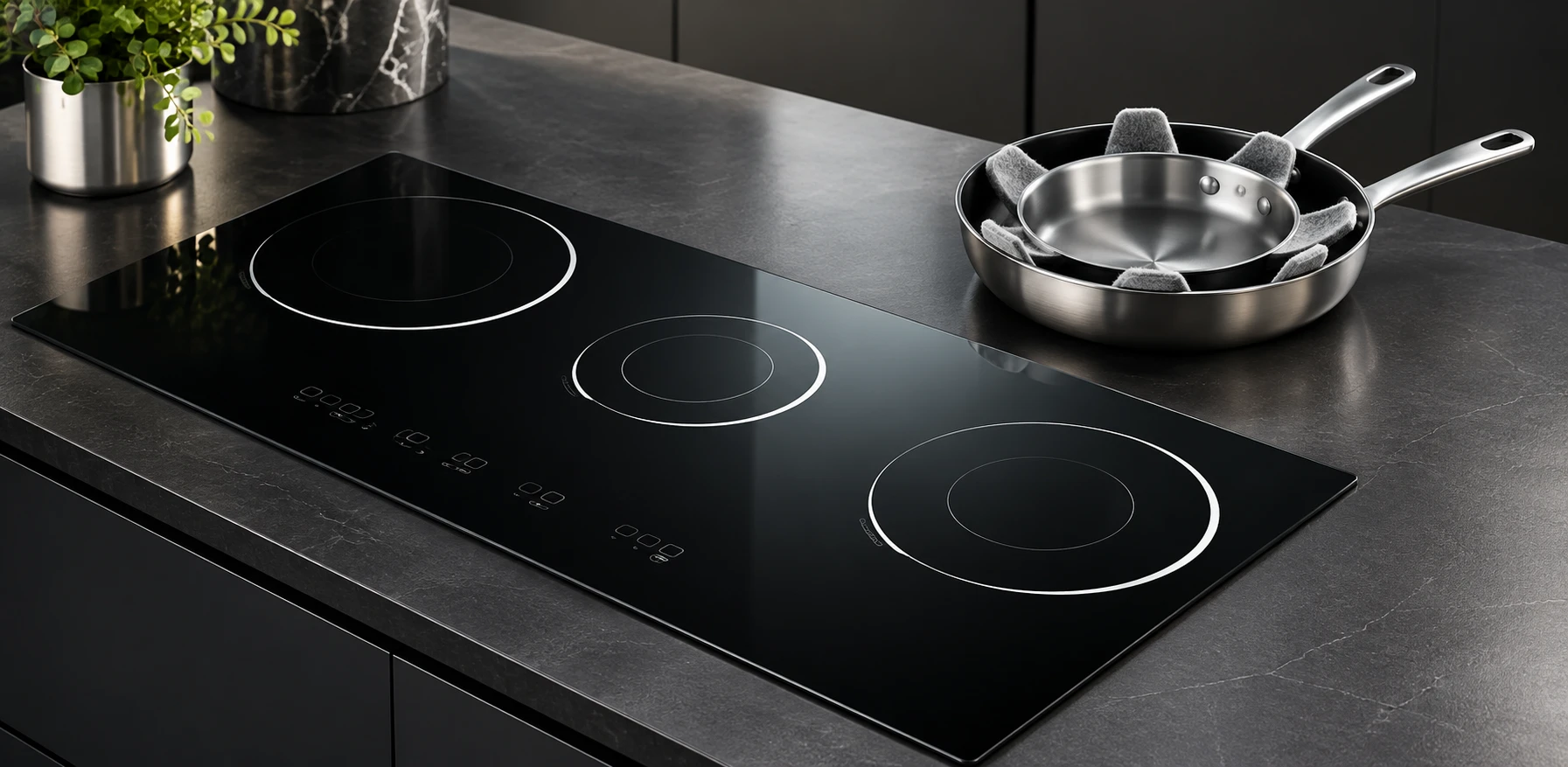
Complete the cleaning and drying routine prescribed for the cookware before putting it away. Check the underside, rim, handle junction and other areas where water can remain. A soft insert is not a drying rack and should not be used to hide a damp surface. Let the accessory itself dry as its care directions require before returning it between pans.
The kitchen’s storage environment matters too. Keep the stack away from steam and repeated splashes where practical. If moisture repeatedly appears in a cabinet, investigate the source rather than adding more fabric to absorb it. Separate cookware care from furniture maintenance and follow the relevant guidance for each. Do not interpret a dry-looking upper surface as proof that the whole nested assembly is dry.
A protected surface and a stable stack are different objectives. Consider the sizes, complete handle outlines and permitted storage arrangement. Do not stack heavy pieces on a fragile or unsuitable lower vessel simply because a soft insert separates them. Check shelf support and access using the furniture manufacturer’s instructions; this article assigns no universal shelf load or maximum stack height.
Make sure the item you use frequently can be removed without lifting an awkward tower. If access requires reaching around projecting handles or balancing loose lids, reorganize the storage. A drawer divider, separate shelf or other documented support arrangement may be preferable to nesting. The right solution is the one the actual vessels and storage space can accommodate consistently.
The table organizes checks drawn from documented cookware-care practices. Exact accessory washing, vessel stacking and furniture limits still require the selected manufacturers’ directions.
| Check | What to inspect | Action when unresolved |
|---|---|---|
| Identity | Accessory intended for cookware storage | Ask the supplier before assigning heat use |
| Coverage | Interior, rim and side contact in the proposed stack | Change separator size or storage arrangement |
| Dryness | Pan and separator after their care routine | Complete drying before nesting |
| Stability | Vessel fit, handle projection and shelf support | Separate pieces rather than forcing the stack |
| Return to cooking | All inserts removed and base checked | Keep accessories in their storage location |
A lid can introduce a hard rim, knob or handle into the arrangement. Do not invert it inside a coated vessel unless the cookware instructions support that storage method. Check the actual points of contact and whether another piece above can load the knob. A pad beneath the pan does not protect an exposed lid edge elsewhere in the stack.
Use a separate organizer when that is more appropriate for the lid and available space. Keep access simple enough that a person can remove one piece without balancing several others. A countertop lid rest used during cooking serves a different purpose from cabinet separation. Do not assume that a single accessory performs both roles merely because a lid fits into it.
Use the accessory’s own washing and drying directions. Felt, textile and silicone products can have different requirements, so avoid applying a single dishwasher or machine-wash routine to all of them. Remove loose debris before nesting. An insert containing particles or sticky residue deserves cleaning or replacement as directed, rather than being treated as protective because it is soft.
Inspect for changes that affect its intended coverage and cleanliness. Do not add adhesives, staples or makeshift fasteners to hold it in place inside cookware. If the product no longer fits or cannot be cleaned as directed, ask the supplier about replacement. Keep damage assessment of the pan separate: a new protector does not establish that an already damaged cooking surface is fit for use.
Make removal a deliberate transition, especially when several pans are nested. Set the chosen cold pan on a separate worktop, remove its separator and inspect the outside bottom. Check that nothing remains stuck to the underside. Put the insert back in its designated storage location away from the cooking area rather than leaving it beside controls or beneath the pan.
U.S. Fire Administration cooking safety guidance emphasizes keeping combustible items away from cooking. A storage insert should not become a convenient landing pad beside a working zone. Nor should it be placed between a vessel and the glass to address scratches or noise. Any accessory proposed for active-hob use needs explicit approval for the exact appliance and application, independent of its storage role.
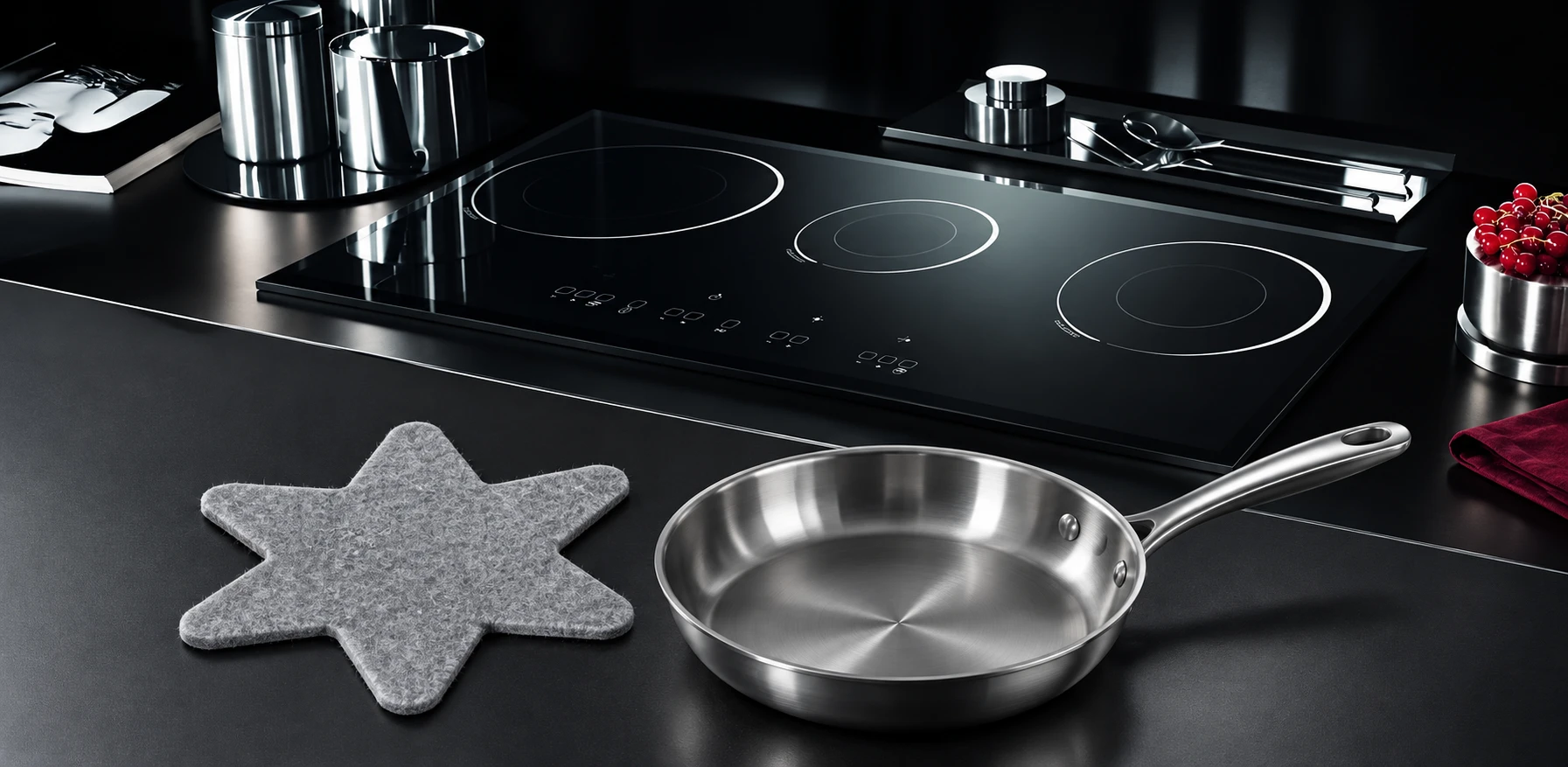
After removal, inspect the cookware as its manufacturer directs. Check for debris, loose attachments and other service concerns before heating. Use measuring the usable cookware base when selecting the appropriate cooking position and planning handle clearance when checking surrounding access. Safe storage does not itself prove induction compatibility or suitable placement on the next appliance you encounter.
If a mark is found on the glass after use, consult checking marks on the glass surface rather than assuming that an insert would have prevented it. Keep cleaning, cookware damage and panel damage as separate questions. Avoid unapproved abrasives or accessory layers as an improvised solution. A documented inspection and care routine is more useful than attributing every mark to a single storage habit.
A simple storage layout should make it obvious where protectors belong and how many pieces need to be removed. Keep the instructions accessible when a set includes several accessory types. People who share the kitchen should be able to distinguish storage separators from heat-use equipment without relying on memory of a product photograph or a salesperson’s informal description.
For commercial purchasing, retain the cookware models, accessory identity, proposed nesting arrangement and care instructions. Review the arrangement when a pan is replaced. Nominally similar cookware can have different walls, handles and coatings. Avoid treating one successful stack as evidence that any future item can be inserted into the same pile without another check.
Kanger’s Kanger black glass-ceramic cooktop panels and black glass-ceramic material guide concern the glass cooking surface. They do not establish a storage protector’s composition, heat rating or suitability under cookware. OEM documentation should distinguish finished-appliance accessory permissions from housekeeping advice. A clear separation helps buyers avoid turning a useful cabinet-care product into an unsupported cooking-system component.
The practical objective is straightforward: clean and dry vessels, appropriate separation, stable access and complete removal before heating. Record unresolved compatibility or damage questions with the responsible supplier. That produces a repeatable routine without claiming that an inexpensive insert can guarantee scratch-free cookware, repair damage or make an unsafe arrangement acceptable.
This independent educational video explains induction heating and cookware geometry. It provides background on the cooking system, not a demonstration or approval of storage protectors, handle repair or any specific cookware model.
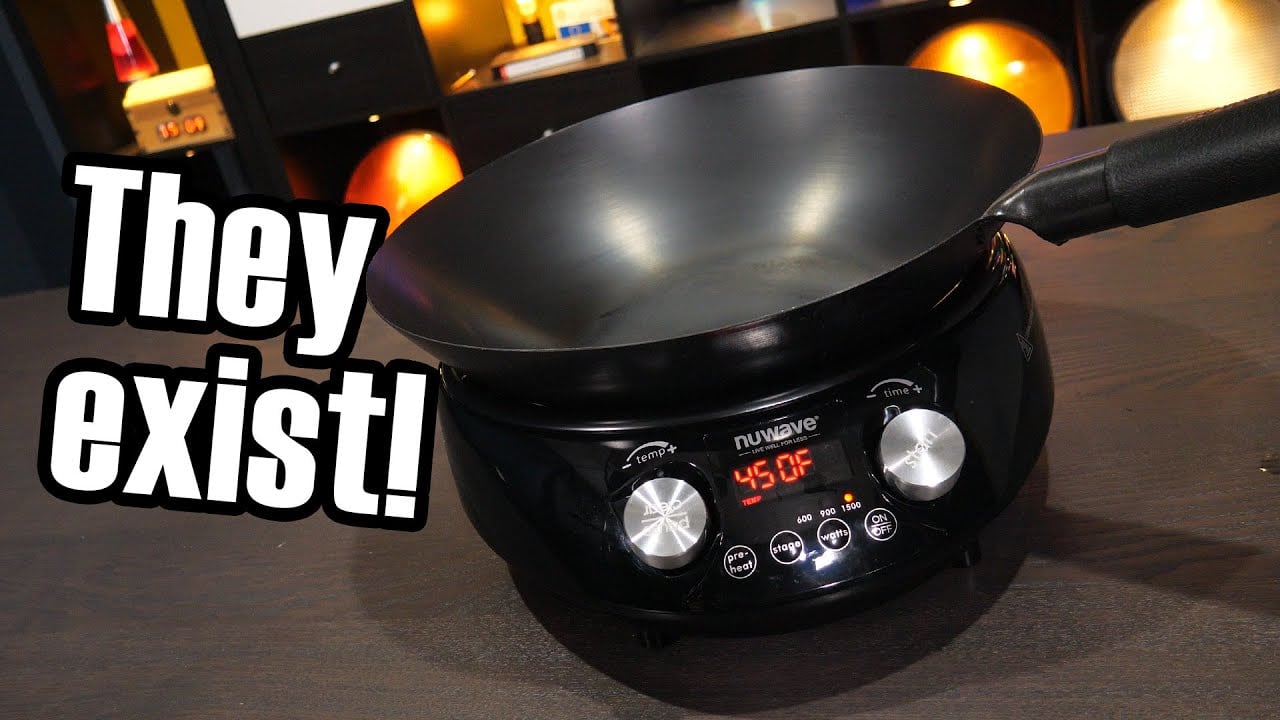
Video: Induction cooking – but what about woks?, Technology Connections. Open the educational video on YouTube.
Do not assume so. Storage suitability does not establish approval for active-hob use.
Yes. Complete the cookware and accessory drying routines before storage.
No. Check vessel fit, handle projection, access and furniture support separately.
No. Resolve cookware damage through its manufacturer; a separator is not a repair.



