Induction cookware scoop colander draining requires a tool that suits the food, pan surface and handling task, plus a clear place to set the vessel and serve the food. A handheld perforated scoop is different from a full-size pasta insert or a clip-on strainer. Check the exact tool's care instructions before resting it on a pan rim. In particular, the manufacturer of the example discussed below instructs users to remove cookware from the heat source before resting the utensil on top. A heat-resistance claim is not permission to leave any tool across an operating hob.
A handheld scoop removes portions of food while liquid remains in the vessel. A conventional colander usually receives food and liquid poured from another container. A pasta insert is part of a different vessel arrangement, and a clip-on strainer attaches in its own specified way. Decide which movement you want to avoid or simplify before buying equipment; these products are not interchangeable merely because all have openings.
This guide concerns selecting and handling a scoop-style tool around induction cookware. It does not provide a recipe or a validated cooking process. The food must still be prepared according to the relevant recipe and food-safety instructions. Choosing a convenient draining tool cannot establish whether food is fully cooked or whether a hot liquid is safe to handle.
Identify the pan's interior material and its permitted utensil types. A tool described as suitable for a particular coating still needs to be used within its own instructions and in a way consistent with the pan's requirements. Inspect the working edge and any hooks for damage before use. Do not assume every perforated metal or polymer tool has the same surface compatibility.
utensil surface compatibility explains the separate utensil-to-interior question. Check that first, then assess the scoop's size and handling. A scoop that fits inside the pan but catches on its rim may still be awkward for the intended task. Do the first fit assessment with the pan and tool cold, clean and empty, where a poor match can be discovered without handling hot liquid.
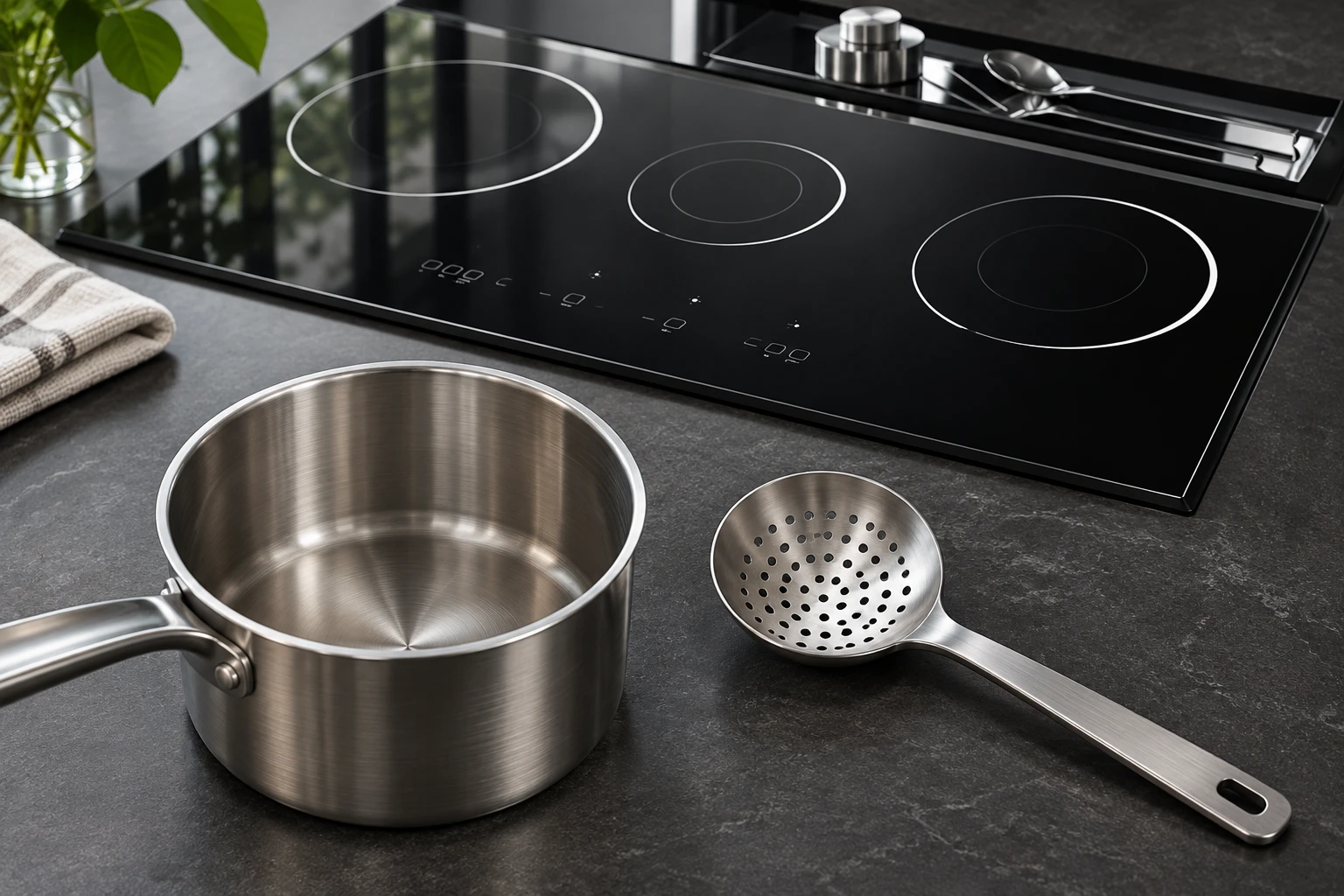
The official Scoop Plus care information describes a scoop-drain-serve function and integrated pan hooks. It also says to remove the cookware from the heat source before resting the utensil on top. These details describe that product; do not copy its ratings or features onto an unlabelled alternative. If your tool has no resting feature, do not improvise one by trapping its handle under a lid.
Read the distinction between holding a tool during a task and leaving it supported by the rim. A general heat-resistance number does not answer every contact duration or operating condition. When a document gives a specific resting restriction, follow it instead of treating the highest advertised number as blanket approval. Ask the manufacturer if the instruction is unclear for the actual appliance and vessel.
| Check | What to observe cold | Decision |
|---|---|---|
| Interior compatibility | Tool material permitted by cookware instructions | Choose an approved material |
| Rim engagement | Resting feature engages as the tool instructions describe | Reject forced or unstable fit |
| Resting restriction | Exact instruction identifies permitted conditions | Remove cookware from heat where required |
| Food and openings | Opening pattern suits intended food | Use another draining method if unsuitable |
| Landing route | Serving bowl and pan destination prepared | Reorganize before handling hot equipment |
This table is an observation guide, not a substitute for the tool's instructions. It deliberately avoids invented load limits or clearances. If the rim shape does not engage as intended, use another permitted draining method. Do not force a hook, bend the tool or add a spacer to make an unsupported combination appear to fit.
Set out the serving container, a suitable utensil landing area and a safe position for the vessel before cooking. The route from pan to serving bowl should not cross a control strip or require reaching over another active zone. Keep the destination stable and accessible. A tool that drains well can still make a poor handling system if the serving bowl is balanced at the edge of the counter.
If moving the vessel is required by the tool instructions, prepare the permitted landing surface and appropriate handling protection first. dry oven glove grip preparation discusses dry grip preparation for a hot pan. That preparation does not give every person or vessel the same lifting capability. If the container cannot be moved securely, stop and choose an alternative process allowed by the equipment instructions rather than trying to complete the movement in stages over the glass.
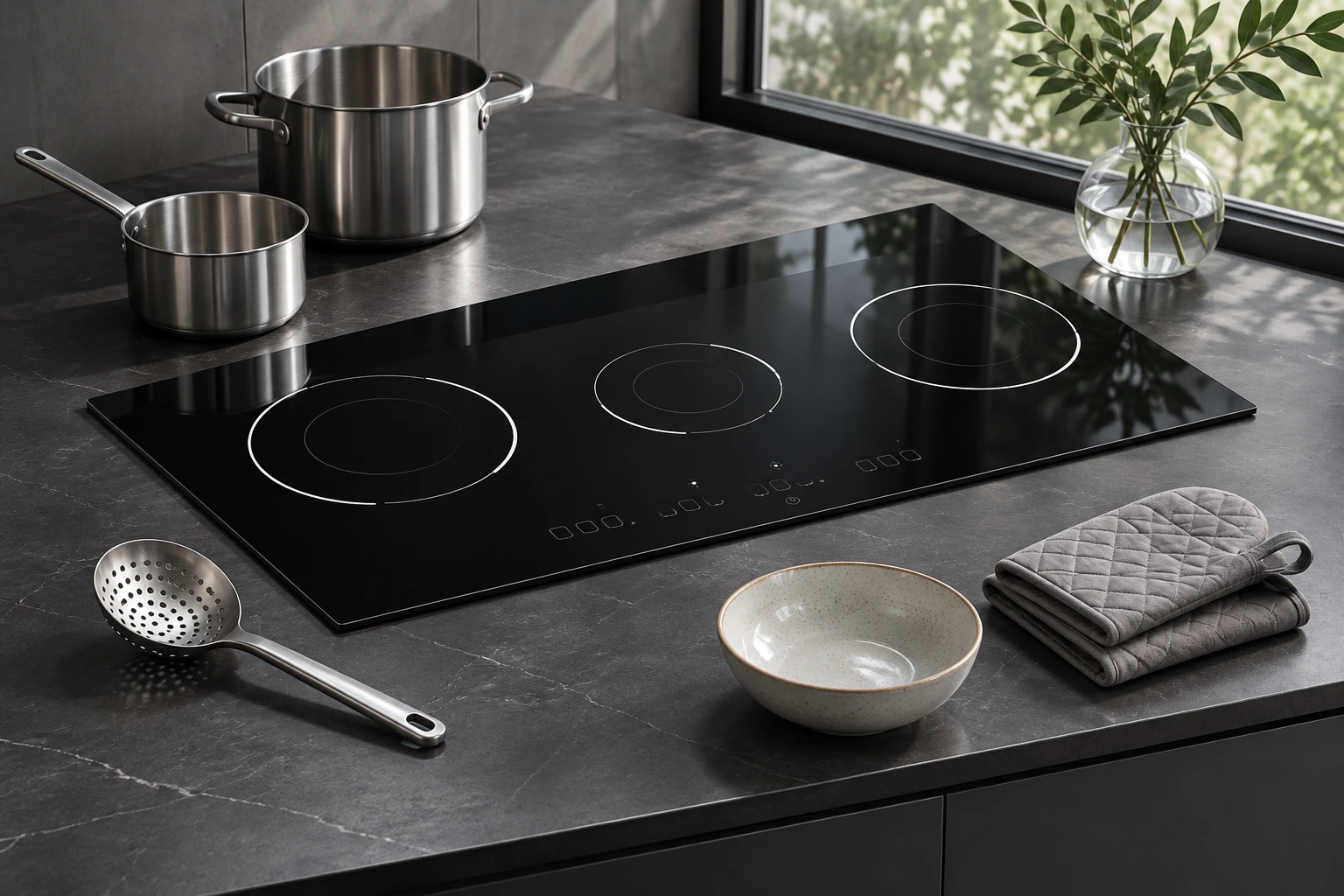
The cooktop is the heating appliance, not an accessory sorting tray. Keep unused tools and serving containers on a separate counter and preserve access to the controls. Kanger supplies black glass-ceramic cooktop panels as an appliance component. Its product page does not certify the pan, the scoop or a draining technique, and it does not establish a universal limit for every finished appliance.
For appliance teams, the user instructions should distinguish panel care from handling hot cookware and accessories. Illustrations should not imply that a scoop can be left over an energized zone or that a glass surface is a suitable landing area for every item. Document the actual appliance requirements and use the tool manufacturer's directions for the accessory-specific steps.
Do not interpret the scoop's bowl volume as an instruction to fill it to the brim. Choose a portion that you can control without sudden movement, and follow any product limits. Keep the working movement deliberate and return to a safe position if the load is awkward. A tool that requires two hands in a way that leaves the vessel unstable is not a good match for that task.
The perforations also need to suit the food. Small pieces can pass through openings intended for larger items, while long or flexible food may hang over the edge. Assess the intended use from the maker's description and a cold inspection. Do not invent a universal opening size; the practical question is whether the selected tool performs the specific task without forcing an unsafe workaround.
A pan rim is not automatically an approved fulcrum. Use resting features only as described for the exact product and do not push down on the handle to balance a heavy load. If the pan moves, the tool rocks or the engagement is uncertain during the cold check, reject the arrangement before heating. The apparent fit in a retail photograph does not establish compatibility with your rim geometry.
Avoid leaving a utensil where it interferes with placing or removing a lid. The next person approaching the vessel should be able to understand what is supported and what must be held. For a shared kitchen, keep the instructions and equipment identity available. Replacing a scoop with a superficially similar model should trigger another check of the support and care requirements.
After the equipment reaches a safe handling condition, follow the tool's cleaning instructions. Inspect the perforations, underside and any hooks for retained food. A permitted dishwasher process for one product does not establish suitability for another tool with a different material or assembly. Do not use an abrasive chosen for a metal pan on a polymer accessory without permission.
Separate cleaning from the active cooking area. cookware drying rack discusses placing washed items where they can drain without directing water toward the hob. A scoop's pan-resting feature is not a drying-rack specification. Put it away in the condition required by its care instructions, and inspect it again if it has been trapped under heavy equipment or visibly distorted in storage.
A scoop may be unsuitable when the food is too small for its openings, when the vessel shape prevents controlled access or when the required movement cannot be completed securely. That is a selection problem rather than a reason to modify the tool. Consider another documented method compatible with the cookware and the task. Keep the distinction between choosing equipment and improvising new functions.
For recurring kitchen work, note which combinations were rejected and why. A short record such as rim mismatch, poor handle access or unsuitable opening pattern is more useful than calling a tool universally unsafe or universally compatible. This also helps purchasing teams replace an item with the right characteristics rather than ordering by appearance alone.
Request the exact tool model, intended uses, material, care instructions and resting limitations. Ask whether its hooks are intended for a particular rim arrangement and what evidence supports any temperature or load claim. For a bundled cookware offer, identify the actual pan and accessory combination. Do not accept a generic induction-compatible statement as proof that every accessory can remain on an operating vessel.
Record the source document and revision used for the decision. A cold-fit observation should be labelled as such; it is not a certification of heat performance or a food-safety test. For unresolved questions, send the supplier photographs showing the entire vessel and the rim contact area. Keep the next action specific: confirm the resting instruction, choose a different tool or remove the unsupported combination from use.
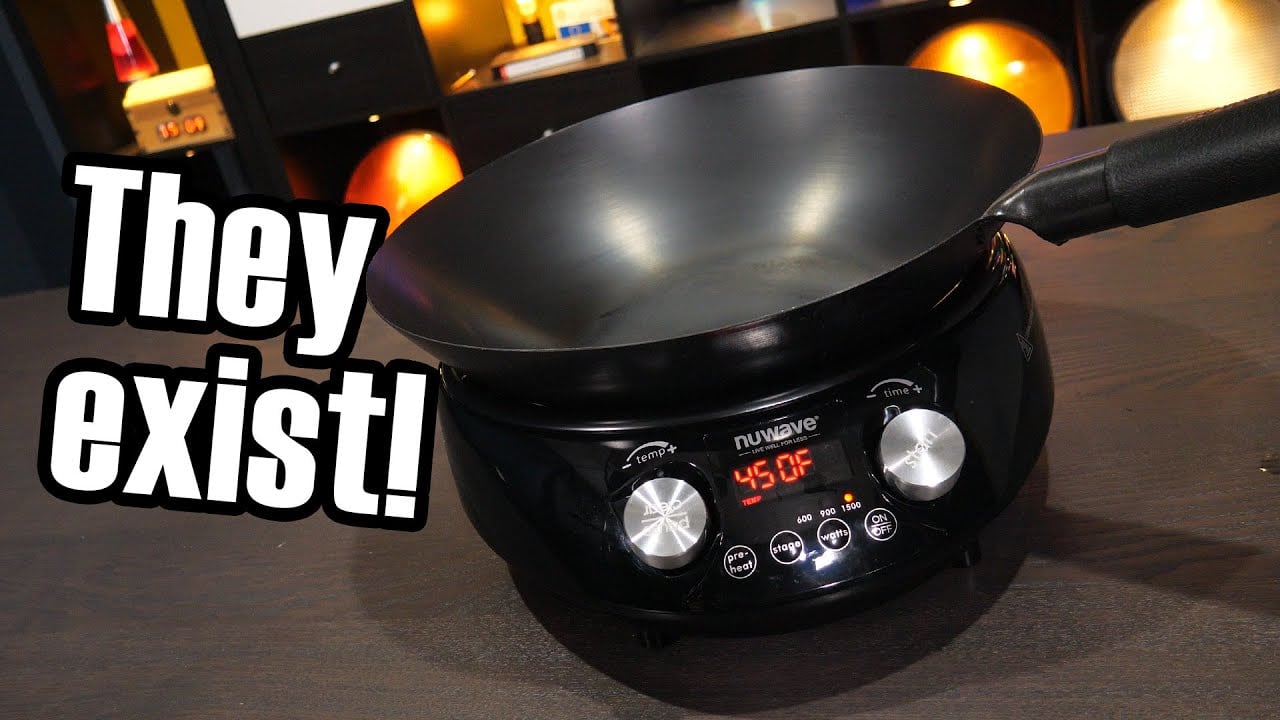
Video: Induction cooking – but what about woks?, Technology Connections. Open the educational video on YouTube.
The video provides neutral background on induction heating and cookware interaction. It does not approve a colander scoop, set its material limits or replace the maker's instruction to remove cookware from heat before resting the example utensil. Keep the appliance, vessel and accessory requirements separate when deciding how to perform the draining task.
No. A handheld scoop removes portions, while an insert belongs to a different vessel arrangement. Choose the equipment for the movement you intend to perform and follow each item's instructions.
Only follow the exact tool's resting instructions. The example manufacturer's care information requires removing cookware from the heat source before resting the utensil on top. A rating alone is not blanket permission.
Use a cold, empty vessel and inspect engagement according to the tool instructions. If it rocks, slips or needs force, choose another permitted arrangement rather than modifying the tool or rim.
No. Cookware induction compatibility does not establish accessory temperature limits, surface compatibility or resting permission. Check the appliance, pan and scoop documents for their separate requirements.
These primary documents support specific product instructions and handling distinctions. Their specifications are not transferred to Kanger components or other products.



