The right induction hob simmer setting is the setting that maintains the gentle cooking required by your recipe in your particular pan. There is no universal numbered level that works across every hob, pan size and quantity of food. Bring the contents to the recipe’s required stage, reduce the power before vigorous boiling continues, then observe and adjust while supervising the pan. A keep-warm button is not automatically a simmer program. If a low setting cycles, judge the actual cooking response before concluding that the hob or its glass panel is defective.
Simmering describes a cooking condition, while a hob number describes an appliance control command. The relationship depends on the recipe, cookware, amount of liquid and starting temperature. A small saucepan of sauce and a large covered pot of soup may therefore need different settings. Begin with the recipe’s instructions and the appliance manual’s guidance for gentle cooking. Treat any example in that manual as a starting point for the stated task rather than a universal temperature conversion.
Watch the contents instead of copying a number from another kitchen. Gentle movement and occasional bubbles can be useful observations, but the required result remains recipe dependent. Thick sauces can catch at the base even when their surface looks quiet. Foods that require a specific safe cooking endpoint still need that endpoint checked using appropriate guidance and equipment. A simmering appearance is not a substitute for food-safety verification, and this article does not prescribe cooking temperatures for individual foods.
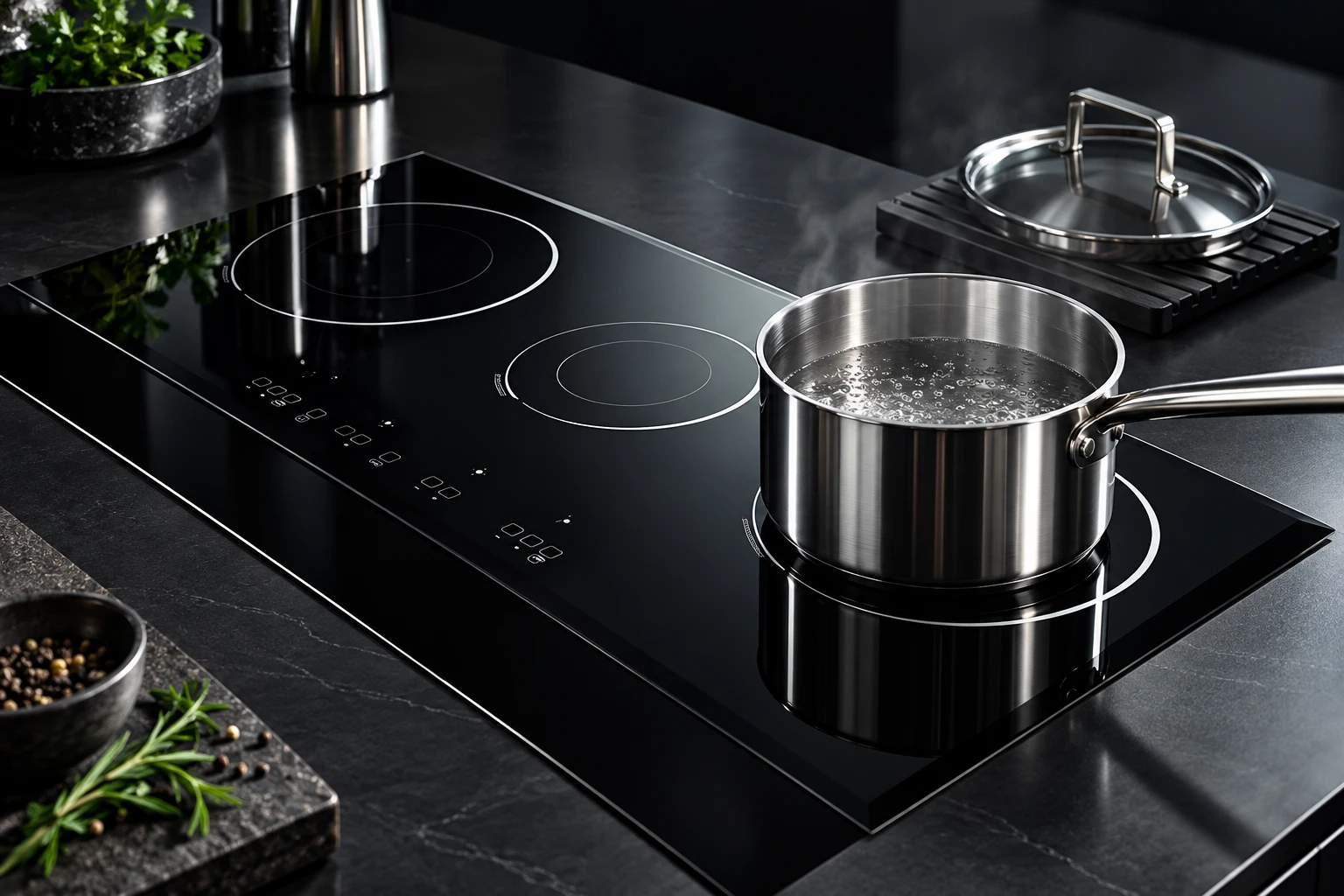
Induction can change the energy delivered to compatible cookware quickly. The pan and food still retain heat, so reducing the setting does not instantly stop all bubbling. When the recipe moves from bringing liquid up to heat to gentle cooking, reduce power promptly and give the contents a short opportunity to respond under supervision. Do not repeatedly alternate between boost and the lowest level in an attempt to force a stable result.
Choose a sensible initial quantity and leave enough headroom for stirring and bubbles. Keep the control area accessible and avoid letting an oversized pot cover it. If food begins rising rapidly, follow the appliance instructions for reducing or stopping heat and handling a spill. Do not try to steady a boiling pan with a towel laid across the glass. Our boil-over response covers the separate spill-response decision; preventing a boil-over is easier than cleaning around hot controls.
Use cookware permitted by the hob manufacturer. ENERGY STAR electric cooking guidance explains induction’s interaction with compatible cookware; it does not provide one numbered simmer setting. Check that the pan sits flat, is suitably sized for the zone and has a base compatible with induction. Advertised rim diameter alone may not describe the active magnetic base. A pan that barely meets detection requirements can complicate observations, especially when comparing it with a different vessel.
Keep the pan centered according to the appliance instructions. Avoid introducing an adapter disc, silicone mat or other layer unless the exact appliance permits it. Those changes affect the cooking interface and may introduce restrictions of their own. If the pan is not accepted by the zone, solve that first with pan-detection checks. Repeatedly increasing power cannot establish a dependable simmer when detection itself is unstable.
Some induction systems regulate low output by cycling energy delivery. The way this appears at the food depends on the appliance and cookware. Audible or visible changes do not, by themselves, establish a defect. Observe whether the recipe remains under control, whether the pan stays detected and whether any error appears. Record those facts rather than diagnosing the electronics from a brief sound or a single burst of bubbles.
If low-level cycling repeatedly causes unsuitable cooking behavior, compare the result with another permitted pan under similar conditions. Keep the quantity, zone and recipe stage consistent. Do not change every variable at once. The separate induction power-cycling checks article discusses on-and-off behavior and fault checks. Here the practical question is whether a particular permitted setup can sustain the cooking task, rather than whether every energy pulse can be eliminated.
| Observation | First adjustment | What to record |
|---|---|---|
| Vigorous boiling after reducing power | Reduce further as permitted and allow retained heat to settle | Previous setting, pan and recipe stage |
| Food stops cooking as required | Increase gradually while observing | Quantity, lid position and response |
| Repeated loss of pan detection | Check cookware and zone requirements | Base size and any displayed message |
| Scorching at the base | Follow recipe guidance on stirring and heat reduction | Food consistency and pan construction |
| Behavior changes when another zone starts | Review shared-power instructions | Both zone settings and active functions |
This is a decision table, not a temperature chart. Use the model-specific manual and recipe to decide the permitted adjustment. Stop using an appliance showing damage or service warnings rather than treating repeated errors as a cooking technique problem.
A lid changes heat and moisture loss. Adding cold ingredients changes the task again. When adjusting a simmer, record whether the lid is on, partly open or removed, and follow the recipe’s instructions. A number that worked before adding ingredients may not maintain the same condition afterward. Do not compensate by selecting boost and walking away; stay with the cooking and observe the transition.
Stir where the recipe calls for it, using suitable utensils and avoiding contact that damages the glass or controls. Thick mixtures may need particular attention to the base of the pan. Keep utensils on a separate rest, not across the operating panel. If you move a pan, lift it with suitable protection as directed rather than dragging it over the surface. Residue and grit under a base create an additional handling problem unrelated to the numerical setting.
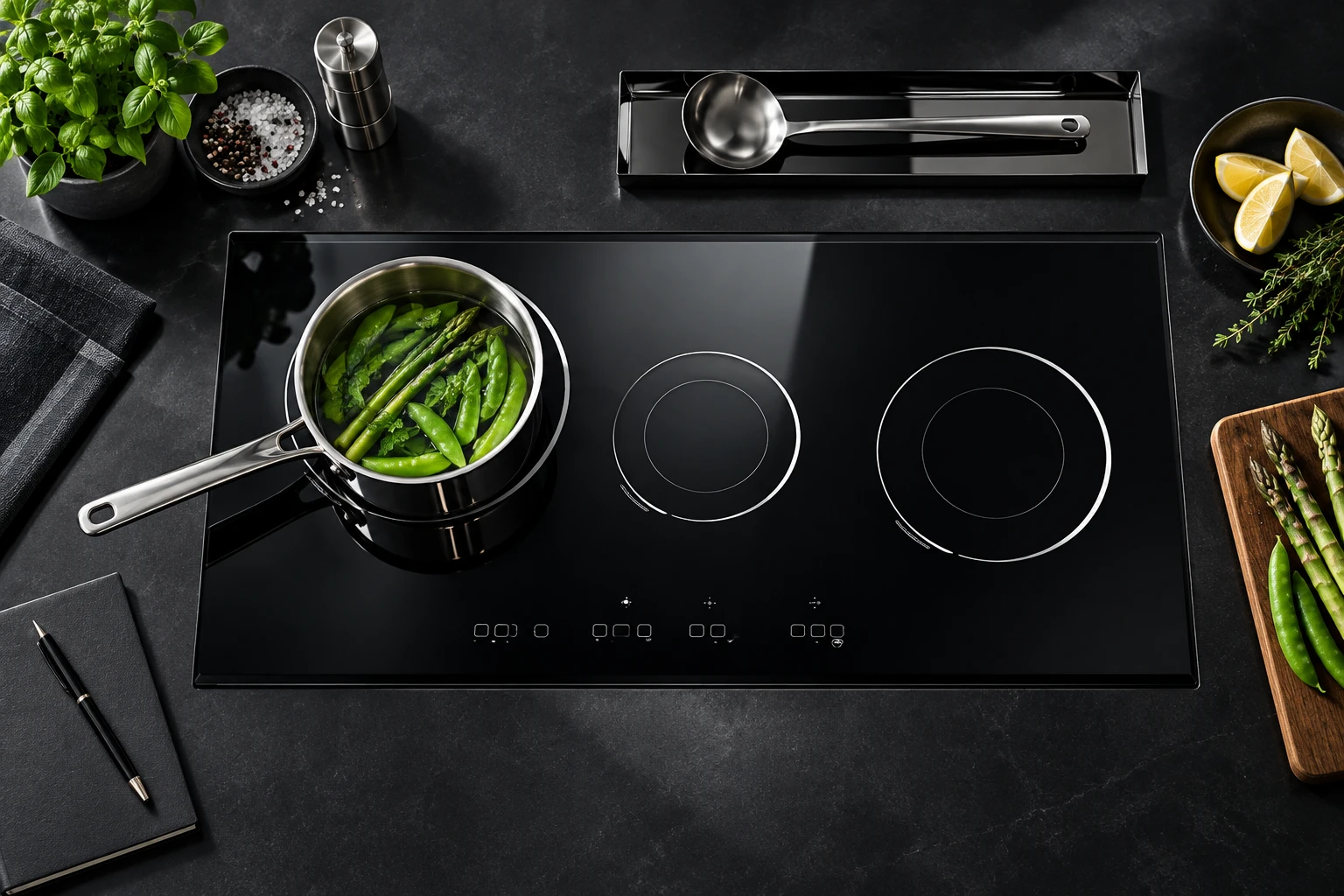
A simmer setting supplies heat for an ongoing recipe step. Keep warm generally describes a convenience mode whose meaning depends on the model. Pause changes active cooking behavior temporarily. These names do not establish equivalent output, food temperature or timing. Read the exact function description before substituting one for another. A setting suitable for holding an already hot dish may not complete a recipe that requires continued gentle cooking.
Our keep-warm function guide explains the separate holding question. If the manual offers a specific simmer function, check its cookware restrictions, activation sequence and cancellation behavior. Do not assume that the symbol measures the temperature throughout the food. For delicate recipes, a thermometer may help where the recipe specifies its use, but it should measure the intended food condition using the instrument’s instructions rather than an inferred temperature of the glass surface.
A hob may manage available power across zones. If the simmer changes when a second pan starts, record the complete configuration before seeking support. Note boost use, the selected zones and any displayed power limitation. The same pan can behave differently under a different multi-zone configuration without showing that the glass has changed. Avoid bypassing appliance settings or changing electrical connections to address a cooking observation.
For a comparison, use a permitted single-zone setup first and then repeat the relevant cooking stage with the second zone active. Stay within the manual and do not deliberately overheat a pan. Keep the observations descriptive: steadier, slower, more vigorous or interrupted, with the circumstances stated. This produces useful support information while avoiding a false conclusion about hidden components.
The Kanger black glass-ceramic cooktop panel is relevant to the cooking surface and its appearance, drawing and assembly requirements. The visible panel alone does not establish the appliance’s low-power control method or a guaranteed simmer temperature. Those depend on the finished system and its validated operation. A supplier photograph cannot show the hidden coil configuration or prove performance with a particular recipe.
For an OEM project, specify the panel drawing and intended controls separately from the cooking-performance acceptance plan. Test representative permitted cookware on the assembled appliance. Record the electronics configuration, software or control revision where relevant, and the cooking task used for evaluation. The black glass-ceramic material overview supports the material discussion; a claim about stable simmering requires evidence from the complete appliance rather than the material name.
U.S. Fire Administration cooking guidance advises attention while cooking and turning the burner off when leaving the kitchen. A gentle setting does not remove that responsibility. Keep combustible items away, make controls accessible and follow the appliance’s hot-surface warnings. Do not touch the glass to judge whether the simmer is correct. The food, cookware and panel can retain heat after the command changes.
If the result remains unsuitable, provide support with the model, zone, cookware description, approximate quantity, recipe stage, selected setting and any error message. Explain whether the issue occurs with more than one permitted pan. A clear record is more useful than saying that every induction hob needs the same low number. Stop and request qualified service when the manual identifies a fault or the surface is damaged.
The neutral educational video below explains induction and cookware interaction, including the difficulties of curved vessels. It provides physical background for pan choice, not a universal simmer chart or instructions for your particular hob.
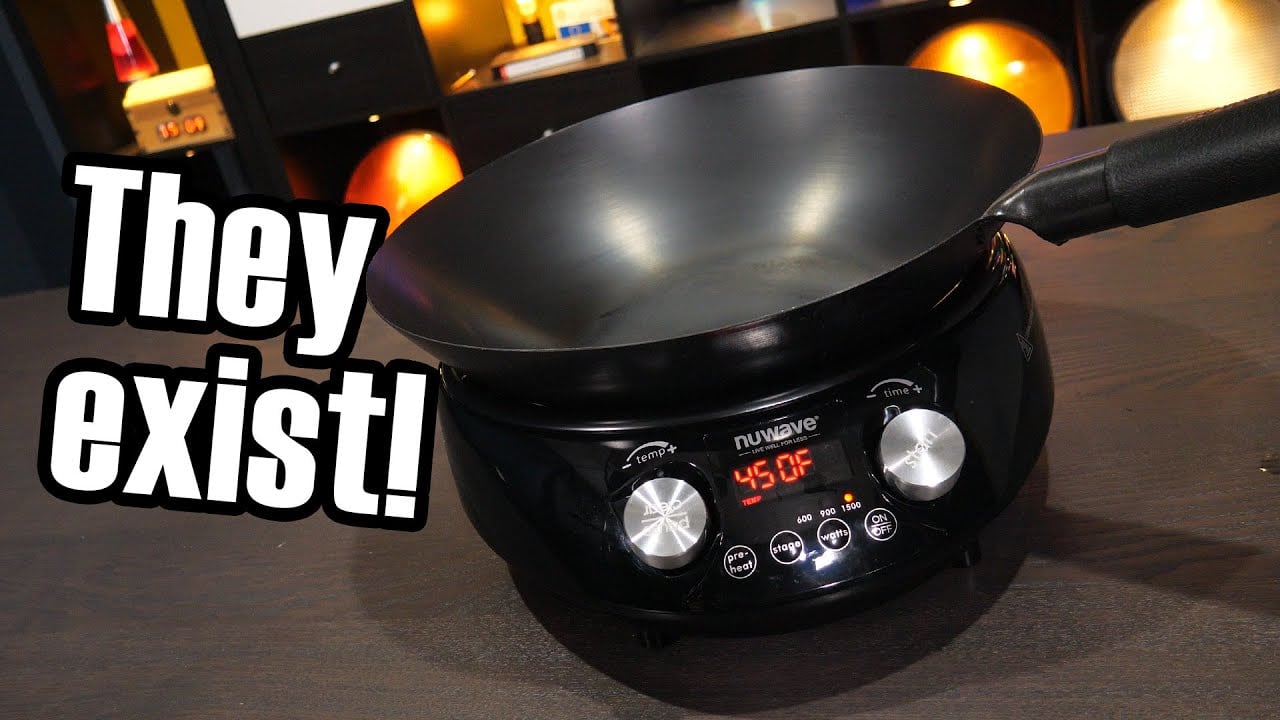
Video: Induction cooking – but what about woks?, Technology Connections. Open the educational video on YouTube.
There is no universal number. Use your recipe and appliance instructions, then adjust while observing the contents in permitted cookware.
No. Check the model’s description. Holding warmth and completing a gentle cooking step can require different conditions.
Not necessarily. Some systems cycle energy delivery. Check the actual cooking response, cookware compatibility and any service messages.
No. Do not touch a potentially hot surface. Follow the recipe and use suitable food-measurement equipment when required.



