 Kanger Glass-ceramic Co., Ltd.
A silicone mat on an induction hob is not automatically safe or compatible simply because the appliance heats magnetically. Before putting any barrier between pan and glass, check the exact hob manual and obtain clear appliance-maker permission for the intended accessory and use. If the maker prohibits barriers, follow that restriction. If permission is unclear, cook without the mat using approved cookware and handling practices. A mat seller’s temperature claim is not approval for an assembled hob, and an induction-only accessory must not be transferred to a radiant cooking zone.
This is a compatibility checklist, not a recommendation to buy a protector. It separates cold covers, countertop trivets and accessories intended for use during cooking. Those products can look similar while having very different permitted uses. None should be treated as a repair for cracked glass or a substitute for correct cookware.
Start with the appliance instructions
Identify the complete model and heating technology before reading accessory listings. A black glass surface can sit above induction or radiant heating. Some kitchens contain different technologies in separate appliances. Appearance, a circular marking or the fact that a mat physically fits cannot establish compatibility.
Read the sections covering cookware, surface protection, accessories and prohibited objects. Where the guidance is unclear, ask the appliance provider whether a barrier is permitted during cooking on that model. Give the accessory’s exact description rather than asking generally whether silicone is heat resistant.
Wolf advises against barriers between cookware and its induction cooktops, identifying performance, detection and barrier-burning concerns. This is a clear model-family example of why universal claims are inappropriate. It is not permission or prohibition issued on behalf of every other manufacturer.
Distinguish three different product jobs
A cold cover is intended to protect or cover an appliance when it is not in use, subject to its instructions. A countertop trivet supports hot cookware away from the hob within its rated use. A cooking protector claims suitability beneath cookware during operation. Sharing the word silicone does not make these functions interchangeable.
Ask exactly when the item may be placed, whether the appliance must be cold, whether controls must remain exposed and when the item must be removed. A storage photograph showing a mat across the whole hob is not evidence that the same position is permitted while cooking.
Keep packaging and instructions together so another person does not mistake a cold cover for an operating accessory. In shared kitchens, an attractive fitted cover can conceal zone markings and make the appliance’s current state less obvious. Clear household practice matters as much as the product description.
| Item or claim | What it does not establish | Evidence to obtain |
|---|---|---|
| Silicone countertop trivet | Permission beneath a pan on an operating hob | Instructions specifically covering that application |
| Full-surface cold cover | Suitability while zones or controls are active | Cold-use conditions and removal requirements |
| Induction protector label | Compatibility with every induction model | Exact appliance permission and accessory instructions |
| Advertised temperature rating | Complete assembly approval or uniform exposure | Rating conditions, limitations and appliance compatibility |
| Scratch-protection claim | Freedom from trapped grit or handling damage | Cleaning, inspection and use instructions |
These are purchasing questions rather than measured product limits. No universal mat thickness, temperature allowance or guaranteed scratch reduction is asserted.
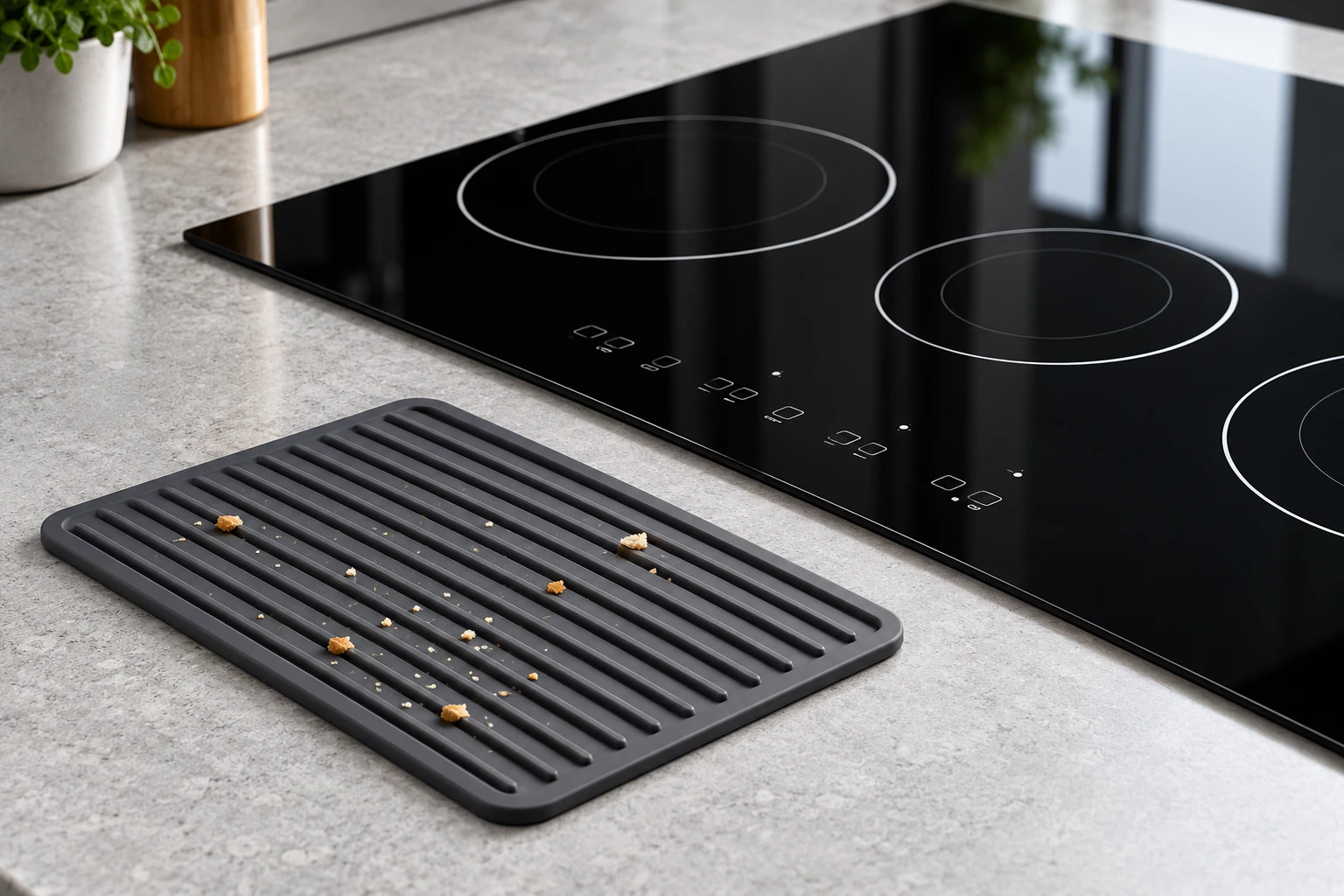
Understand why magnetic heating does not make a mat cold
The US Department of Energy explains that induction creates heat in suitable cookware. The hot pan can then transfer heat to nearby materials. An accessory does not need to be heated directly by the electromagnetic field to experience significant contact heat.
That is why “the hob does not heat silicone directly” is an incomplete compatibility argument. Actual exposure depends on the pan, cooking conditions and the accessory’s construction. A printed temperature figure without test conditions does not describe every point under a hot vessel or how the complete appliance responds.
Do not conduct an improvised high-power empty-pan experiment to see whether a mat survives. Absence of visible melting in a short demonstration is not a validation program. If an accessory is authorised, stay within every condition in both sets of instructions; where requirements conflict, do not use the combination.
Review detection, controls and stable placement
Adding a layer changes the physical arrangement between cookware and appliance. Whether a particular hob continues to recognise a vessel is a system question. A pan that was accepted without an accessory may not behave identically with it. Successful recognition alone also does not prove that the accessory is permitted.
Keep touch controls, status indicators and ventilation areas unobstructed as required by the manual. Do not trim an accessory into a homemade shape, stack several layers or cover controls to stop accidental operation. The appliance’s own documented locking function is the appropriate starting point for control management.
Consider whether the permitted accessory lies flat and whether the vessel is stable. A curled edge, folded section or poorly fitting pad should not be ignored because the material is described as non-slip. Do not force a pan into place or accept instability to obtain scratch protection.
If pan recognition is the original complaint, use the separate pan-detection guide. Do not add accessories as a remedy for a vessel that is already unsuitable.
Scratch prevention begins with clean surfaces and handling
A barrier does not eliminate the need to inspect the cool pan base and clean the glass using the appliance maker’s method. Particles trapped under an accessory can remain unseen. Remove an authorised accessory only when safe, inspect it as instructed and avoid assuming that a covered surface is a clean surface.
Lift cookware carefully instead of dragging rough bases across the glass. Check the cookware instructions for suitable use and do not place a damaged, unstable or contaminated vessel on the hob. For heavy cookware, read the cast-iron handling guide rather than treating a mat as permission for unlimited weight or careless movement.
A protector also does not bridge or stabilise cracked glass. Stop use and follow service guidance for a crack. Covering damage can make it less visible without making the appliance sound. Existing pits, stains and scratches need appropriate identification, not an accessory placed over them.
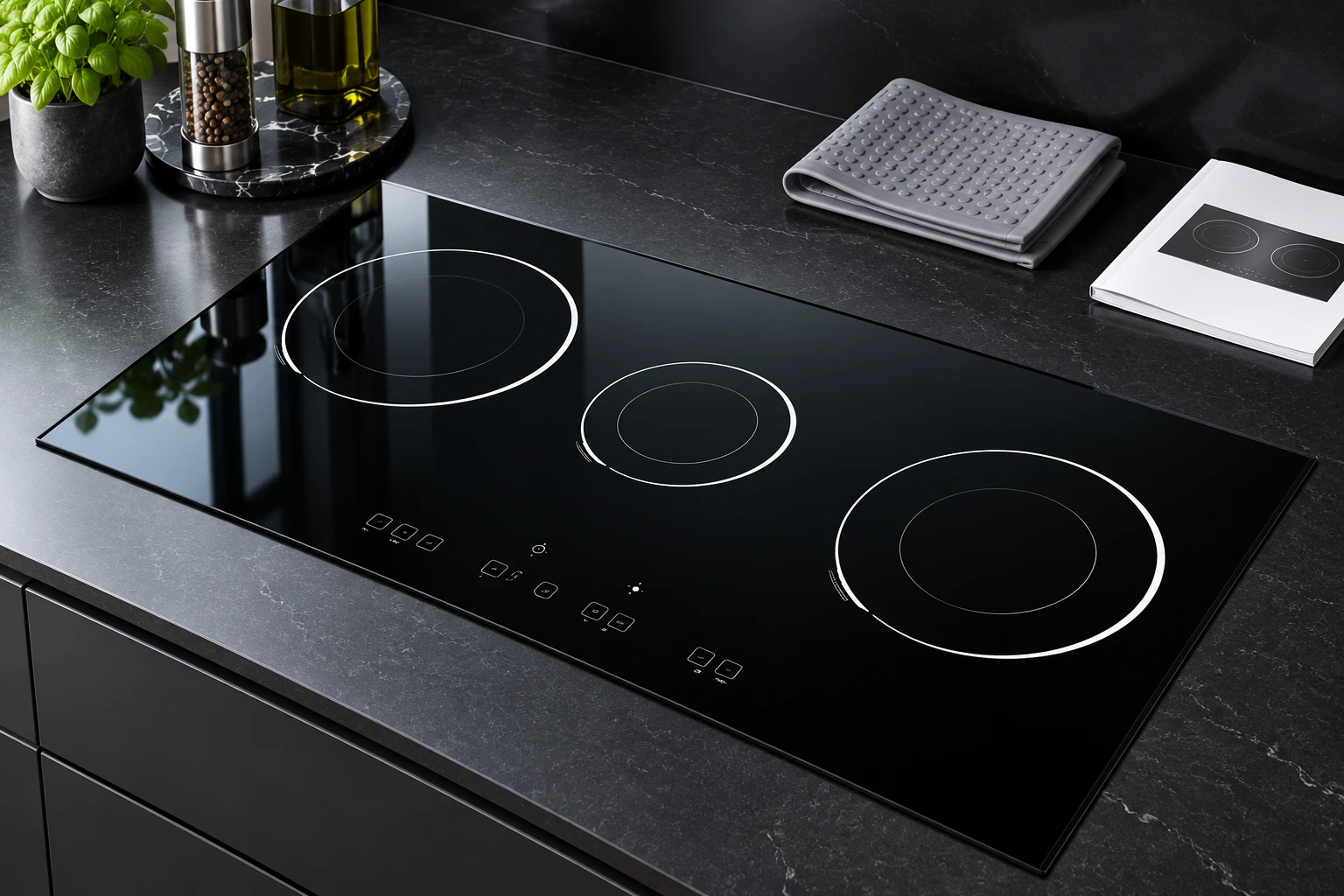
Questions to ask before purchasing an accessory
Request the exact intended heating technology, permitted use stage, construction, care instructions and restrictions. Ask whether the item is intended for continuous cooking, brief contact or only a cold appliance. Keep the answer in writing with the model reference.
Then ask the appliance provider about the proposed combination. The useful question is not “is silicone safe?” but “is this identified accessory permitted beneath this cookware on this model while cooking, and under what conditions?” If the provider declines approval or prohibits barriers, a positive seller review does not resolve the conflict.
Do not interpret a material declaration or unrelated test report as complete hob compatibility. Check the report’s product identification, sample and use conditions if it is being offered as evidence. A certificate for another thickness, formulation or product cannot be assumed to cover the item supplied.
If clear evidence is unavailable, defer the accessory and use the appliance according to its manual. This is a useful purchasing outcome: avoiding an uncertain combination is preferable to conducting the missing validation in a home kitchen.
If a mat has already been used
Turn cooking off normally and let the appliance and cookware become safe to handle. Follow the maker’s instructions for removing and cleaning the accessory. Do not peel an adhered or damaged item from a hot surface by force, apply an unapproved solvent or scrape with a tool chosen at random.
Document any sticking, discoloration, unusual odour, detection problem or changed cooking behavior. Retain the accessory identity and describe the conditions without guessing a material temperature. If there is damage or a warning state, ask the appliance provider what action is appropriate before further use.
For contamination rather than compatibility, consult the melted-plastic decision guide. It is a separate cleaning problem and does not imply that every silicone mark should be treated as plastic or removed with the same technique.
What panel buyers should record
Appliance developers should decide accessory policy with the complete design and intended use in view. Glass geometry, mounting, controls, heating components, cookware and operating instructions interact. Do not place an unverified “mat compatible” promise in a panel purchase order based only on the material name.
Kanger’s black glass-ceramic panel product supplies the relevant component context. Buyers should provide drawings and agreed application requirements, and ask which component data is available. Material supply does not by itself approve a third-party accessory for the finished appliance.
Keep accessory evaluations separate from the induction-versus-infrared panel selection. A familiar-looking surface can conceal a different heating system, making careless transfer of instructions particularly unhelpful. No Kanger accessory test or universal operating limit is claimed here.
Further learning: induction and cookware geometry
The Technology Connections video explains induction cooking through a discussion of woks and energy coupling. It supports understanding of the heating process; it does not approve silicone mats, provide accessory temperature limits or replace appliance instructions.
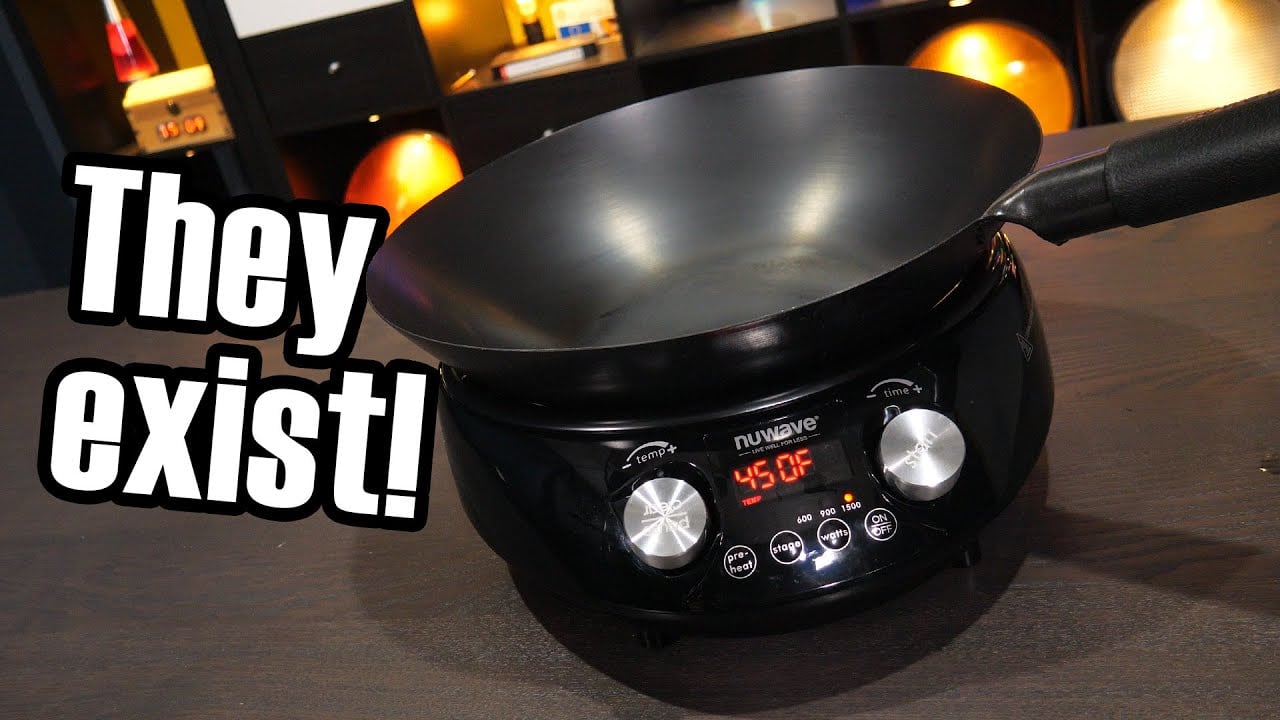
Video: Induction cooking – but what about woks?, Technology Connections. Open the educational video on YouTube.
Frequently asked questions
Can I use any silicone baking mat on an induction hob?
No. Baking or countertop use does not establish permission beneath cookware on an operating hob. Check the exact appliance and accessory instructions before considering the combination.
Does a high advertised temperature rating prove compatibility?
No. A material rating does not establish cookware detection, control access, stable placement or complete appliance approval. Its test conditions and intended application matter.
Can an induction-only mat be used on a radiant glass cooktop?
Do not transfer induction-only accessory instructions to a radiant cooking zone. Identify the actual heating technology and follow the appliance’s explicit restrictions.
Will a mat make cracked glass safe to use?
No. A protector does not repair cracked glass. Stop use and follow the appliance provider’s service instructions instead of covering the damage.


