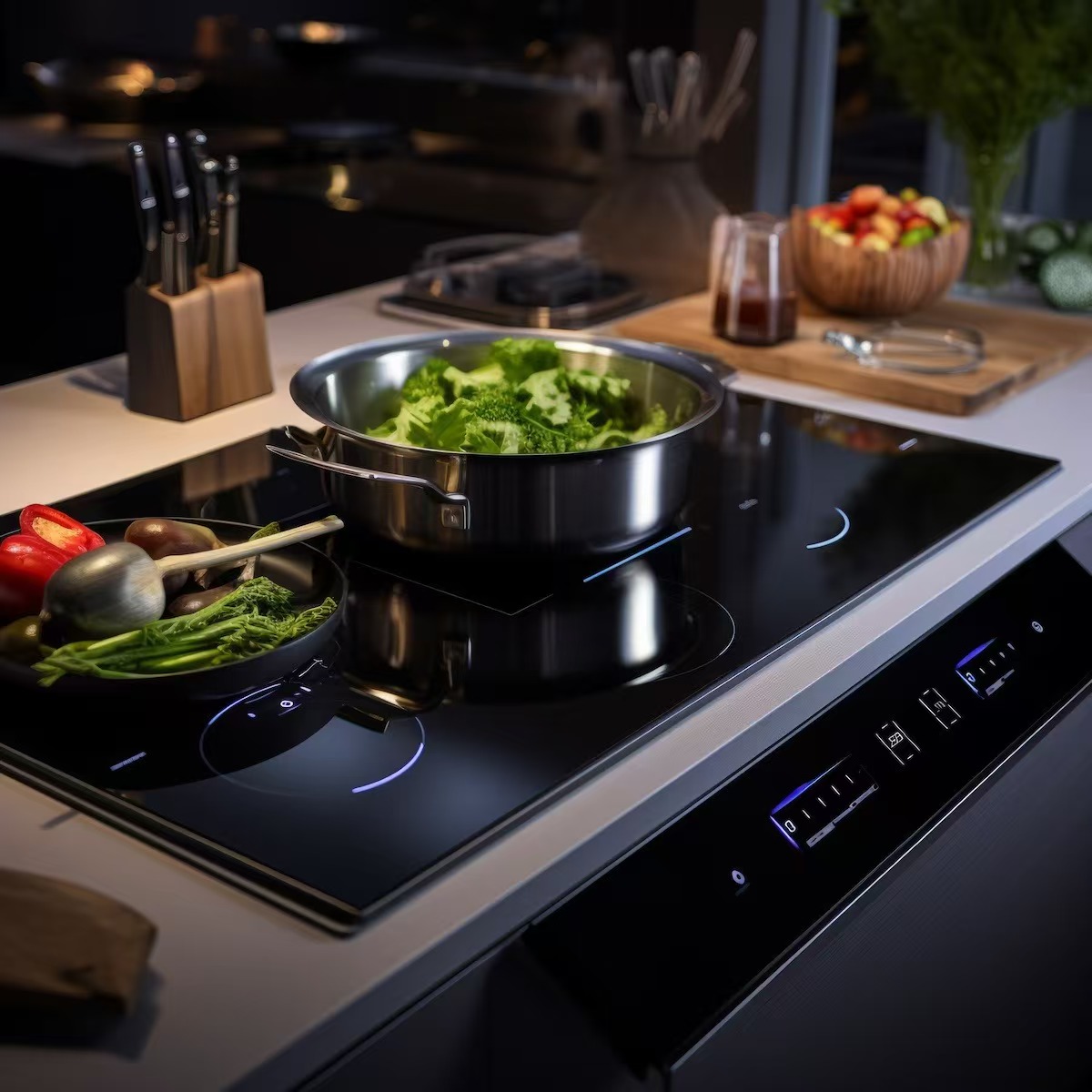
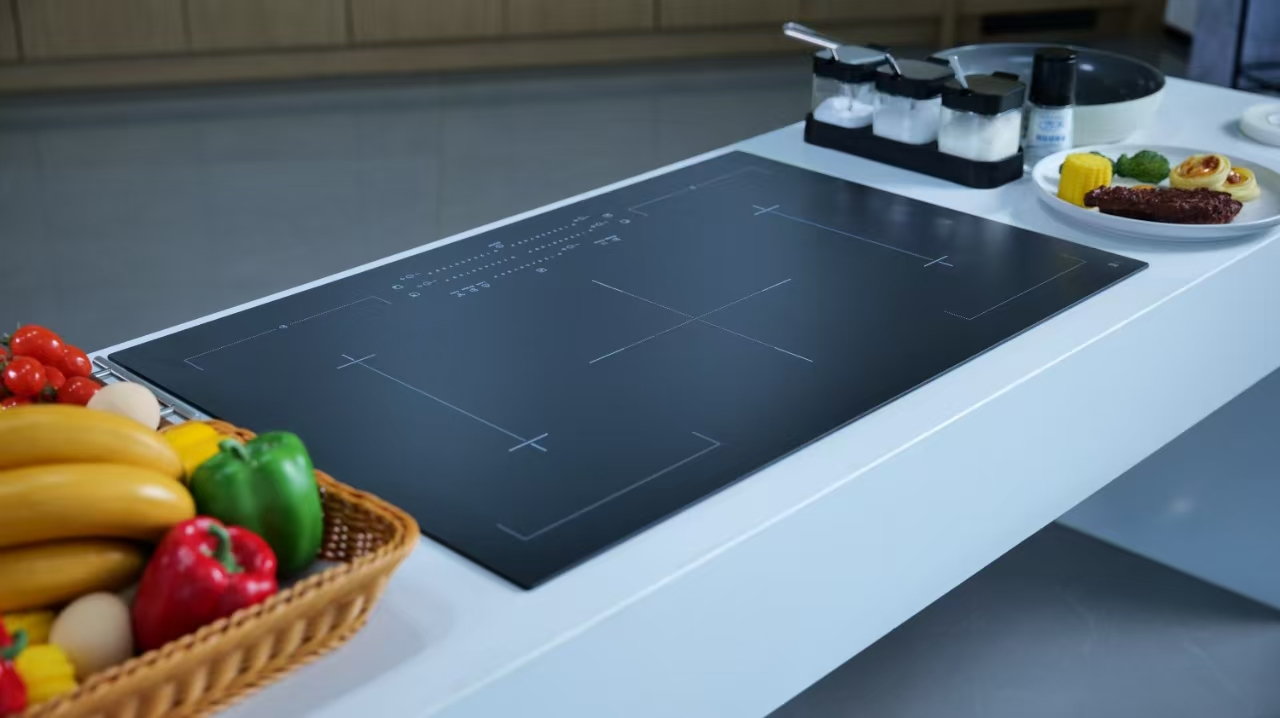
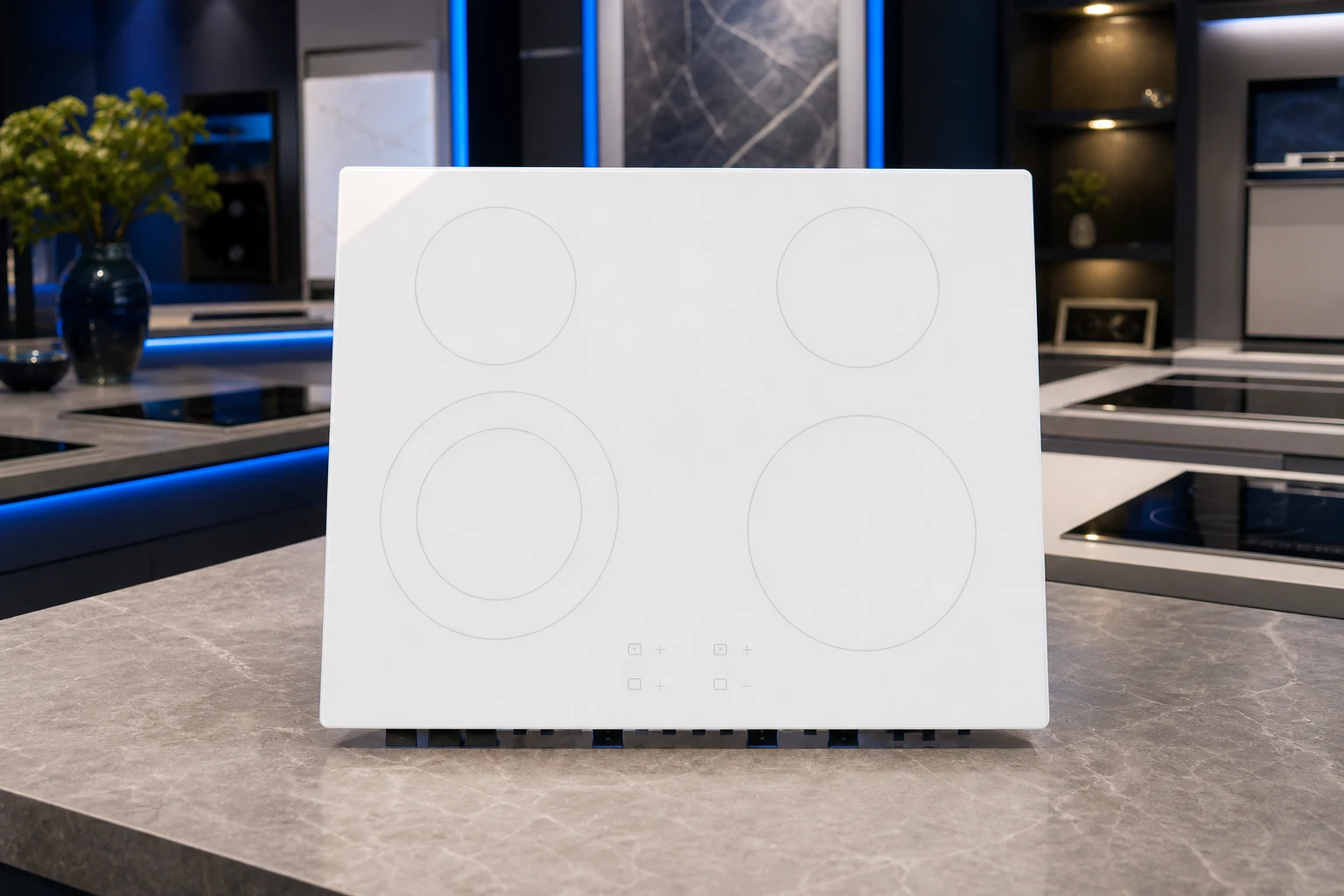
White glass-ceramic cooktop RFQs should define a color reference sample, lot acceptance method, decorative consistency criteria, and MOQ planning fields—then require every supplier to complete the same appearance and quantity table before price comparison.
OEM sourcing teams, appliance industrial designers, and importer QA groups use these fields to keep porcelain-white hob surfaces visually aligned across models and production runs. For durability and thermal fields beyond appearance, see the durable cooktop RFQ checklist. For label normalization, see the RFQ terminology alignment guide. For induction-oriented selection context, see how to choose the right white glass ceramic for your induction hob.
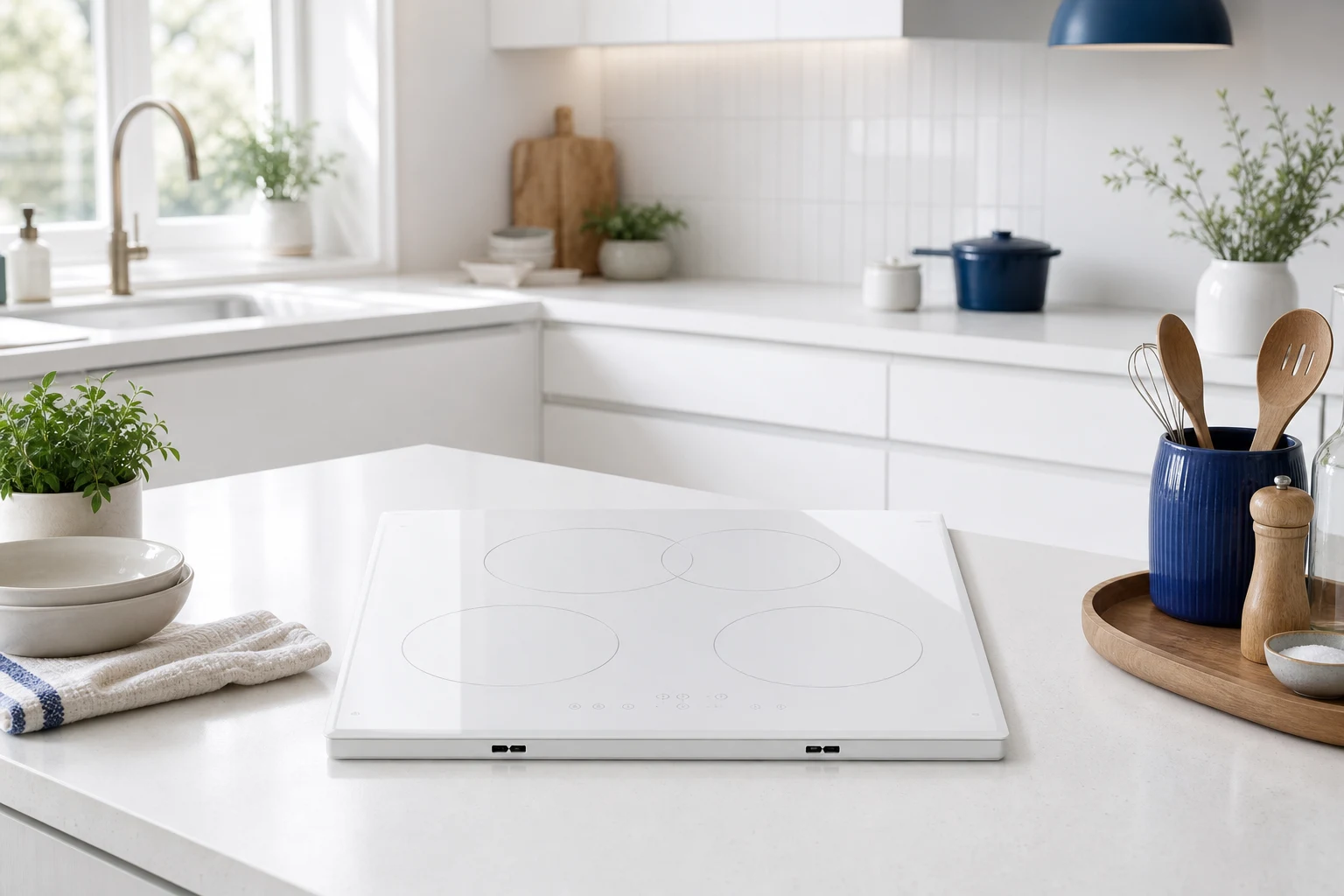
Color lot consistency describes how closely finished white or porcelain-white cooktop panels match an approved reference across a defined production batch. On premium hob programs, buyers care because visible drift between lots—brightness, opacity, gloss, or printed zone graphics—shows on retail floors and in multi-SKU kitchen suites.
SCHOTT’s glass-ceramic materials overview positions glass-ceramic as a cooktop material class with grade-specific properties. White panels share that material family; decorative appearance still needs explicit lot criteria in the RFQ, not assumed “matching white” language from a brochure.
| Term | Meaning in RFQs | Notes |
|---|---|---|
| Reference sample | Approved color/appearance standard | Attach photo, physical chip, or signed sample |
| Lot / batch | Defined production grouping | Supplier must state lot boundary rules |
| ΔE (color difference) | Instrument-based tolerance | Use only if buyer and supplier agree method |
| Visual standard under light | Inspection booth or D65 equivalent | Common when ΔE is not specified |
| Porcelain white | Marketing/descriptive label | Normalize to measurable criteria in Part 4 |
| Decorative consistency | Opacity, gloss, texture, print alignment | Separate from thermal fields |
Important: A supplier quote that says “porcelain white premium surface” without reference sample, lot method, and inspection light conditions is not comparable with a bid that completes the appearance table in Part 4. — Source: Kanger white cooktop product hub
White and porcelain-white cooktops sit in visible, design-led appliance lines. A black panel program may tolerate minor surface variation under zone printing; a white panel exposes lot drift at edges, bezels, and adjacent SKU layouts.
Lot planning also protects reorder programs. When a buyer adds a new hob width or companion oven trim, the white cooktop panel must still match earlier shipments—not only pass thermal tests.
| Factor | Lot-related effect | RFQ action |
|---|---|---|
| Multi-SKU kitchen suites | Panels must match across models | Define cross-model reference sample |
| Zone silk-screen / controls | Print registration affects perceived color | Attach artwork and alignment tolerance |
| Gloss and texture | Changes under lighting | State gloss band or visual standard |
| Reorders after tooling change | New lot may drift | Require sample approval before mass run |
| Mixed supplier quotes | Different white grades | Block price ranking until appearance table matches |
Published Kanger messaging for the white cooktop line cites rapid temperature rise up to 650°C. Treat that figure as line-level marketing context until a drawing-specific datasheet confirms thermal values for your SKU. Color lot planning and thermal validation are separate RFQ blocks.
White cooktop RFQs combine material class, decorative appearance, mechanical drawing data, and planning fields for quantity. Industry datasheets such as Eurokera Keralite transparent glass-ceramic sheets show how suppliers document grade-specific properties. Use those documents as field templates when requesting white cooktop quotes—not as proof of Kanger color or MOQ values.
| RFQ request | Acceptable supplier response | Do not assume |
|---|---|---|
| Color reference sample | Signed sample or agreed ΔE/visual method | All suppliers use the same white grade |
| Lot acceptance criteria | Completed appearance table | “Standard white” matches every brand program |
| Decorative printing | Artwork rev + registration tolerance | Black cooktop print rules copy unchanged |
| MOQ and sample policy | Supplier-declared tiers and lead assumptions | Published blog or listing MOQ without confirmation |
| Thermal fields | Grade-specific datasheet | One temperature band for all colors |
Pair appearance fields with the durable cooktop RFQ checklist when the program also requires thickness, edge finish, and thermal shock evidence.
Start the appearance section with a header line such as “Glass-ceramic cooktop panel — white / porcelain-white — color lot and decorative acceptance per attached drawing.” Follow with a table every supplier must fill in—not optional narrative.
| Field | Example wording | Why it matters |
|---|---|---|
| Material class | Glass-ceramic, cooktop grade, white opacity | Blocks wrong material substitution |
| Color reference | Attached sample ID or ΔE method | Creates comparable acceptance baseline |
| Lot definition | Supplier states batch size and mixing rules | Prevents silent lot blending |
| Inspection conditions | Light source, viewing distance, defect limits | Stops subjective acceptance disputes |
| Decorative elements | Zone print, logo, control legend rev | Aligns print with color review |
| Drawing reference | Rev. letter + outer dimensions | Ties appearance to actual geometry |
| Sample approval gate | Production lot held until buyer sign-off | Protects reorder consistency |
When a buyer lacks instrument tolerances, write “Supplier to propose visual acceptance method under agreed inspection light; bids without completed appearance table are non-conforming.” That wording keeps the RFQ open while blocking vague adjectives.
Use the RFQ terminology alignment guide so “white glass ceramic,” “porcelain white,” and “ceramic glass” map to one material class in supplier responses.
MOQ (minimum order quantity) shapes tooling amortization, lot planning, and sample policy. Kanger does not publish universal MOQ numbers for every white SKU in public marketing copy—so RFQs must request MOQ fields instead of inventing them in procurement documents.
| Field | Example wording | Why it matters |
|---|---|---|
| Target annual quantity | Buyer forecast range | Helps supplier propose viable lot sizes |
| First production quantity | Pilot run vs mass run | Separates sample policy from series MOQ |
| Reorder quantity assumptions | Spares and line extensions | Surfaces whether lots can be mixed |
| Sample requirement | Number of approval samples | Affects lead time and cost |
| MOQ request | Supplier to declare MOQ by SKU/drawing | Keeps numbers supplier-owned |
| Lot mixing rule | Same color reference across splits | Prevents appearance drift at low qty |
| Packaging and inspection level | AQL or inline criteria | Links MOQ to acceptance workload |
Rank price only after suppliers complete the same MOQ and appearance tables—or document accepted deviations in writing. A low bid that assumes a different lot size or sample policy is not comparable.
Several recurring RFQ errors produce appearance drift or MOQ disputes on white cooktop programs:
| Scenario | Recommendation |
|---|---|
| White flat cooktop panel, design-led hob line | White glass-ceramic line + full color lot and MOQ block |
| Black cooktop with zone printing only | Black line + thermal checklist; different appearance priority |
| Transparent fireplace observation window | Transparent line—different duty and appearance table |
| Shaped / concave commercial burner panel | Shaped line + contour drawing; appearance at curved zones |
| Only “white heat resistant glass” wording | Rewrite using Part 4 fields before sourcing |
| Service replacement single panel | Route to spares channel; lot rules may differ from OEM mass run |
Route normalized white cooktop color and MOQ RFQs to:
Use this routing table in sourcing notes:
| Normalized RFQ header | Send to |
|---|---|
| White glass-ceramic cooktop, flat | White cooktop product line |
| Porcelain-white decorative hob panel | White cooktop product line + appearance table |
| White glass-ceramic cooktop, shaped/concave | Shaped cooktop product line + contour drawing |
| Black cooktop variant | Black cooktop product line—different checklist |
| Color/MOQ RFQ without drawing or sample | Hold quote until geometry rev and reference are attached |
For induction-oriented white panel selection before RFQ release, review how to choose the right white glass ceramic for your induction hob. Pair this appearance focus with the durable cooktop RFQ checklist for thickness, edge finish, and thermal document fields.
What is color lot consistency for white glass-ceramic cooktop panels?
It is the agreed method for keeping white or porcelain-white panel appearance aligned to a reference sample within a defined production lot. Require the method—not adjectives—in every quote.
Does white cooktop glass need different lot criteria than black panels?
White programs usually prioritize visible decorative consistency across lots and SKUs. Black programs may emphasize zone graphics and thermal fields first. Request grade-specific appearance tables for each color line.
What MOQ fields should appear in a white panel RFQ?
Ask suppliers to declare MOQ by drawing, sample policy, first-run quantity, and reorder assumptions. Do not embed unpublished MOQ numbers in the RFQ unless the supplier has confirmed them for your SKU.
Can buyers specify a porcelain-white reference without a supplier color standard?
Yes—attach a signed reference sample or agreed visual/ΔE method. “Porcelain white” alone is not a comparable specification across bidders.
How does decorative printing affect color lot acceptance?
Zone graphics, logos, and control legends change perceived color at edges and under lighting. Include artwork revision, registration tolerance, and inspection conditions in the same lot block as the base white surface.
Which Kanger line matches a white cooktop color and MOQ RFQ?
Use the white glass-ceramic cooktop product line entry and attach the panel drawing, color reference, and quantity planning fields from Parts 4–5.