OEM teams should specify concave heat resistant glass panels on one controlled drawing that locks bowl diameter, depth, and radius, flange zones, thickness and edge finish, thermal evidence, and mounting/frame interface—then compare quotes only against that same package.
On a concave glass-ceramic cooktop panel program, those fields turn a vague shape request into a comparable shaped heat resistant glass panel RFQ. The sections below cover bowl geometry fields buyers forget, flange and frame notes that prevent mounting rejects, the documents that keep quotes aligned, and the sibling topics that belong elsewhere.
When the package is ready, route shaped concave programs to Kanger’s special-shaped glass-ceramic product hub.
OEM teams are locking a drawing-controlled concave panel package for quotation and production—not shopping for a shape adjective and not accepting a brochure temperature line as a finished specification.
Procurement and mechanical engineering share the same failure mode on shaped cooktop programs: a supplier returns glossy copy that says “concave heat resistant glass,” while bowl section views, flange datums, and thermal evidence rows are missing. Two quotes then look cheap for different reasons, and the lower price often omitted the hard work.
Treat the RFQ as a configuration control problem. If the drawing revision, heating method, bowl profile, and evidence set are not identical across bidders, price ranking is theater.
Glass-ceramic—sometimes called microcrystalline glass in buyer shorthand—is a lithium aluminosilicate (LAS) material class chosen for near-zero thermal expansion on concave glass-ceramic cooktop panel surfaces. That material context matters because concave panels still see hot bowl centers next to cooler flange lands; confirm the quoted grade rather than inventing a universal temperature rating from marketing headlines.
Put bowl diameter, depth, radius or profile definition, and a section view through the bowl center on the same bowl geometry drawing revision as the outer outline—otherwise the quote is for a verbal “concave” label, not a manufacturable contour.
A top view alone cannot define how deep the bowl is or how the curve transitions into the flat border. On shaped rims, brand technical literature for cooktop glass-ceramic grades documents resistance to zone-to-edge temperature differences and sudden shocks up to 700˚C for CERAN-class materials. Those figures illustrate the material class on a concave rim—they are not a free pass to copy 800℃ or 760℃ claims from unrelated catalogs onto your SKU.
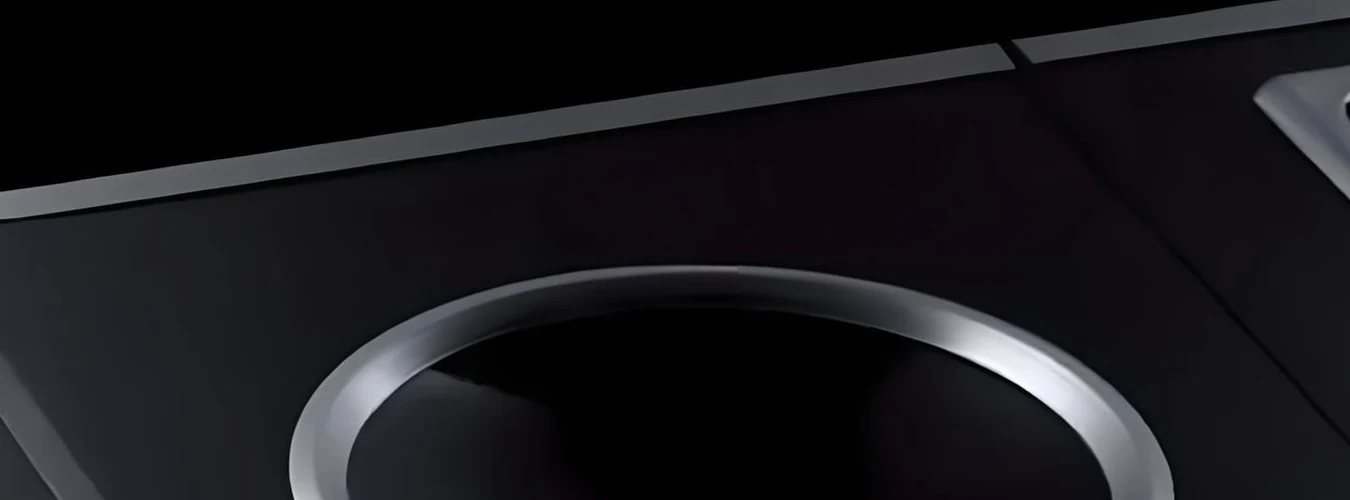
The image shows concave profile context for the bowl block below.
| RFQ field | What to lock on the drawing | Risk if missing |
|---|---|---|
| Bowl outer diameter | Nominal + tolerance at rim | Wrong seat for cookware or burner ring |
| Bowl depth at center | Dimension + profile sketch | Hot-spot or wok stability issues |
| Radius / contour method | Spherical, toroidal, or spline reference | Non-repeatable forming |
| Section view | Through bowl centerline | Plan-view-only quotes |
| Heating method | Induction, infrared, gas-assisted, or mixed | Wrong duty assumptions |
Market OEM sheets for concave commercial glass-ceramic sometimes list diameter bands such as 200 mm through 500 mm alongside 4 mm and 6 mm thickness options. Use that only as market context when you discuss size with newcomers—not as a rule that every program must pick one of those numbers without engineering review.
State flange width, datum, and flatness class on the controlled drawing so mounting clips, gasket lands, and support rings do not fight the bowl contour.
The flange zone / flat border is the flat border land around the bowl where the panel meets the chassis. On concave heat resistant glass panels, buyers often specify the bowl beautifully and leave the flange as “standard flat.” That gap is where edge crush, seal leaks, and clip interference show up in pilot builds.
Write flange notes as controlled features: minimum land width, reference datum for the flat border, and any keep-out bands for print or sensors. If your program also needs induction coil clearance or commercial wok burner envelope sizing, do not silently fold those sibling jobs into this flange block—link to the dedicated guides when that is the open question.
State nominal thickness with tolerance and an explicit edge class for both the bowl rim and the outer perimeter—then deepen thickness detail on a black-panel thickness sibling when that is the only open question on a flat border.
Manufacturing descriptions for Ceran-type glass-ceramic often cite rolled stock near 4–5 mm ahead of crystallization.
Competitor OEM sheets commonly advertise 4 mm and 6 mm cooktop panel options and ask buyers for dimensions, holes, printing, and quantity.
That pattern is useful as a reminder of which fields appear in serious shaped heat resistant glass panel RFQs. It is not a rule that every Kanger concave program must default to one of those two numbers without structural review.

Concave forming can leave different edge stress at the bowl rim versus the outer flange. Call out edge grind or polish class separately when inspection criteria differ. Knob openings, vent slots, and printed legends still belong on the same revision as the bowl profile.
Document clip zones, gasket lands, support-ring interfaces, and fastener keep-outs on the controlled drawing so the mounting / frame interface mates to the chassis without ad hoc shimming.
Mounting is not a footnote after bowl geometry. A shaped panel RFQ should show where clips engage, where the gasket compresses, and which surfaces must stay unprinted. If the frame assumes a flat rectangular land but the drawing omits land width, assembly teams improvise—and suppliers quote different assumptions.
Add a simple interface table to the drawing package when multiple teams review the RFQ:
| Interface | Drawing note | Assembly risk if vague |
|---|---|---|
| Clip / bracket zone | Width + offset from outer edge | Edge chip under load |
| Gasket land | Flatness + width | Steam or grease ingress |
| Support ring | OD/ID + height | Bowl rocking |
| Fastener clearance | Hole pattern + edge distance | Crack initiation |
Request the quoted grade’s datasheet rows plus any appliance-standard thermal evidence that references the same drawing revision—not marketing slogans alone.
For CERAN HIGHTRANS® eco, published technical notes cite conductivity near 1.6 W/(m·K) and EN 60335-2-6 thermal-shock compliance for that grade line. Mirror that structure on your RFQ: list the continuous-use, peak, shock, and conductivity fields you need answered for the named grade.
From the field: Community threads on ceramic viewing glass repeat that ammonia-based cleaners can etch the surface and that manufacturer guidance often calls for ammonia-free products (Hearth.com — keeping glass clean).
That language shows why verbal “concave” is not a controlled spec—field teams need top views, section views, and flange datums, not shape adjectives alone.
| Document | Pass | Fail |
|---|---|---|
| Grade datasheet for quoted material | Named grade + thermal rows | Generic brochure only |
| Drawing / artwork revision ID | Same rev on both quotes | Missing or mismatched rev |
| Thermal-shock / ΔT evidence scope | Method or standard named | “High temperature” slogan |
| Forming + inspection notes | Bowl/flange criteria stated | “As sample” with no notes |
Those figures illustrate the material class. They are not a free pass to copy 800℃ marketing lines from product pages onto your SKU without a grade-tied datasheet for the quoted lot.
Keep concave induction coil interface clearance work and commercial wok burner sizing out of this heating-agnostic concave RFQ, or you will compare prices for different components.
Concave shape alone does not prove which heating interface or burner envelope applies. A panel that looks identical in a gallery can still carry the wrong coil clearance notes, the wrong wok-foot contact definition, or the wrong duty evidence.
| Stop condition | Better route | Why |
|---|---|---|
| Need induction coil clearance + bowl coupling | Concave induction OEM guide | Coil interface dominates the RFQ |
| Need commercial wok burner / wok-foot sizing | Commercial wok concave sizing guide | Burner envelope is the open decision |
| Still choosing flat vs concave platform | Flat or concave cooker plates guide | Geometry gate comes first |
| Flat induction heat-duty only | Heat resistant induction glass panels guide | No bowl profile on drawing |
If a supplier offers one price for “concave glass-ceramic, any cooker,” ask which heating technology and drawing revision that price assumes. Silence on those two fields is a red flag.
Route shaped concave programs through Kanger’s shaped glass-ceramic product route — shaped glass-ceramic concave heat resistant panels — with the controlled drawing package attached. Missing bowl, flange, or frame fields still block a fair quote even when the hub page is open.
The public hub positions custom molded shaped glass-ceramic with high infrared transmittance and routes drawing-led enquiries for curved cooktop and cookware blanks. That matches the RFQ package in this article when bowl geometry, flange zones, thickness, edge finish, thermal evidence, and frame interface travel together.
Not recommended when: the program is flat-only; the only open question is induction coil clearance (use the concave induction sibling); the RFQ is commercial wok burner sizing without a general concave panel spec (use the wok sizing sibling); or the need is white, transparent fireplace, borosilicate oven, or tempered appliance glass rather than shaped cooktop glass-ceramic.
Following hub review, attach the controlled package when you reach Contact Kanger. Enquiry mechanics stay outside this article so the product-fit recommendation stays the focus.
Lock bowl diameter, depth, radius/profile, section view, flange zones, nominal thickness with tolerance, edge class, heating method, mounting/frame interface notes, and the thermal evidence set tied to one drawing revision.
Bowl geometry defines the concave contour and flange transition. Coil clearance defines induction coupling space under the bowl. Use the concave induction OEM guide when coil interface is the open decision.
Specify flange width, datum, flatness class, clip zones, gasket lands, and support-ring interfaces on the drawing. Vague “standard flat border” language hides the land width assembly needs.
Market listings often show 4 mm or 6 mm options, while Ceran-process notes reference roughly 4–5 mm rolled stock—state your program nominal and tolerance after structural review instead of copying a competitor default.
Require a named grade datasheet with continuous-use, peak, and shock rows plus any EN 60335-2-6 or equivalent thermal-shock language tied to that grade. Marketing slogans without a grade are not enough.
Not safely without splitting heating-method assumptions. Zone prints, emitter maps, and duty evidence differ when the heating interface changes. State the heating method on the RFQ and use technology-comparison siblings when the split is still open.
Use the special-shaped customized ceramic glass cookware product line for drawing-led concave heat resistant glass panel programs, then contact Kanger with the controlled package attached.