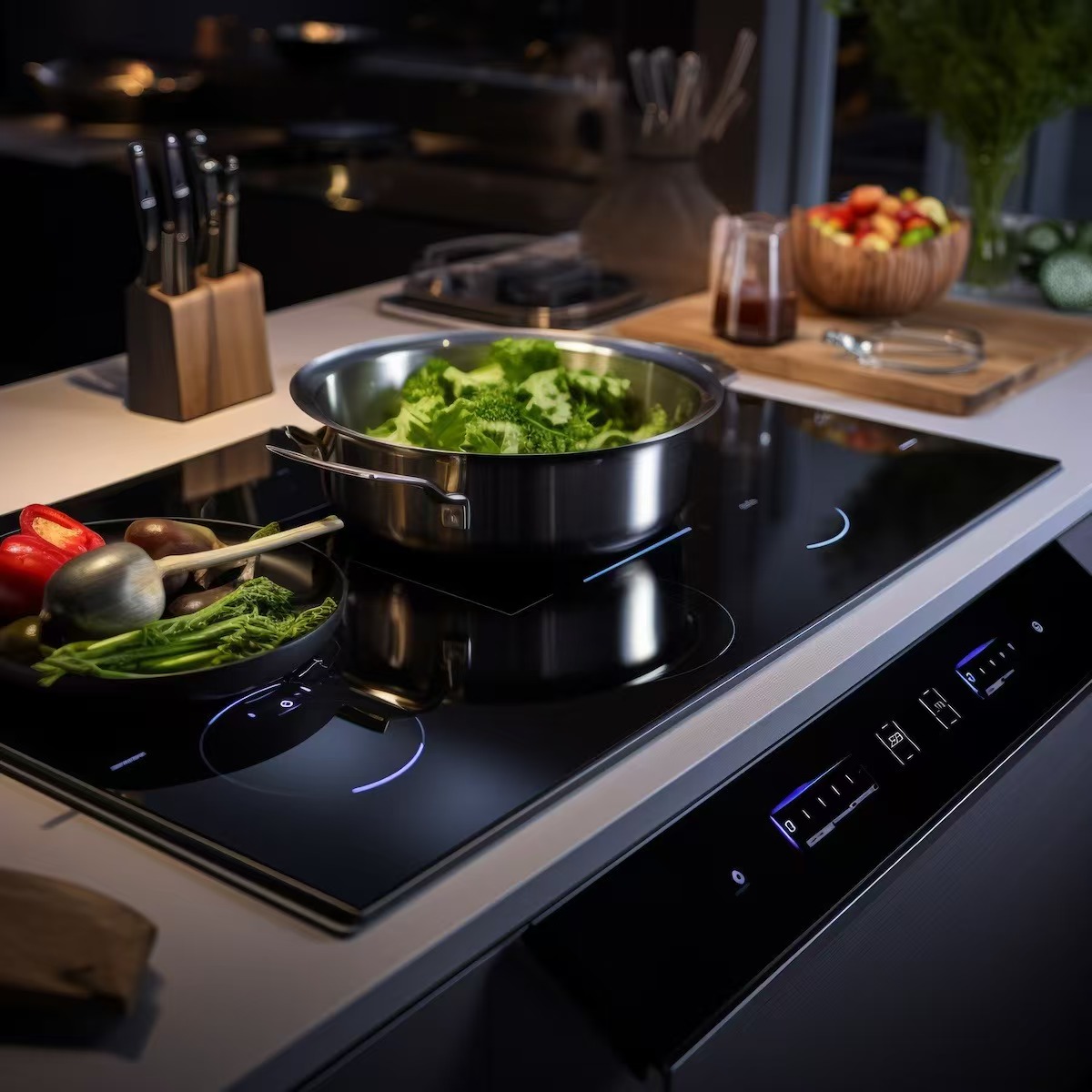
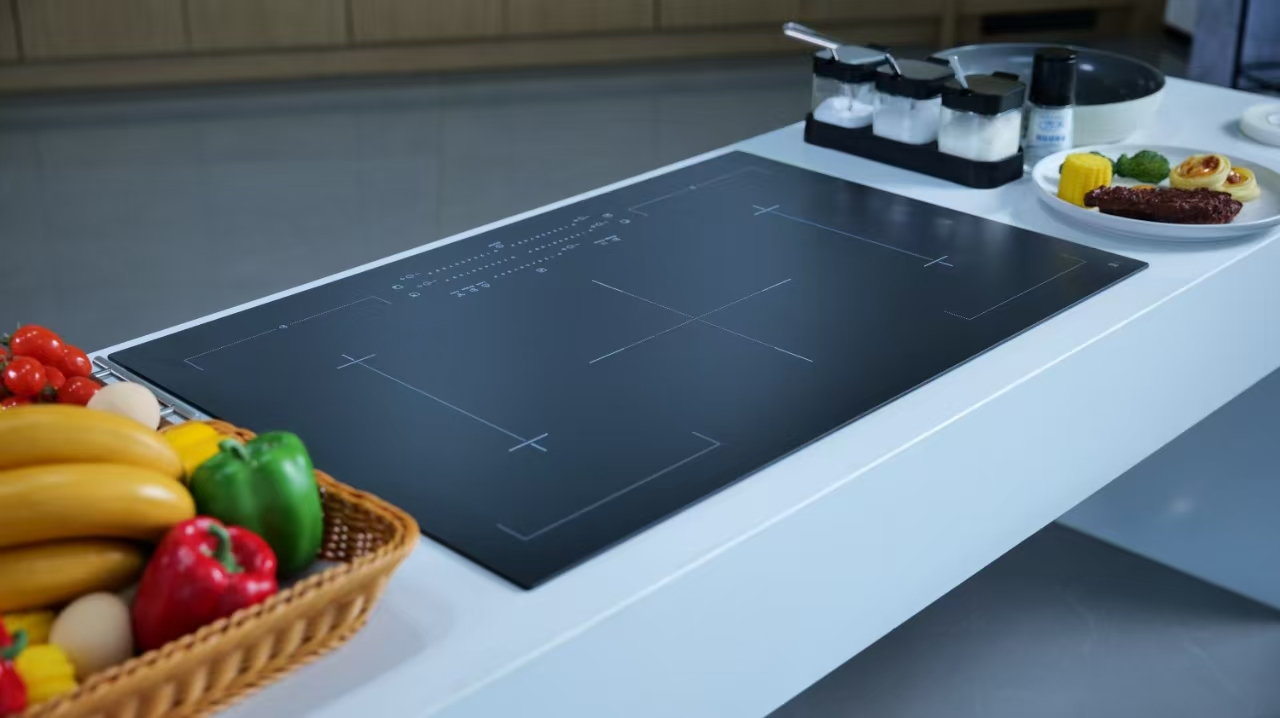
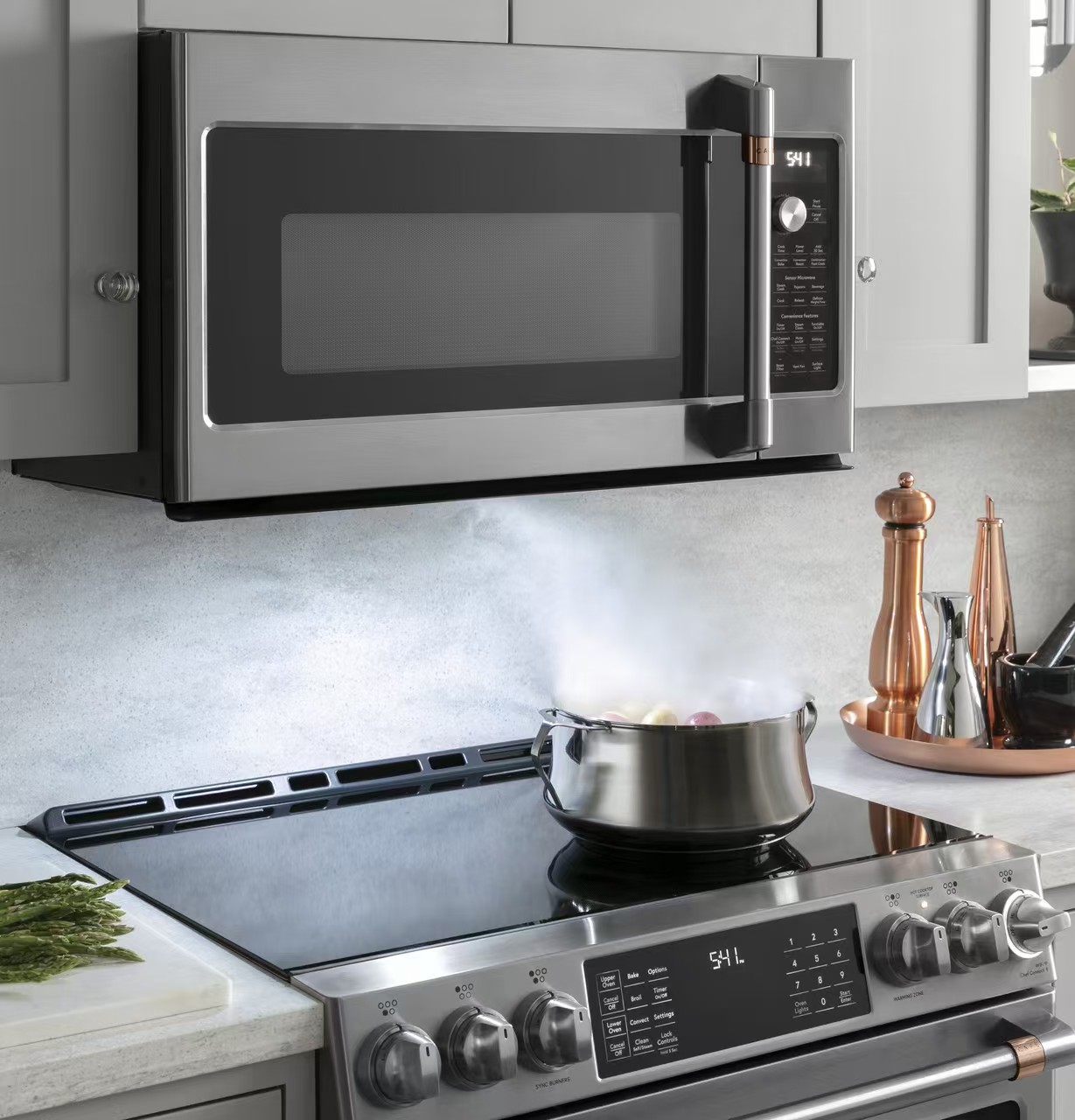
Sugar on a glass cooktop needs the spill procedure for the exact appliance, especially when syrup, jam or another sugary mixture has reached a hot cooking surface. Some glass-ceramic manuals treat sugary spills as an exception to routine cleaning because waiting can allow permanent surface damage. That does not justify reaching across hot cookware or improvising a blade technique. Switch off the affected cooking zone, keep people clear and follow the model’s specified protective measures and tools. If you cannot do that safely, stop and contact the manufacturer rather than experiment.
A few dry grains on a cool, unused surface are a different situation from boiling jam that has spread around a pan. Record whether the zone was operating, whether the material is still hot and whether the spill has reached controls, edges or openings. Do not use your finger to establish the temperature or to decide whether a sticky patch is removable.
Also identify the appliance. Glass-ceramic induction and radiant cooking surfaces can look similar, but the model’s care instructions decide the procedure. A guide for removing sugar from a metal saucepan is not automatically appropriate for the glass below it. Advice that combines all stovetops into one recipe often omits this important distinction.
Find the relevant manual before starting a cleaning attempt. Search under cleaning, sugary spillovers, melted materials or glass-surface damage. The GE Appliances manual finder is one example of a model-specific documentation service. Use the equivalent resource for your own appliance and keep the correct manual available.
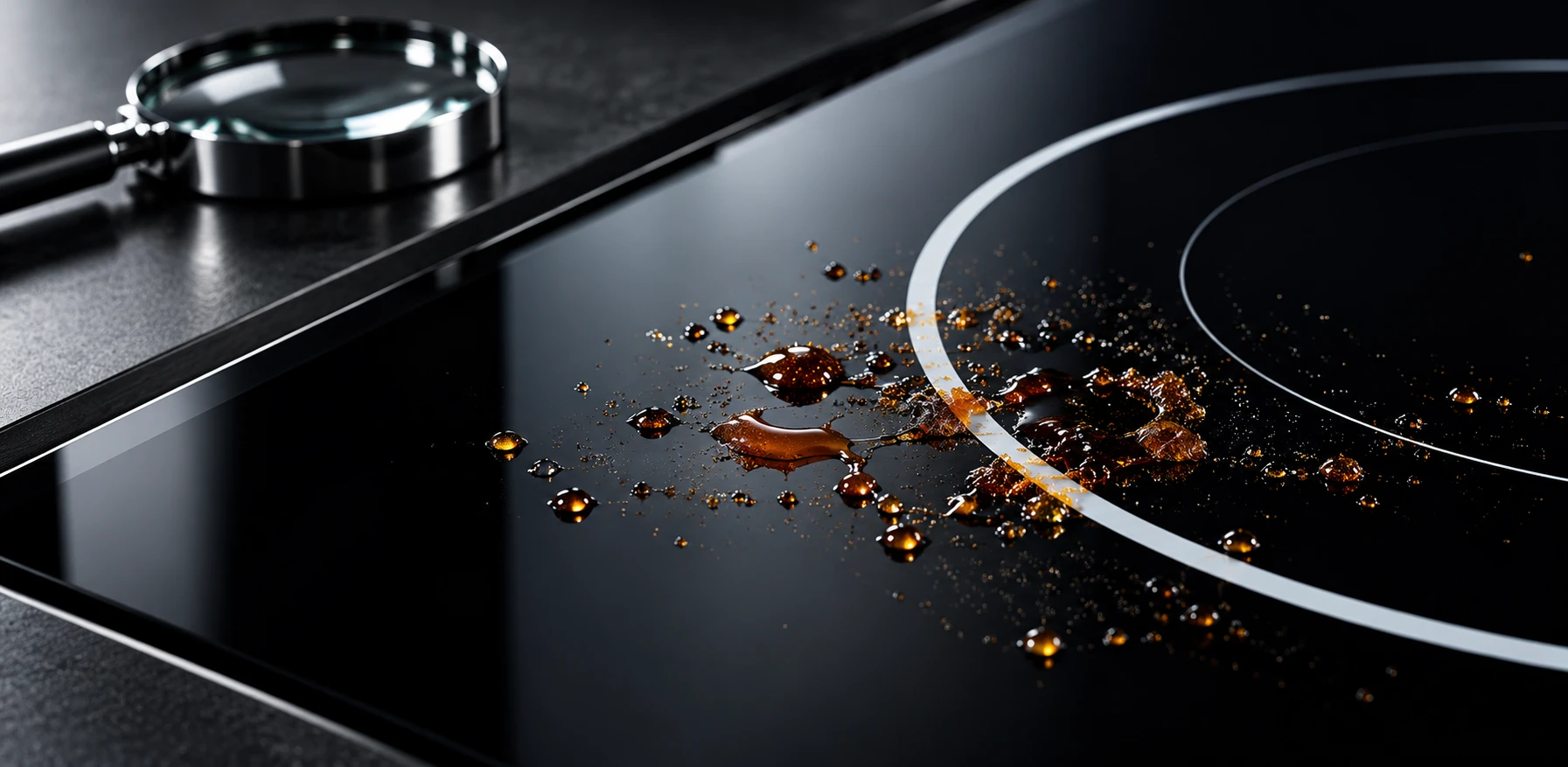
Routine care often begins with a cool surface, but special spill instructions can differ. A GE Appliances glass-cooktop care document identifies sugary spillovers as a potential cause of surface pitting and gives a specific removal procedure. That is evidence for checking the exception, not permission to apply an old manual’s exact method to every current hob.
The important decision is the match between the appliance and its procedure. Check the required equipment, protection, surface condition and sequence. If you do not have the specified tool or cannot reach the spill safely, seek advice. A quick action that creates a burn or chips the surface is not a successful cleaning result.
Do not invent a universal waiting time, scraper angle or reheating setting. Those details need to come from the applicable instructions. Likewise, do not present an internet explanation of sugar chemistry as proof that a particular patch has damaged the panel. The spill history and the actual surface need assessment.
| What you observe | What remains uncertain | Appropriate next step |
|---|---|---|
| Dry sugar on a clearly cool, unused surface | Approved routine cleaning material | Follow the model’s ordinary care instructions without grinding particles into the glass |
| Hot sugary mixture around cookware | Safe access and special spill procedure | Switch off the affected zone and follow the exact manual if it can be done safely |
| Hardened residue with unknown history | Whether reheating or a particular tool is allowed | Ask the maker before improvising a removal method |
| Depression, missing material or crack after cleaning | Surface condition and appliance safety | Keep the affected appliance out of use and obtain qualified guidance |
This checklist separates situations. It does not replace emergency instructions or establish a safe working temperature.
Heating a sugary food changes more than how wet it looks. Water can leave a solution, and further heating can change its color and composition. The ACS Reactions educational episode linked below discusses concentration and browning in syrup production. These general processes explain why a spill may not behave like plain water, but they do not provide a recipe for cleaning an appliance.
Brown color alone cannot tell you whether a patch is residue, a mark left after residue removal or missing glass. Nor does a pale patch establish that sugar was the only cause. Avoid claims that every sugary spill chemically etches every glass panel in the same way. Product composition, exposure and appliance instructions matter, and a photograph seldom supplies the full history.
In a service conversation, describe observations before conclusions. For example, report that jam spilled during cooking, the affected zone was switched off and the approved cleaning method left a visible depression. That is more useful than asserting that the panel has failed a particular material test when no such test was performed.
Do not cycle through abrasive powders, metal tools and solvents just because one online comment recommends them. The surface can acquire additional marks, and the service team may then struggle to separate the original condition from later cleaning damage. Record what has already been used, including the type of cloth, cleaner and tool.
Do not reheat hardened sugar simply to make removal easier unless the appliance maker gives the relevant instruction for that situation. A hot sticky material can be difficult to control. Avoid flooding a hot surface with water or transferring a pan-cleaning method to an installed cooking panel without checking the manual.
A separate guide covers melted plastic on a glass cooking surface. Keep the material identities separate: a clear, sticky deposit is not automatically sugar, and an unknown melted object should not be treated as food residue.
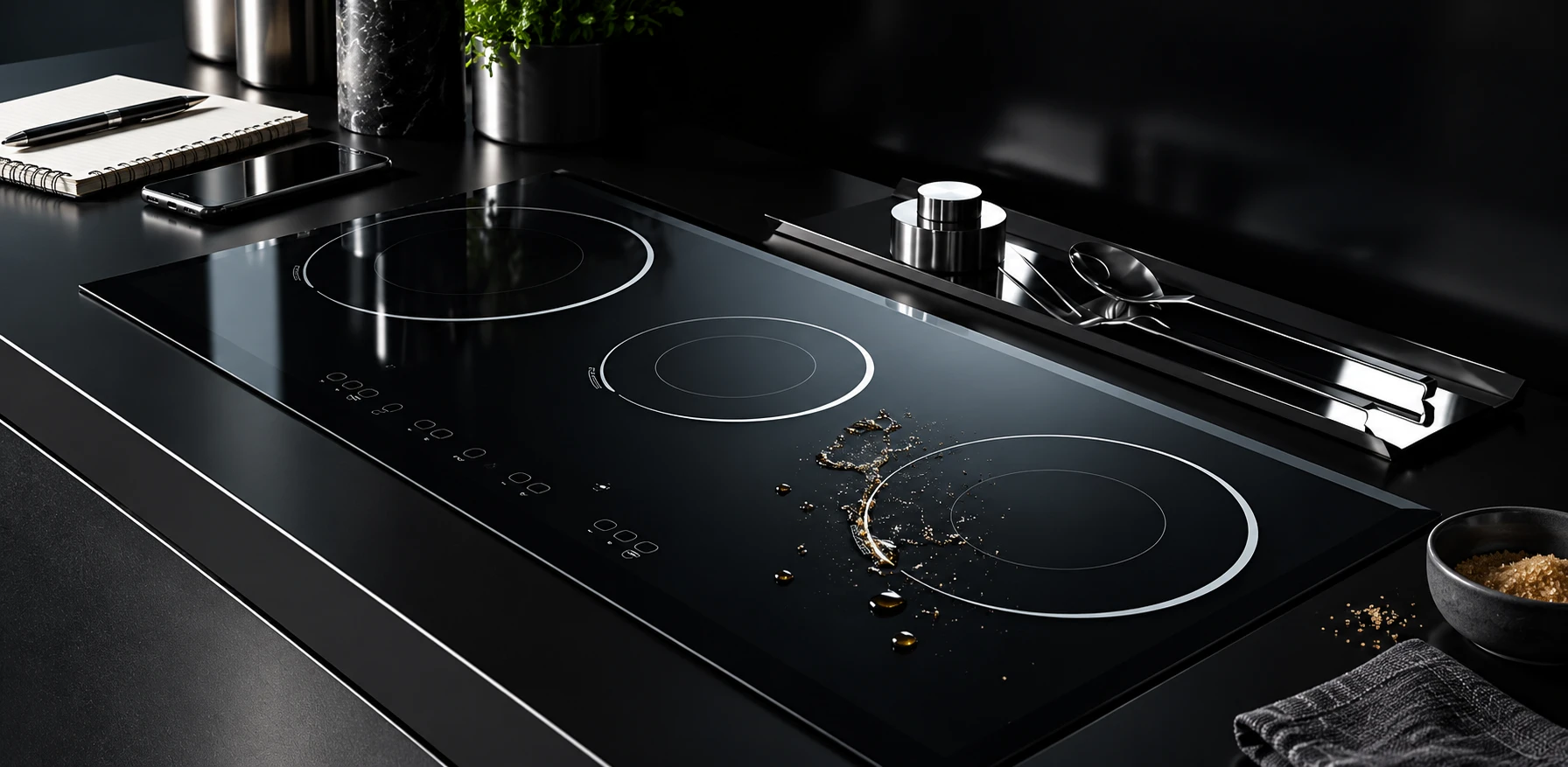
After the required procedure and cooling, view the surface under ordinary and angled light without scraping it further to prove a point. Photograph the whole zone and a close view with a recognizable reference for scale. Do not place a ruler on a suspect hot surface. A service team can advise which additional photographs are useful.
If the material is gone but a depression remains, ordinary polishing is not a way to restore the original panel. The article on pitting versus removable residue explains that distinction. Do not fill a missing area with resin, paint or another household repair material.
A visible crack needs separate attention. GE Appliances’ cracked-cooktop guidance illustrates why an operating appliance should not be assumed safe merely because a burner can still turn on. Follow your model’s shutdown and service instructions rather than conducting another cooking test.
Include the model number, the affected zone, the food involved and the approximate sequence of events. State whether the surface was hot, whether the spill cooled before removal and which manual section you followed. If a temperature was never measured, say that; do not substitute the power-setting number for a surface temperature.
Attach the original photographs and keep a list of cleaning products and tools already used. Separate an observation such as a new visible mark from an assumption about its cause. Ask whether the appliance should remain unused, whether an inspection is needed and what replacement or service options apply.
For a rental property or shared workplace, make the record available to the person responsible for the appliance. A verbal message that the glass looks clean can omit the more important fact that the surface may have lost material. Clear handover prevents someone else from unknowingly continuing use before the issue has been assessed.
Choose cookware and batch sizes that follow the appliance and recipe instructions, and stay attentive when cooking foods likely to foam or boil over. Keep the work area arranged so the correct care information and approved tools are accessible without reaching over a hot pan. Planning ahead is especially useful for jam, syrup and confectionery tasks.
Do not protect the surface with an unapproved paper sheet, mat or cover during cooking. That introduces a separate accessory question. After a spill, do not cover a suspect area with another pan so the mark is less visible. Resolve the surface condition before returning the appliance to ordinary use.
The Kanger black glass-ceramic panel family relates to the underlying cooking-surface material. A material description alone cannot promise that every spill is harmless. The assembled appliance program should connect its selected panel, approved care method and user instructions.
For a supplier review, request the relevant documentation and define who approves the final care wording. Keep sample identity and panel drawing revisions traceable. If testing is needed, agree the method and acceptance criteria with the responsible technical team; do not turn a staged illustration or a household observation into a claimed test result.
For broader material context, see the ceramic cooktop glass overview. Material identity, appliance approval and the care procedure are separate parts of the decision.
ACS Reactions’ episode on maple syrup explains concentration and browning during heating. It supplies background for the residue discussion, not instructions for removing hot sugar or validating a damaged hob. The model-specific care and service guidance remains the authority for the appliance.

Video: How Do They Make Maple Syrup?, Reactions. Open the educational video on YouTube.
Check the exact manual. Some glass-ceramic instructions specify a special procedure for sugary spills, with required protection and tools.
Do not improvise reheating. Ask the appliance maker for the procedure applicable to the existing residue and model.
No. Color alone cannot distinguish residue, a remaining mark and missing surface material.
Do not treat missing glass as removable dirt. Stop further abrasive attempts and obtain qualified service guidance.