Canning on a glass top stove is suitable only when the exact appliance and canner instructions permit the combination and the required process can be maintained. A glass surface that handles everyday cooking is not automatically approved for a loaded canner. Check the stove model, permitted canner base size, loaded weight, heating method and canner instructions before preparing food. If approval is unclear, choose a manufacturer-approved alternative rather than experimenting with a full batch. This guide explains the equipment decision; it does not replace a tested preservation recipe, pressure-canner instructions or advice from your local food-preservation extension service.
A smooth black surface can cover radiant heating elements or induction coils. The similar appearance does not mean the appliances deliver heat in the same way, have the same supporting structure or accept the same cookware. The visible glass-ceramic panel is one component of an assembly that includes supports, controls, sensors and installation clearances. A material description alone cannot establish the approved operating conditions of that assembly.
Water, jars, food, the canner and its rack all contribute to the load. Heat must also reach the vessel reliably throughout the process. A canner may fit physically yet be unsuitable because its base, weight or heat requirements conflict with the stove manual. Conversely, an appliance whose manual allows a particular canning arrangement should still be used only within those specific limits.
The National Center for Home Food Preservation guidance on boiling-water canners explicitly directs readers to check the range manufacturer’s suitability advice and recommended canner size before using a smooth top. Treat that check as a prerequisite, not a final detail after buying equipment.
Collect the stove model number from an accessible label or existing paperwork without moving a connected appliance. Find its actual use-and-care manual, not a manual for a similar-looking range. Do the same for the canner. If either document excludes the intended combination, stop there. If the language is ambiguous, ask the relevant manufacturer for clarification that identifies both models.
| Decision | Evidence to obtain | Reason to stop or change equipment |
|---|---|---|
| Appliance permission | The exact manual allows the intended canning method | Prohibited use or no clear approval |
| Canner compatibility | The canner instructions accept this heat source | Excluded glass surface or induction use |
| Base and zone fit | Actual base dimensions meet the appliance limits | Unapproved overhang, ridged base or unstable contact |
| Loaded mass | Combined vessel, water, rack, jars and food fit stated limits | Unknown rating or load above the permitted value |
| Process continuity | Approved equipment can maintain the tested process requirements | Loss of required boiling or pressure |
| Handling | A clear, stable route permits safe lifting and placement | Need to drag a heavy vessel across the panel |
These are qualitative acceptance questions, not universal engineering limits. Do not substitute a number copied from another brand’s support page. For the difference between a material claim and an appliance rating, see our glass cooktop weight-limit guide.
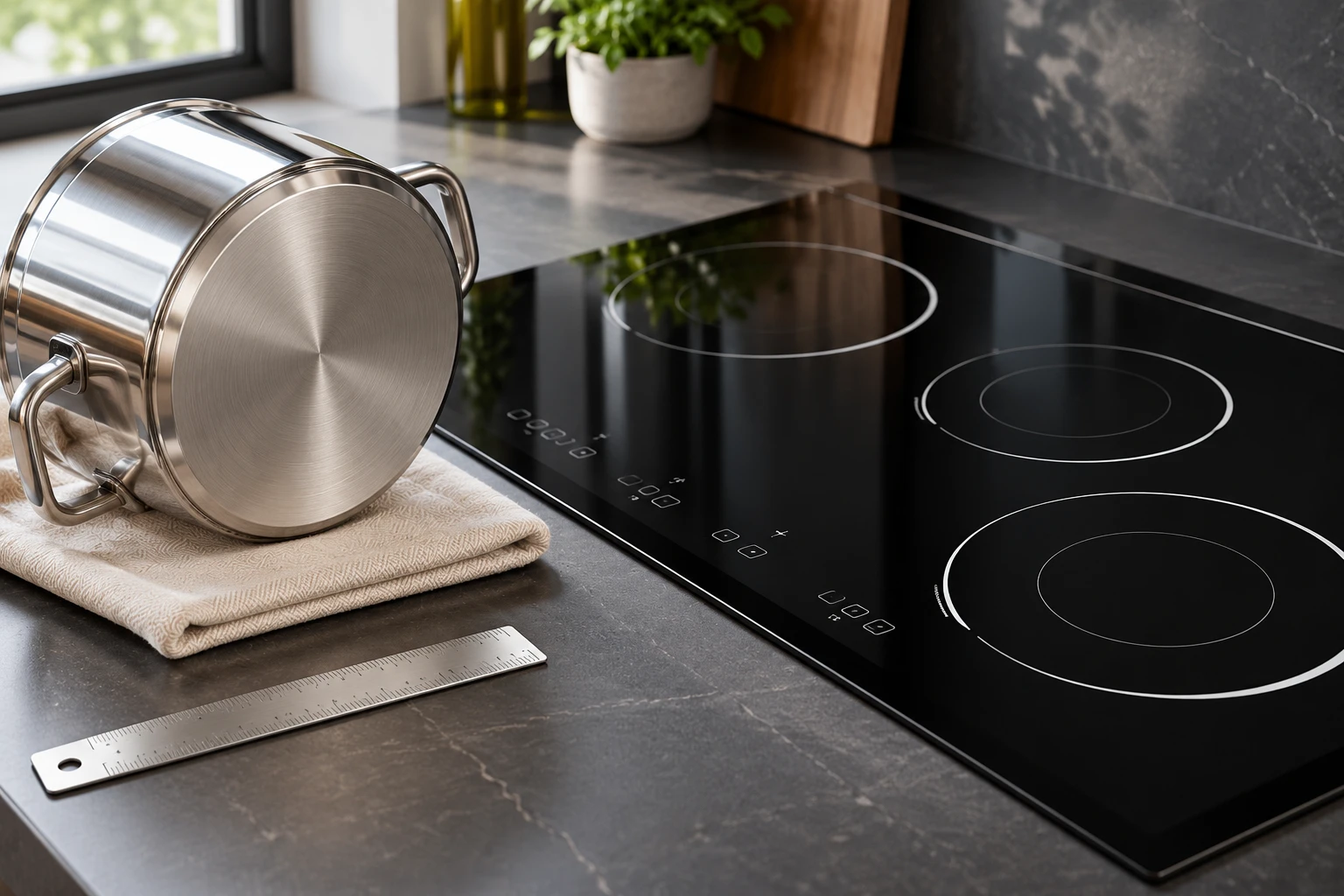
Inspect the base while the canner is empty, clean and cool. The widest rim is not necessarily the heating footprint. A concave, stepped, heavily ridged or damaged bottom can behave differently from the flat base assumed in a stove’s instructions. Compare the actual contact area with the specified cooking zone and any stated overhang rule. Do not bridge two zones unless the equipment instructions explicitly authorize that arrangement.
A flat base does not justify adding an improvised metal plate, trivet or heat diffuser between the canner and the hob. Such accessories change the thermal arrangement and may be prohibited. Induction adds another compatibility question: the base must be accepted by the induction appliance. A conventional aluminum canner should not be assumed to work simply because its bottom is smooth.
The Penn State Extension discussion of smooth-cooktop canning considers both equipment suitability and sustained processing conditions. It is a useful companion to the two manufacturers’ instructions, rather than permission to override either one. An attractive countertop layout or a successful short trial cannot resolve a documented incompatibility.
Do not treat the word canning as a single appliance setting. The preservation method is selected from a tested procedure for the food and preparation, with the required local adjustments. A pressure canner, pressure cooker and boiling-water canner are not interchangeable tools. Appliance compatibility is an additional requirement; it does not change the method needed for the food.
A rolling boil in an ordinary pot does not demonstrate that a loaded pressure canner can be controlled correctly. Likewise, the fact that a stove warms a canner does not establish that it can sustain the required process. Keep the validated recipe and canner operating instructions beside the appliance permission record. Do not shorten processing, change a pressure requirement or invent a new method to accommodate inconvenient burner behavior.
If processing conditions are interrupted, follow the applicable tested procedure and extension guidance for that interruption. This article deliberately provides no substitute time, temperature or pressure schedule. That information depends on the food, preparation, container, altitude and preservation method and belongs in a validated preservation source.
Some electric cooking systems regulate average heat by cycling power. Induction systems can also vary output, while protective controls can limit performance under particular conditions. A changing glow or sound is therefore not a reliable indication of the temperature or pressure inside a canner. Observe the process indicators specified by its instructions, not the appearance of the heating surface.
The educational video below explains how common radiant-stove controls cycle power. It helps distinguish control behavior from continuous energy delivery; it is not a canning approval, a guide to modifying controls or a demonstration of Kanger equipment. Do not bypass a limiter or sensor to force uninterrupted heat. For ordinary cooking behavior, our guide to induction pulsing addresses a separate diagnostic question.
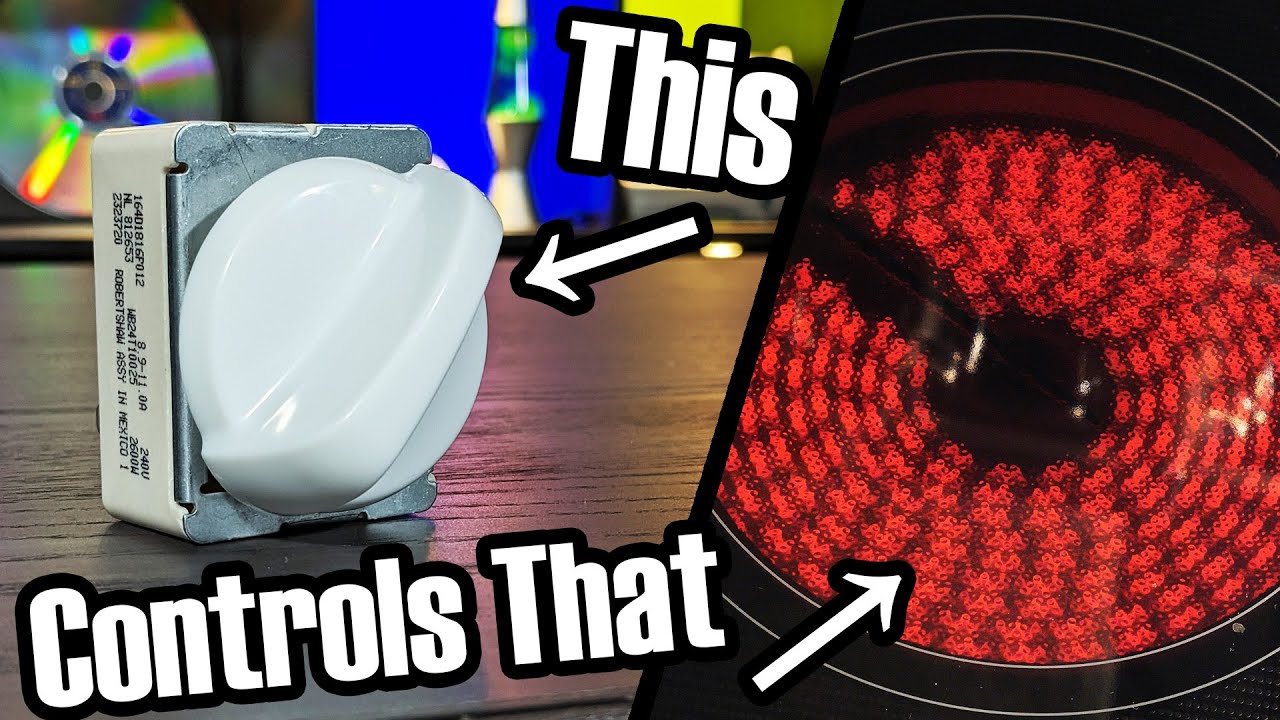
Video: Simmerstats: The genius old tech that controls your stovetop, Technology Connections. Open the educational video on YouTube.
A successful empty-vessel experiment is particularly unhelpful and can be hazardous. Do not heat a canner dry to assess speed. Any permitted preliminary familiarization should follow the equipment maker’s instructions and should not be confused with validation of a food-preservation process. If the approved arrangement cannot maintain the required conditions, select suitable equipment before beginning a batch.
Work out the intended loaded mass away from the hob using suitable equipment and existing component information. Do not place a canner on the glass merely to discover whether the assembly tolerates it. Check the manual’s interpretation of load limits: a whole-surface rating is not necessarily a rating for one zone, one contact point or a heavy vessel placed abruptly.
Keep the base and surface clean and avoid sliding the canner into position. Abrasive particles trapped beneath cookware can mark the surface, and moving a heavy hot vessel introduces a separate burn and spill risk. Provide a stable, heat-appropriate landing area that follows the canner’s instructions. Empty zones are not storage shelves for jars, utensils or a second loaded vessel.
Cracks, chips near supports, unusual appliance faults or unstable cookware require attention before further use. A panel that looks intact in a photograph has not passed a structural or thermal assessment. For surface defects rather than load approval, see our guide to residue and glass surface loss.
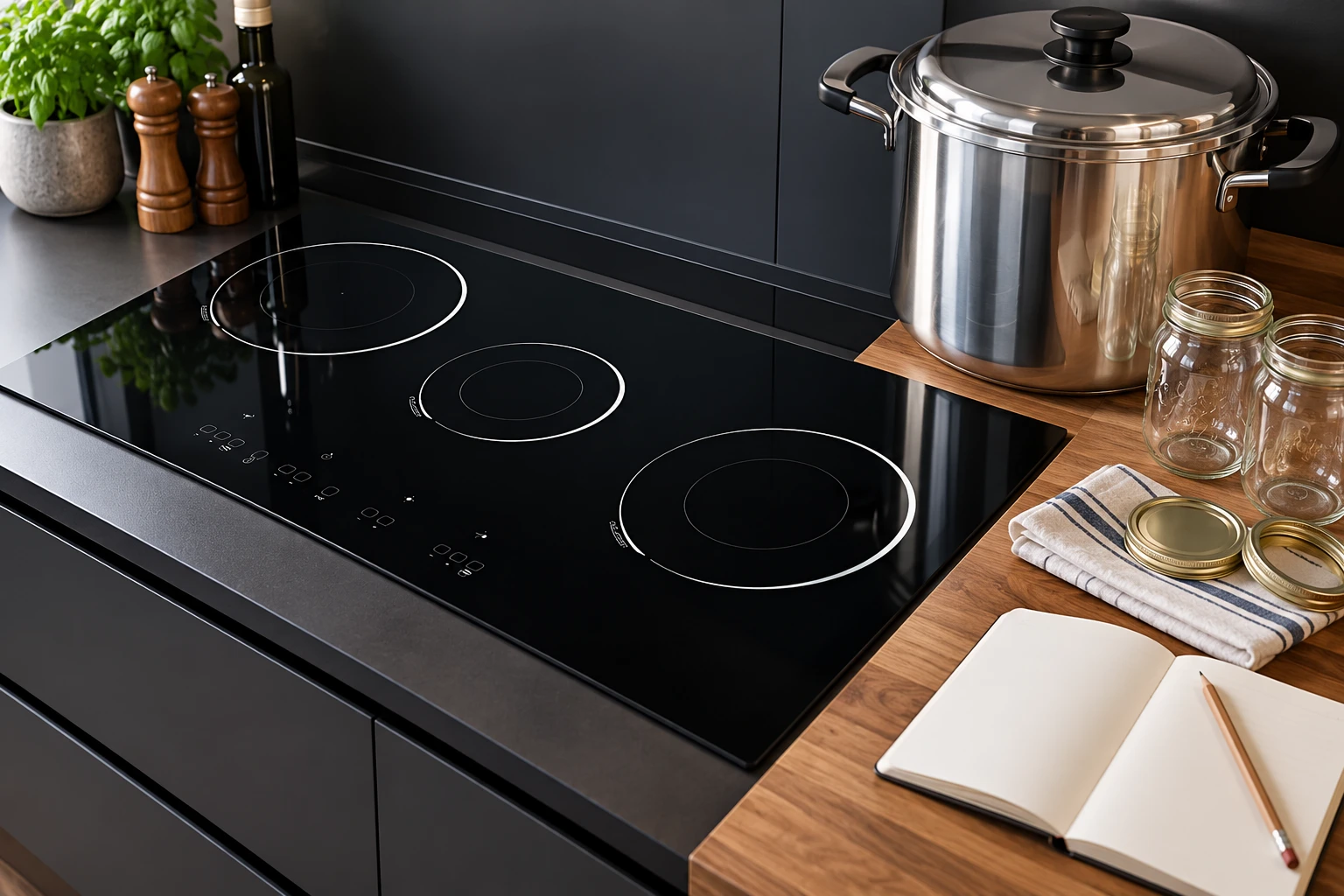
Do not solve a prohibited-use condition by reducing the batch and assuming the remaining load is acceptable. A restriction may involve heat concentration, controls or vessel geometry as well as weight. Ask the appliance and canner makers about a compatible alternative. Portable burners, outdoor equipment and electric canning appliances each have their own installation, ventilation, electrical and process limitations.
Food-preservation extension services can help evaluate appropriate methods and recognized guidance, but they cannot turn an unsuitable stove into an approved appliance. Keep food preparation on hold until the equipment question is settled. Buying a new canner based only on an online list can leave the same incompatibility unresolved.
Kanger supplies black glass-ceramic cooktop panels; this does not certify an assembled stove for home canning. An appliance buyer should define the intended vessel range, support arrangement, control system and complete-product evaluation with the responsible appliance team. The panel drawing and material information support that work but cannot replace it.
When a customer asks whether a surface can support a canner, record the actual appliance model and the intended operating case before discussing replacement glass. A different panel is not a remedy for an appliance that lacks permission for the task. Keep the approved instructions, correspondence and service findings together so later purchasing decisions do not rely on a generic glass-strength claim.
No. Use only a combination permitted by the exact stove and canner instructions, with a tested preservation process that the equipment can maintain. A smooth glass appearance does not establish approval.
No. Base shape is one requirement. Appliance permission, vessel dimensions, loaded mass, heating compatibility and process continuity also need to be resolved before use.
No. Induction changes how energy reaches compatible cookware. The glass, supports, installation and permitted load remain properties of the specific assembled appliance.
No. Do not bypass controls or protective devices. If approved equipment cannot sustain the required process, stop and obtain an appropriate equipment solution and food-preservation advice.



