Induction cookware dishwasher care starts with the instructions for the exact cookware model, not with the induction symbol. A magnetic base establishes one heating requirement; it does not certify the coating, exposed rim, handle or lid for machine washing. Identify each component, check its permitted cleaning method, and keep anything without confirmed permission out of the dishwasher until the maker clarifies it. Where hand washing is recommended, follow that product’s cooling, cleaning and drying directions rather than transferring advice from another pan.
This guide focuses on deciding what may go into the machine and preparing a repeatable care routine. It does not set a universal detergent, cycle temperature or guarantee period. Those details depend on both cookware instructions and the dishwasher’s loading guidance.
Start with the model reference on the packaging, receipt, base marking or instruction booklet. A listing that calls a set stainless steel may describe the exterior while some pieces have a coated interior. Likewise, two pans from the same brand can belong to different ranges. Record the actual range and size before searching the maker’s support pages.
Compare the online instructions with the piece you own. Look for a revision, region and description matching its handles, lid and surface finish. If the page describes a similar but different product, use it only to frame a question for support. A product photograph is useful for identification but cannot establish dishwasher permission by itself.
A set is an assembly of separate items, not one cleaning specification. Make a short list for the pan body, removable handle, cooking lid, storage lid and any accessories. Read the relevant instruction for each. A detachable mechanism can have a different cleaning route from the body it carries, even when both arrived in the same box.
For example, Groupe SEB cookware safety instructions direct readers to product-specific dishwasher advice and give separate restrictions for Ingenio handles. That is a documented reason to check components individually, not a rule assigning the same restriction to every handle from every manufacturer. Consult removable-handle compatibility for the separate question of which mechanism belongs to which vessel.
Instructions may permit machine washing while recommending hand washing for appearance or service life. Preserve that distinction in your household care note. Do not rewrite a recommendation as a prohibition, or permission as a promise that repeated machine cycles cannot change the product. Ask the manufacturer when wording is ambiguous or different documents conflict.
The material sections in Le Creuset material-specific care instructions illustrate why the exact range matters: instructions differ between constructions and finishes. Use the section matching the product, not the first cleaning paragraph on a long page. No permission in that source transfers to Kanger glass panels, unrelated cookware or a different model carrying a similar color or finish.
| What you have | What to check | Practical next step |
|---|---|---|
| Identified pan body with explicit dishwasher permission | Any cycle, detergent or placement restrictions | Follow both cookware and machine instructions |
| Removable handle or mechanism | Its own cleaning instruction | Separate it and use its permitted method |
| Cooking lid or storage cover | Material, knob and specific dishwasher wording | Do not infer permission from the pan body |
| Unknown finish or missing model | Maker identification and support response | Resolve identity before machine washing |
| Existing sharp rim, loose part or damaged coating | Condition assessment by the maker | Keep the affected item out of use pending advice |
The table organizes an instruction check; it is not a list of universal material approvals. Its component distinction is supported by the cited manufacturer care and safety documents. There are deliberately no invented dishwasher temperature limits or detergent concentrations.
Finish cooking and switch the appliance off using its controls. Handle the vessel as directed and allow the cooling process required by its care instructions before washing. Do not use a rush to load the machine as a reason to plunge a hot pan into cold water. Keep children and other users clear of hot cookware during the transition.
Remove food residues in the manner permitted for the actual surface. If food is stuck, consult removing burnt food with surface-specific care and the maker’s cleaning instructions before choosing a tool or chemical. Machine washing is not a substitute for assessing damage, and repeated aggressive cycles are not a diagnostic method for an unexplained mark inside a vessel.
Use the dishwasher’s designated supports and loading instructions. Leave space as directed for spray access and avoid placing a heavy pan where it can strike a fragile lid or fall when the rack moves. Check the machine’s manual for its own limitations; cookware permission alone does not establish that a particular rack position is appropriate.
Stage clean and dirty items on a suitable adjacent worktop, not across the glass cooking zones or touch controls. This keeps drips, loose utensils and heavy edges away from the appliance panel. Do not place a wet rack on the hob or assume a surface is cold because the induction power has been switched off.
Read the cookware instructions for prohibited cleaners and abrasive tools. If a machine product is allowed, follow its own directions and the dishwasher manual. Do not improvise by adding hand-washing liquid to the machine or mixing cleaners to overcome a difficult stain. More foam or stronger chemistry does not establish better care for a bonded rim or coating.
Separate the products used on cookware from those permitted on the appliance glass, seals and printed markings. A cleaner approved for a stainless interior may be unsuitable for the panel. Store chemicals in their original labeled containers and away from food. When uncertain, request a named compatible product or written cleaning method from the responsible manufacturer.
Allow safe handling, then examine the interior, exterior base, rim, lid and handle attachment under ordinary light. Look for retained food, loose parts or a change that warrants a question. A clean appearance does not certify an assembly, but a consistent inspection helps identify a problem before the next cooking session rather than after loading food.
Dry and store the components according to the care instructions. If a new mark appears, record the exact cycle and cleaner used, along with clear photographs and the model reference. Do not grind or file a sharp rim at home to restore it. Ask the maker whether inspection or replacement is needed before using an item with sharp or damaged parts.
A stain after washing is a surface-care enquiry first. It does not by itself show an induction electronics fault or prove that the pan no longer couples with the appliance. If a separate recognition problem occurs, consult the appliance manual and stainless cookware induction-base checks for the base-related checks, keeping those observations separate from the washing history.
For interior marks, documenting suspected salt-pitting marks explains how to document the observation without deciding that every spot is corrosion. Send before-and-after pictures when available and avoid promising a warranty outcome. The manufacturer’s product-specific assessment has more value than a general statement that stainless steel always survives any dishwasher cycle.
A short component list can prevent mistakes when several people unload or wash the same set. Record the model, permitted method and location of the instructions. Use plain descriptions such as pan body, detachable handle and glass lid, rather than relying on a symbol that another user may interpret differently. Update the note if the maker supplies revised advice.
For purchasing teams, request the care document before choosing a replacement range. Ask whether all components share the same cleaning process and whether the supplier can provide replacement handles or lids. Treat these as procurement questions, not as assumptions based on induction compatibility. A documented routine is easier to hand over than memory of a sales description.
Kanger black glass-ceramic cooktop panels concern the glass-ceramic appliance surface. That surface and the removable cookware have different care responsibilities. Use the appliance manufacturer’s instructions for panel cleaning and the cookware maker’s instructions for the vessel. The black glass-ceramic material guide explains the material context without turning a cookware washing recommendation into approval for a finished appliance.
A well-planned kitchen keeps those routines distinct: cook with a compatible vessel, move it safely to a suitable preparation area, clean each component by its approved method, and return a clean dry base to the hob. No additional performance, dishwasher or durability claim about Kanger panels follows from the examples in this article.
This independent educational explanation shows the relationship between induction heating and vessel geometry. It helps explain why a base that heats on induction says nothing about dishwasher permission, packaging removal or food-storage suitability. It does not demonstrate those care processes or approve any cookware model.
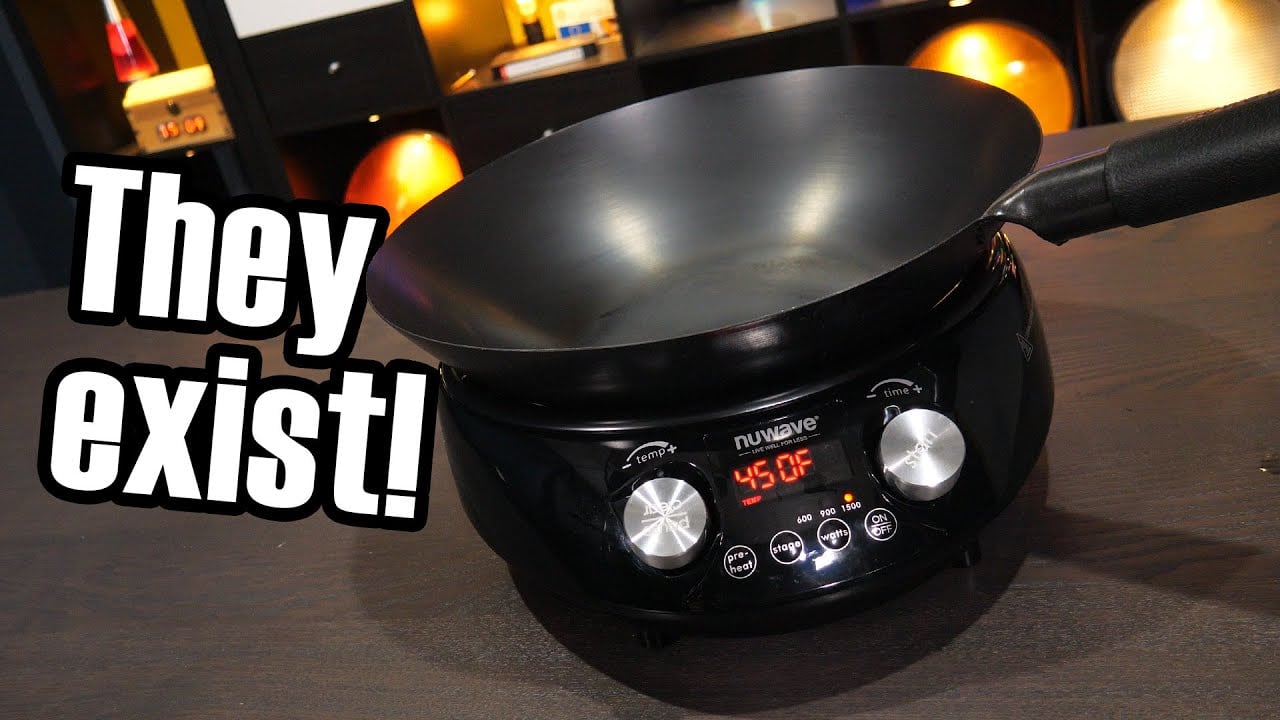
Video: Induction cooking – but what about woks?, Technology Connections. Open the educational video on YouTube.
No. It concerns heating compatibility. Check the exact cookware and each component for dishwasher permission.
Only if its own instructions permit it. A detachable mechanism can require a different method from the pan body.
Confirm the model and document revision with the maker before machine washing. Do not choose the more permissive wording by assumption.
No. Record the surface condition and washing history separately from any appliance recognition problem, then seek the relevant manufacturer’s advice.



