Induction cookware capacity markings and maximum fill instructions answer different questions. A capacity printed on packaging may describe nominal vessel size; an interior scale may help measure contents; a maximum mark or manual instruction limits a particular use. Do not treat these as interchangeable. Identify the exact vessel, unit system and cooking method, then follow the maker’s permitted working fill. A larger pot is useful only if its base also suits the hob and the full vessel can be handled safely. There is no universal fill fraction for every open pot, pressure cooker or cooking task.
Read the surrounding words, not just the largest number on the box. Look for capacity, nominal capacity, maximum fill, measurement scale or a recipe-specific instruction. If the wording is unclear, ask the supplier which definition is being used. A product name containing a volume is not itself a complete operating limit.
Cookware and Bakeware Alliance industry guide includes industry terminology for cookware capacity, while NIST metric kitchen cookware and tools guide explains metric kitchen measurement context. These are useful references for understanding the vocabulary and units. They do not replace the manual supplied with the particular vessel, especially when the cooking process has its own fill restrictions.
An interior line can be a convenient reference for adding liquid without being the highest permitted level during cooking. Conversely, a maximum mark may apply only to a specified method or ingredient. Find the explanation in the instructions before assuming that every line has the same purpose.
Check whether the vessel has several scales, whether the numbers refer to volume or another cooking quantity, and whether the scale belongs to a removable insert. A mark on an insert does not automatically describe the capacity of the outer pot. If two pieces were combined from different sets, establish that they belong together before relying on either set of markings.
Use the unit written on the product specification and retain it when comparing options. Liters, milliliters and different quart conventions should not be mixed casually in an order. A rounded retail description can obscure a meaningful difference when several suppliers quote a vessel as the same nominal size.
For a procurement sheet, keep separate columns for the original stated value, original unit and the supplier’s definition. If a conversion is necessary, record the conversion basis rather than replacing the original value silently. This makes it easier to spot whether two offers differ in capacity definition rather than in the actual size of the cookware.
A recipe may include solid ingredients, later additions and stirring. The space available at the start is not necessarily the space needed during the full process. Follow the cookware and recipe instructions together. If either imposes a more restrictive working limit for the actual task, do not use nominal capacity as permission to override it.
This guide does not provide pressure-cooking, deep-frying or preservation fill rules. Those processes require their own validated instructions and suitable equipment. A general saucepan table cannot establish a safe fill for a sealed cooker, and a volume mark does not approve a different lid or pressure mechanism.
| Information found | Question to resolve | Record for selection |
|---|---|---|
| Volume in the product name | What definition does the supplier use? | Original value, unit and definition |
| Interior graduated lines | Are these measuring references or operating limits? | Manual explanation of the scale |
| Maximum mark | Which cooking mode and contents does it cover? | Applicable restriction and conditions |
| Recipe quantity | Will later additions and handling fit the permitted method? | Vessel specified by the recipe or maker |
| Induction label | Does the base suit the actual cooking zone? | Base and appliance compatibility information |
The table organizes a purchasing decision rather than assigning fill limits. Its measurement vocabulary is informed by the industry and NIST references above. The operating permission still comes from the actual equipment and process instructions.
A pot selected by volume alone may be awkward to carry when it contains food. Consider where it will be filled, how it will be stirred and how the contents will be served. Plan a stable landing area before cooking. Do not assume that a handle arrangement comfortable with an empty pot will be equally manageable with the intended batch.
U.S. Fire Administration cooking safety guidance provides general cooking-safety guidance, including attention to the cooking area and safe handling habits. Keep that context separate from a claim about a particular vessel’s load rating. If the planned batch is difficult to manage within the instructions, use a more suitable vessel or adjust the process rather than relying on a higher nominal capacity figure.
A tall narrow pot and a broad shallow pot can share a nominal volume while presenting different bases to the hob. Record the actual base information required by the appliance maker, not only the rim diameter. The presence of a glass-ceramic surface does not mean that every vessel placed on it will be recognized or heated appropriately.
Do not infer compatibility from a photograph, capacity marking or lid size. Keep base selection and permitted fill as two checks on the same purchase. If one fails, the other does not compensate for it. A correctly sized cooking zone cannot make an overfilled vessel appropriate for a restricted process.
If a supplier asks you to confirm an ambiguous scale with a cold-water observation, follow a suitable measurement method and the maker’s permission. Keep the vessel on a level stable surface away from the appliance, identify the measuring tool and record the conditions. Do not use a brimful pot of water as a handling experiment.
An informal check does not calibrate the cookware or establish a maximum working fill. It also cannot prove compliance with a purchasing tolerance unless the contract defines a test method. Where measurement accuracy matters, agree the method and acceptance criteria with the supplier instead of treating a household jug as an independent certification.
A useful enquiry includes the model, photograph of the markings, packaging capacity, intended use and the unit system expected in the order. Ask whether the listed capacity is nominal or associated with a specified fill level. Request the working-limit instructions and any separate limits for lids, inserts or cooking modes.
For repeat orders, retain the exact specification revision. Similar-looking cookware can be sold with different handles, inserts or instructions. The objective is to buy a vessel that performs the intended task within documented conditions, not to maximize the printed capacity number. Keep any clarification with the purchase record so that future batches are compared on the same basis.
Follow the permitted cleaning method around interior scales and warning marks. If a marking has become unclear, contact the maker for identification and operating guidance. Do not scratch a new line into the vessel, stamp a guessed capacity onto it or copy a limit from another pot with a similar shape.
A missing mark is a documentation problem to resolve, not a reason to estimate a safe limit from the rim. For equipment in a shared kitchen, make the relevant instructions available in a separate operating record. That allows users to understand the intended process without changing the vessel or implying that an unofficial mark has manufacturer approval.
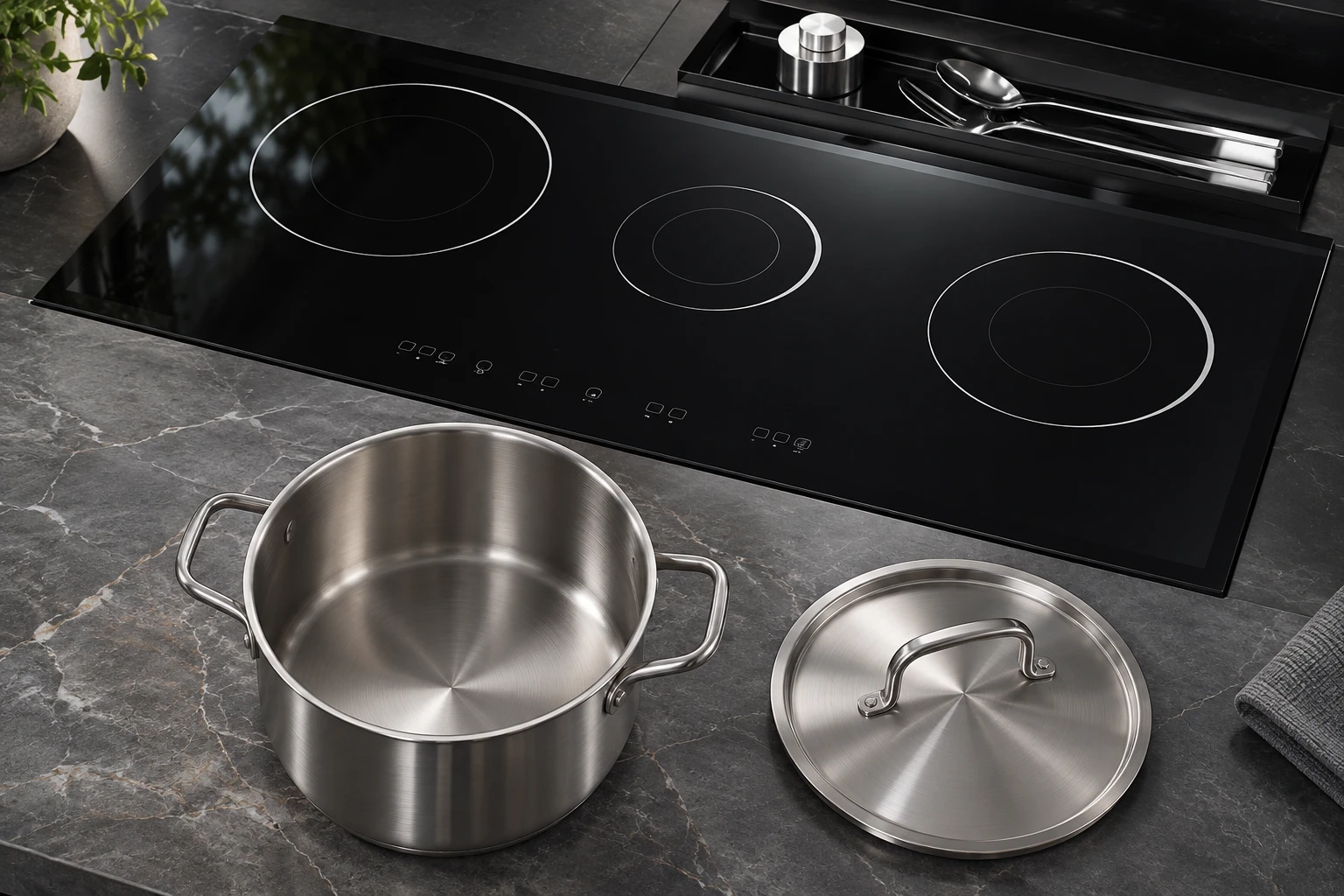
The cooking surface and the vessel need separate documentation. Kanger black glass-ceramic cooktop panels describes the relevant glass-ceramic product family, while black glass-ceramic material guide explains the material context. A photograph of a panel does not establish accessory compatibility, load capacity or a finished appliance rating. For adjacent questions, see cookware base selection, matching removable handles, dry oven gloves and secure grip. Keep the current question separate from those topics when choosing a remedy or requesting a quotation.
This neutral educational video explains induction operation and the relationship between cookware and the appliance. It is background for the cookware and glass distinction discussed above; it does not certify this accessory, prescribe cleaning chemicals or approve a Kanger installation.
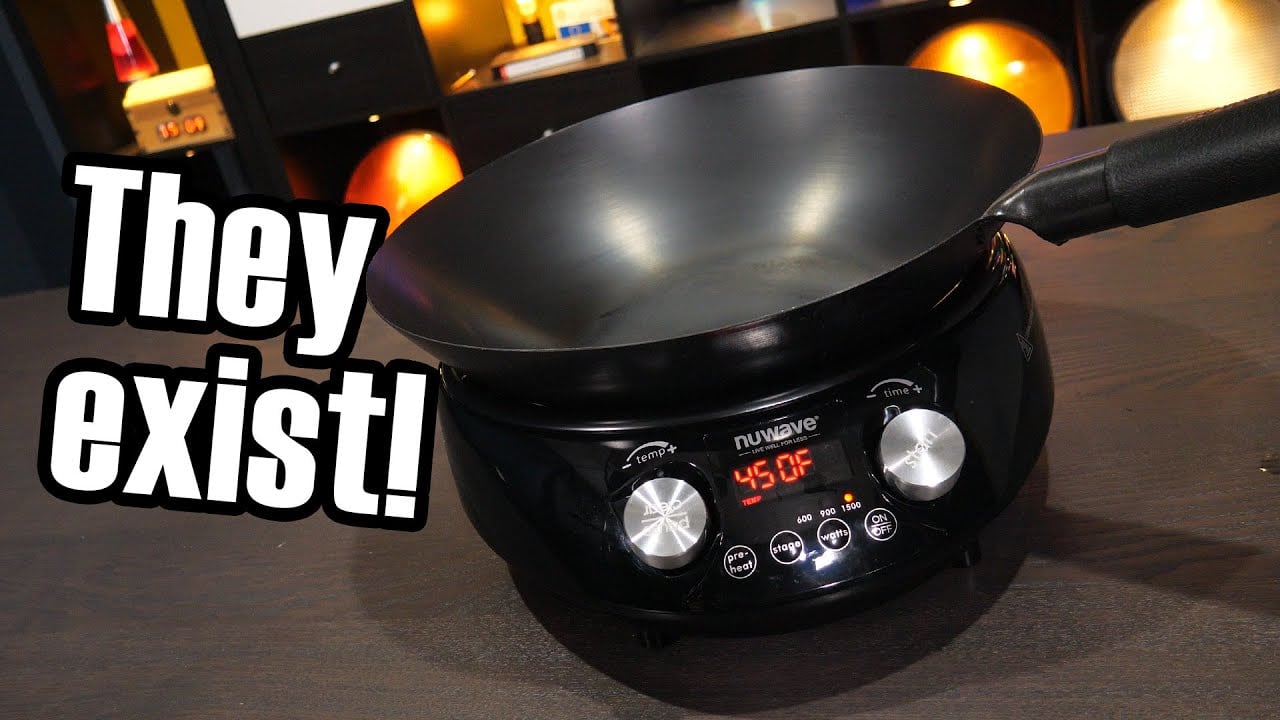
Video: Induction cooking – but what about woks?, Technology Connections. Open the educational video on YouTube.
Do not assume so. Ask what the capacity definition means and read the exact working-fill instructions. Nominal size, measuring scales and use-specific maximum limits can refer to different things.
Yes, their shapes and base dimensions can differ. Compare the base information required by the appliance maker separately from the volume required for the recipe or batch.
No universal percentage applies to every vessel and process. Open-pot cooking, pressure cooking and other methods have different instructions. Use the equipment and process guidance for the actual task.
An informal measurement can help describe an item, but it is not a calibration certificate or a test of maximum working fill. Agree a suitable measurement method when contractual accuracy matters.