 Kanger Glass-ceramic Co., Ltd.
A glass cooktop weight limit must come from the manufacturer of the complete appliance, for the exact model and loading conditions. There is no single kilogram or pound rating that applies to every glass-ceramic panel. Count the cookware, food, liquid and accessories together, and distinguish a stated total surface limit from a limit for one zone. Never use a generic number as permission to stand, sit or place storage loads on a hob. The panel material, mounting and appliance structure all matter, and impact is a different event from gently placing a permitted pan.
Find the appliance rating before weighing the pot
Start with the owner’s manual and official support information. Search by model number, not merely the hob width or the words ceramic glass. Read whether a limit covers the entire top, each cooking zone, one pan, or a particular accessory. Note any separate restrictions for canning, large stockpots, bridge zones or oversized cookware.
GE’s cooktop surface weight guidance gives a 50-pound maximum for the glass cooking surfaces it describes. That is a manufacturer-specific example, approximately 22.7 kilograms, rather than a universal rating or a Kanger panel specification. The article does not authorize another brand’s appliance or every possible arrangement of that weight.
If the correct documentation gives no rating, ask the appliance manufacturer. Do not infer it from glass thickness, a showroom demonstration or the fact that a similar pot was used previously. Absence of a published number is not evidence of unlimited capacity.
Calculate the actual cooking load
The empty vessel is only part of the load. Include the lid, contents, basket, rack and any accessory supported by the hob. Use a suitable scale on a separate stable work surface when the cookware is cool. Do not balance a filled pot on an undersized scale or use the cooktop as an improvised weighing platform.
A simple accounting expression is total load equals vessel plus lid plus contents plus supported accessories. If several pans are present, add their complete loads for any total-surface restriction, while still checking the individual-zone and cookware requirements. Keep units consistent; a numeric value without its unit is not a useful limit.
For example, an illustrative inventory might contain a 3-kilogram vessel, a 0.5-kilogram lid and 5 kilograms of contents. That totals 8.5 kilograms before accessories. These numbers demonstrate arithmetic only; they do not establish that this load is permitted on a particular hob. Compare the actual arrangement with the actual instructions.
Separate four different loading questions
| Question | Required evidence | Do not assume |
|---|---|---|
| How much total mass may be supported? | Complete-appliance manufacturer’s stated rating | Every glass-ceramic panel has the same limit |
| Where may the pan sit? | Zone and cookware positioning rules | Total capacity permits loading any edge or corner |
| Can a large vessel be heated? | Cookware size and heating restrictions | Acceptable mass proves acceptable thermal conditions |
| Will a dropped object damage it? | Applicable impact evaluation and damage instructions | A static rating covers dropping or striking |
The table describes separate decisions. Passing one does not pass the others. Follow the appliance instructions even when your calculated mass is below a published total.
Why mass alone does not describe the event
A pot rests through its base, while a small hard object may touch through a much smaller area. A pan placed gently and the same pan dropped from a height are different loading events. Do not create a drop test at home or use a heavy object to test how strong the surface feels.
The panel is supported by an assembly. Its geometry, openings, edges, seals and supporting structure affect how the appliance is evaluated. A material coupon or detached panel cannot demonstrate the capacity of every installed assembly. Likewise, a complete-appliance rating should not be reissued as a bare-sheet property.
A visible crack, chip or suspicious damage changes the question from normal loading to service assessment. Do not use a published rating to justify loading damaged glass. Keep the appliance out of use as its instructions require and seek the approved decision.
Pan size and thermal behavior still matter
A vessel can satisfy a mass limit while being unsuitable for the selected zone. Check base diameter, flatness, permitted overhang and whether the model supports a griddle or linked-zone accessory. Keep cookware away from the control region and outside any prohibited edge area.
GE’s radiant-cooktop cookware guidance distinguishes materials and explains why heat retention and base condition matter. Its advice relates to the appliances and technology described there. On induction, magnetic compatibility and effective base size are additional considerations; a cookware label should be read with the hob instructions.
Do not use a generic weight rating to authorize an oversized canning vessel. Canning involves prolonged heating and particular cookware conditions, so consult both the appliance instructions and an appropriate validated food-preservation procedure. This article does not establish a canning method or processing schedule.
Move heavy cookware without a surface-strength experiment
Plan the route before lifting. Keep a stable heat-resistant landing area available, use the cookware’s intended handles, and avoid sliding a rough or dirty base across the glass. Do not move a dangerously heavy hot pot simply to satisfy a photograph or informal test. If the load is difficult to handle safely, change the cooking plan within the appliance and recipe instructions.
Keep jars, cans and heavy utensils from being stored where they can fall onto the hob. Whirlpool’s ceramic-glass care instructions warn about falling hard objects and sliding cookware. These are handling hazards, separate from the arithmetic of a total cooking load.
Do not stand on the hob to reach a shelf, sit on its edge, or use it as temporary storage while fitting cabinetry. A cooking-surface rating describes an appliance application under stated conditions. Human loads and construction work introduce different contacts, movements and impact risks.
What to do when a weight limit is unclear
Send the appliance manufacturer the exact model and a clear description of the intended vessel. Provide the full loaded mass, base dimensions, contact shape, intended zone, accessory arrangement and heating task. Ask whether the published figure applies to the whole surface or to an individual zone, and whether other restrictions remain.
Keep the response with the manual rather than relying on a retailer’s casual statement. If a support answer gives only a number, ask what conditions it assumes. A rating without context may answer a different question from the one you are trying to resolve.
For an existing installation, report any damage and relevant service history. Do not conceal a previous impact because the surface still looks usable. Photographs can support an inquiry, but cannot establish residual strength or the condition of hidden supports. Qualified assessment may be necessary before any loading decision.
Panel procurement needs assembly-level evidence
Kanger supplies black glass-ceramic cooktop panels. For an OEM project, specify the actual grade, thickness, outline, openings, edge processing, print and assembly interface. Do not ask the supplier to certify an unsupported universal load based only on the word glass-ceramic.
Define how the finished appliance will be evaluated: load arrangement, support conditions, duration, temperature state and acceptance criteria should be agreed by the responsible engineering team under applicable requirements. Identify who owns the appliance test and how panel and assembly revisions remain traceable. No invented pass load or certification should appear in the purchasing brief.
The cooktop glass overview explains the material context. For observed cracks and edge damage, the panel failure-analysis guide helps organize evidence. Neither article provides permission to operate damaged glass.
A procurement comparison should separate three records: material data, the panel drawing and complete-appliance validation. A claim in one record should not silently migrate into another. The useful supplier answer names the tested configuration and scope instead of presenting a broad promise of strength.
Keep related symptoms in their proper category
Heavy cookware may also make sound on induction or respond differently to control changes. Those effects do not measure the load-bearing capacity of the surface. Consult the cookware noise discussion for sound observations, and keep structural questions with the manufacturer. A quiet pan is not evidence of a safe load, and a buzzing pan is not automatically too heavy.
Further learning: the appliance beneath the surface
The educational video explains traditional electric-stove power control and distinguishes the heating system from its user controls. It provides background on why a complete appliance is more than a sheet of glass. It does not demonstrate a load test, establish a weight rating or authorize copying a disassembly procedure.
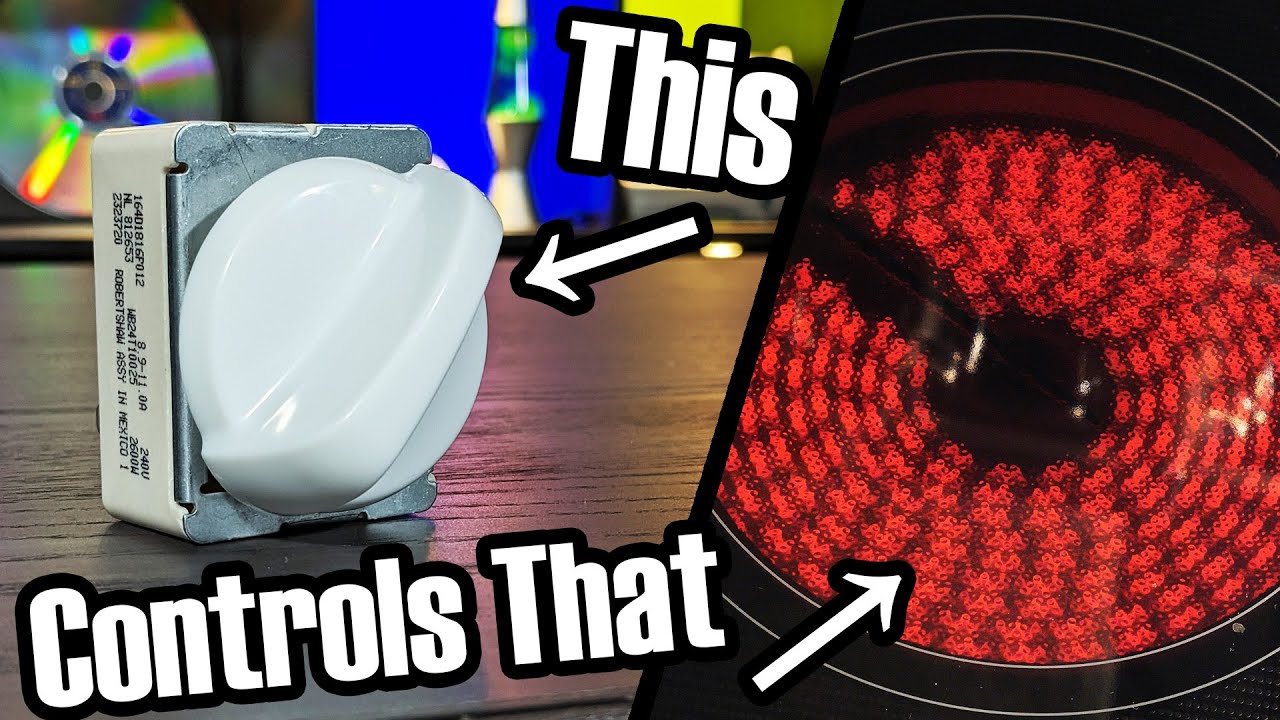
Video: Simmerstats: The genius old tech that controls your stovetop, Technology Connections. Open the educational video on YouTube.
Frequently asked questions
Is 50 pounds the limit for every glass cooktop?
No. That figure appears in specific manufacturer guidance and must not be generalized. Obtain the rating and conditions for your exact appliance.
Does the limit include food and water?
Count the complete supported cooking load, including the vessel, lid, contents and accessories, then apply the manufacturer’s stated total and zone restrictions.
Can I test the glass by putting a heavy weight on it?
No. Do not perform an improvised strength or impact test. Obtain the appliance rating and arrange assessment if condition or suitability is uncertain.
Does a low pan weight guarantee compatibility?
No. Pan size, base condition, placement, heating behavior and technology compatibility remain separate requirements.


