Kanger Glass-ceramic Co., Ltd.
Glass cutting wheels create a score used to guide the separation of a suitable glass sheet. Wheel selection belongs to the complete scoring system: substrate, thickness range, surface condition, cutter, lubricant where specified, support, and separation method. There is no universal wheel angle or pressure that works for every glass. For appliance panels, define the finished geometry and approve a controlled fabrication route before tempering. A cutting wheel is not a remedy for resizing a finished tempered pane, and changing the wheel alone will not fix every edge-quality or dimensional problem.
Separate scoring from sawing and grinding
A scoring wheel makes a controlled surface score; the subsequent separation produces the cut edge. A diamond saw removes material through a kerf, while grinding modifies an edge or profile. These processes have different capabilities and output conditions. Choose among them from the substrate and required geometry rather than treating every product called a glass cutter as the same tool.
For a simple rectangular blank, scoring and separation may be a proposed route. Holes, internal cutouts, edge profiles, and other features need their own process definition. Ask the fabricator which operations produce the finished part and where dimensional allowances are taken. An appliance drawing should identify the final requirements without assuming that a scoring wheel can produce every feature shown on the file.
Match the wheel to the approved cutting system
Wheel material, geometry, mounting, and condition should be compatible with the cutter and intended substrate. Use the tool supplier’s application guidance and a controlled trial to establish the setup. Do not select a wheel solely from a marketplace description such as “for all glass.” A wheel that mounts physically in a holder is not necessarily approved for the required material and process.
Confirm the relevant thickness range, surface treatment, and sheet condition. Printed, coated, textured, or laminated products can require different handling or processes. A setting established on an untreated clear sample may not represent the production part. The trial should use the intended substrate or a justified representative material, and the record should explain any difference. Keep wheel identity and approved use visible in the process instruction.
Treat pressure and motion as controlled variables
Scoring behavior depends on more than the wheel. Cutter alignment, loading method, motion, lubricant where used, and the condition of the support can affect the result. Set these variables through the equipment instructions and process qualification. Avoid copying a numerical pressure or travel speed from a different machine and calling it an industry standard for appliance glass.
When investigating variation, record the existing settings before changing them. Adjust one relevant variable or a defined combination, then inspect the resulting score and separated blank. A repeatable trial is more useful than a sequence of undocumented operator adjustments. If the setup works only when one person compensates by feel, the production method needs a clearer control or a demonstration of repeatability before it is released.
Keep the wheel and sheet contact clean
Review how the wheel contacts the sheet and whether contamination can enter that interface. Chips, debris, unsuitable lubricant, or residues can affect the process and later surface cleanliness. Follow the cutting system’s maintenance and lubrication instructions. Do not substitute a household oil because it appears to improve one trial; its compatibility with washing, printing, coating, and downstream heat treatment needs review.
Inspect the support surface and the route by which glass moves onto the table. A damaged covering or trapped debris can mark the pane even if the score separates correctly. Keep cutting and clean finished-part handling distinct where the process requires it. Include contamination or lubricant changes in the trial record so an edge or surface issue can be traced to a specific condition rather than vaguely blamed on the wheel.
Define when a wheel is checked or replaced
A replacement rule should reflect the actual cutting system and observed output, not an invented universal service life. Useful triggers can include an approved usage interval, a change in score quality, physical damage, or an event identified by the tool supplier. Inspect the holder and alignment when replacing the wheel. Installing a new wheel in a damaged holder can leave the original problem unchanged.
Keep the relationship between wheel changes and production lots where it helps trace variation. Record the last acceptable output and the first unacceptable result when an issue appears. This boundary can help determine which parts need additional inspection. Avoid continuing production simply because the wheel is new; the output still needs to meet the approved blank and edge requirements.
Coordinate separation and downstream edge finishing
The separation method should match the score and the supported sheet. Uncontrolled bending or a changed support position can create problems that look like poor scoring. Review the sequence as a whole and inspect the separated edge before later grinding removes evidence. The operator should know which edge conditions require a stop, rework under an approved process, or rejection.
If edge grinding or polishing follows, define the blank allowance and final profile. The finished edge should be checked after the full operation, not inferred from a satisfactory score. For conventional tempered flat glass, resolve required cutting and edge treatment before thermal treatment. NGA’s fabrication guidance supports that sequence and warns against post-treatment modification. Keep the pre-treatment blank and the final pane inspection connected in the lot record.
Scoring-process control table
| Process input | What to specify or confirm | Output evidence |
|---|---|---|
| Substrate and surface | Exact material, thickness range, coating or print state, and orientation | Trial uses the intended or justified representative sheet |
| Wheel and holder | Compatible wheel identity, geometry, mounting, and condition | Repeatable score without unexplained variation |
| Cutter settings | Approved loading and motion method for the actual system | Recorded settings tied to acceptable separated blanks |
| Lubrication | Approved material and delivery method where used | No unreviewed residue or downstream compatibility issue |
| Sheet support | Clean surface, reference arrangement, and separation support | Stable separation and no contact damage |
| Wheel maintenance | Inspection and replacement triggers with reaction instructions | Last-good and first-bad production boundaries can be identified |
| Edge finishing | Blank allowance and final edge profile | Finished geometry and edge condition meet the drawing |
The table intentionally contains no wheel-angle, force, speed, or replacement-life values. Those inputs need the actual tool documentation and validated process.
Use a trial that answers the production question
For an appliance blank, choose a trial that evaluates the relevant size, orientation, substrate, and downstream finishing route. Inspect score consistency, separation, dimensions, edge condition, surface cleanliness, and final features after the necessary processing. Define acceptable results before starting. A cut made successfully on a small scrap is not enough evidence for a production-sized panel or a different coating.
Preserve the trial record and relevant samples. If several wheels are compared, use the same evaluation method and explain any setup differences. Select from the ability to produce the required output consistently, not only the lowest wheel price. Tool consumption matters commercially, but it should be evaluated with rejected blanks, downtime, washing effects, and finishing effort when those are relevant to the actual process.
Diagnose a poor score without changing everything
If a score behaves inconsistently, first verify material identity, wheel and holder condition, guide or machine alignment, support, and the separation method. Confirm that the inspection method can distinguish score variation from damage introduced later. Keep an affected blank and compare it with an acceptable result from a known setup. A useful comparison identifies where the process first changed.
For example, if separation is acceptable near one end of a long blank and poor near the other, investigate the supported path, loading consistency, and motion before simply selecting a sharper wheel. This is a troubleshooting example, not a diagnosis of any specific machine. The purpose is to test a supported explanation and avoid creating a new setting that conceals the symptom without controlling its cause.
Specify the appliance output when requesting a quote
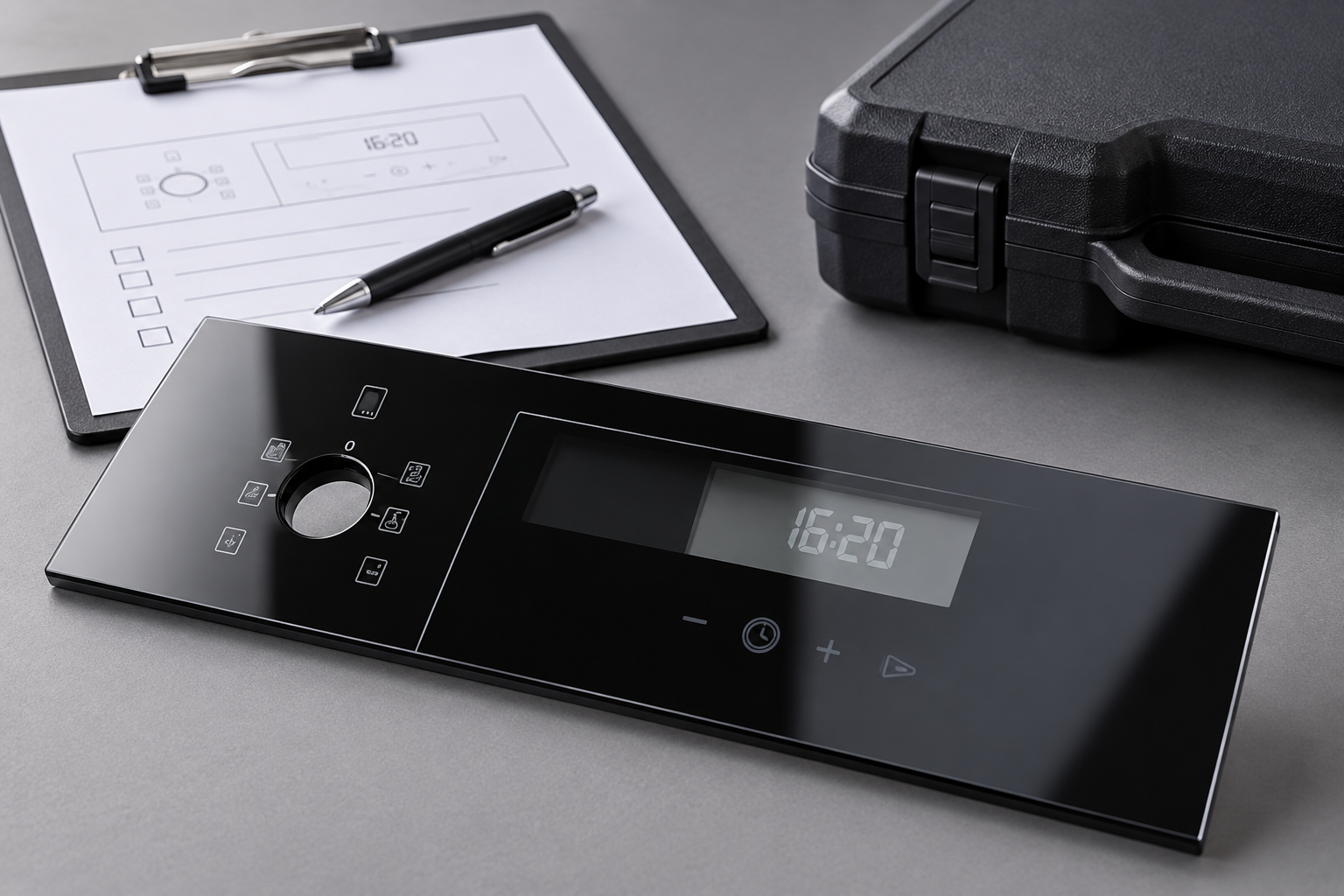
An OEM buying finished glass should provide material, treatment, dimensions, features, edge finish, print, and acceptance requirements. Ask the fabricator to confirm feasibility and the evidence it will provide. Naming a particular cutting wheel does not establish that the full component can be produced or qualified. Kanger’s appliance-control glass is a relevant finished-product connection, but its page does not prove ownership of a particular scoring line.
Keep proposed process changes in the qualification record when they affect finished appearance, edges, or dimensions. The supplier can propose its controlled route; the buyer can evaluate that route against the actual part requirements. This keeps the inquiry focused on a usable component and a repeatable inspection result rather than on an isolated tool specification.
Frequently asked questions
Is there one best wheel angle for all glass?
No. Select the wheel and setup for the substrate, thickness, cutter, surface, and separation method using the tool supplier’s guidance and an appropriate controlled trial.
Can a wheel cut a finished tempered panel?
Do not plan ordinary scoring and resizing of conventional tempered flat glass. Required fabrication belongs before thermal treatment; the correctly sized pane may need to be remade.
Does a new wheel solve every separation problem?
No. Holder condition, alignment, support, loading, cleanliness, and separation can also matter. Verify the whole process and inspect the output after replacement.
What should an OEM request from the fabricator?
Request confirmation of the finished geometry, edge condition, material, treatment, surface system, and inspection evidence. Let the processor explain how its controlled cutting route meets those requirements.
Related appliance-glass resources
- Thermal Shock Resisitance Tempared Glass For Household Appliances Panel Product
- Tempered Glass Appliance Panels: OEM Specification Guide
- Can Tempered Glass Be Cut? Limits, Risks, and Safer Alternatives
- Toughened Glass: How It Is Made, Where It Works, and How to Specify It
Sources and further reading
- NGA — fabrication before heat treatment
- NIST — measurement uncertainty
- GGF Glazing Manual — architectural-glass context, not an appliance specification
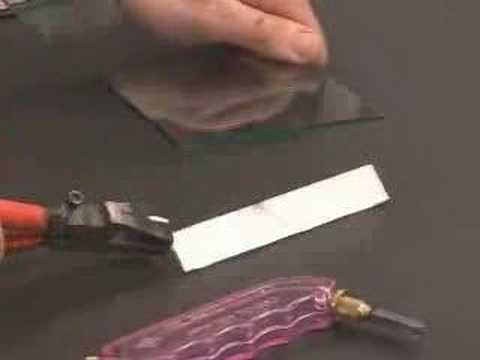
Educational video: Cutting Glass
A museum demonstration of glass cutting introduces scoring and controlled separation. It is educational context, not a machine operating procedure.