Kanger Glass-ceramic Co., Ltd.
Glass ceramic cooktop panel drawing revision control keeps geometry, artwork, material, appearance, packaging, and inspection requirements aligned from quotation through serial production. A revision letter on one PDF is not enough when the product also depends on CAD, print files, limit samples, specifications, tooling, purchase orders, and supplier work instructions. The control system must identify the released package, describe every change, remove obsolete data from use, confirm supplier implementation, and define when first-article or appliance-level revalidation is required.
This practical OEM guide addresses the search intent behind glass ceramic cooktop panel drawing revision control. It does not invent a universal tolerance, sampling plan, certification, or performance guarantee. The released appliance design, contract, applicable standards, supplier evidence, and representative validation remain controlling.
Define the controlled product package
List every document that defines the panel: dimensional drawing, 2D and 3D data, material specification, artwork separations, color or appearance master, edge and surface notes, inspection method, packaging specification, approved deviation, and validation report. Assign an owner and identifier to each. The release record should state which files together form the manufacturing baseline.
Write the responsible owner, input source, acceptance evidence, and reaction to missing information. Review this point with design, quality, manufacturing, purchasing, and the glass supplier. Use production-intent parts and tolerance extremes when the risk cannot be resolved from nominal samples alone, and keep the outcome linked to the controlled lot and revision.
Use one source of release truth
Store approved files in a controlled system with access, review, and approval rules. Suppliers should receive a transmittal that lists filenames, identifiers, revisions, dates, and superseded items. Email attachments and local desktop copies must not become competing masters. Purchase orders and quality plans should reference the same released package. Access history should show who issued and acknowledged it.
Write the responsible owner, input source, acceptance evidence, and reaction to missing information. Review this point with design, quality, manufacturing, purchasing, and the glass supplier. Use production-intent parts and tolerance extremes when the risk cannot be resolved from nominal samples alone, and keep the outcome linked to the controlled lot and revision.

Describe changes clearly
A change notice should explain what changed, why, affected features and products, risk, inventory effect, validation, approval, and implementation point. Use marked comparison views for geometry and artwork, but keep the clean released file as the manufacturing authority. For a black cooktop panel, seemingly cosmetic changes to rings, icons, opacity, color, or printed side may affect sensors, visibility, heating, or customer appearance.
Write the responsible owner, input source, acceptance evidence, and reaction to missing information. Review this point with design, quality, manufacturing, purchasing, and the glass supplier. Use production-intent parts and tolerance extremes when the risk cannot be resolved from nominal samples alone, and keep the outcome linked to the controlled lot and revision.
Review cross-functional impact
Engineering should evaluate fit, thermal gradients, supports, edge stress, heater clearance, sensor performance, graphics, cleaning, and appearance. Quality reviews measurement and acceptance methods. Manufacturing checks tools, screens, fixtures, work instructions, and packaging. Purchasing coordinates price, lead time, inventory, and supplier acknowledgement. Service and regulatory teams review affected records where applicable.
Write the responsible owner, input source, acceptance evidence, and reaction to missing information. Review this point with design, quality, manufacturing, purchasing, and the glass supplier. Use production-intent parts and tolerance extremes when the risk cannot be resolved from nominal samples alone, and keep the outcome linked to the controlled lot and revision.
Control supplier acknowledgement
Require the supplier to confirm receipt, feasibility, affected tooling and stock, implementation lot or date, and any exception. Acknowledgement is not technical approval of an undocumented deviation. Compare the supplier traveler, print screen, inspection plan, packaging instruction, and labels with the new baseline. Escalate missing files or conflicting revision statements before production starts.
Write the responsible owner, input source, acceptance evidence, and reaction to missing information. Review this point with design, quality, manufacturing, purchasing, and the glass supplier. Use production-intent parts and tolerance extremes when the risk cannot be resolved from nominal samples alone, and keep the outcome linked to the controlled lot and revision.
Separate and disposition old stock
Identify raw material, work in process, finished panels, service stock, and goods in transit under the old revision. Decide whether each quantity is use-as-is, reworked, relabeled, returned, scrapped, or covered by a time-limited concession. Physically and digitally segregate versions. The effective point may be a lot, serial range, purchase order, shipment, or date, but it must be unambiguous.
Write the responsible owner, input source, acceptance evidence, and reaction to missing information. Review this point with design, quality, manufacturing, purchasing, and the glass supplier. Use production-intent parts and tolerance extremes when the risk cannot be resolved from nominal samples alone, and keep the outcome linked to the controlled lot and revision.
Plan first-article and revalidation evidence
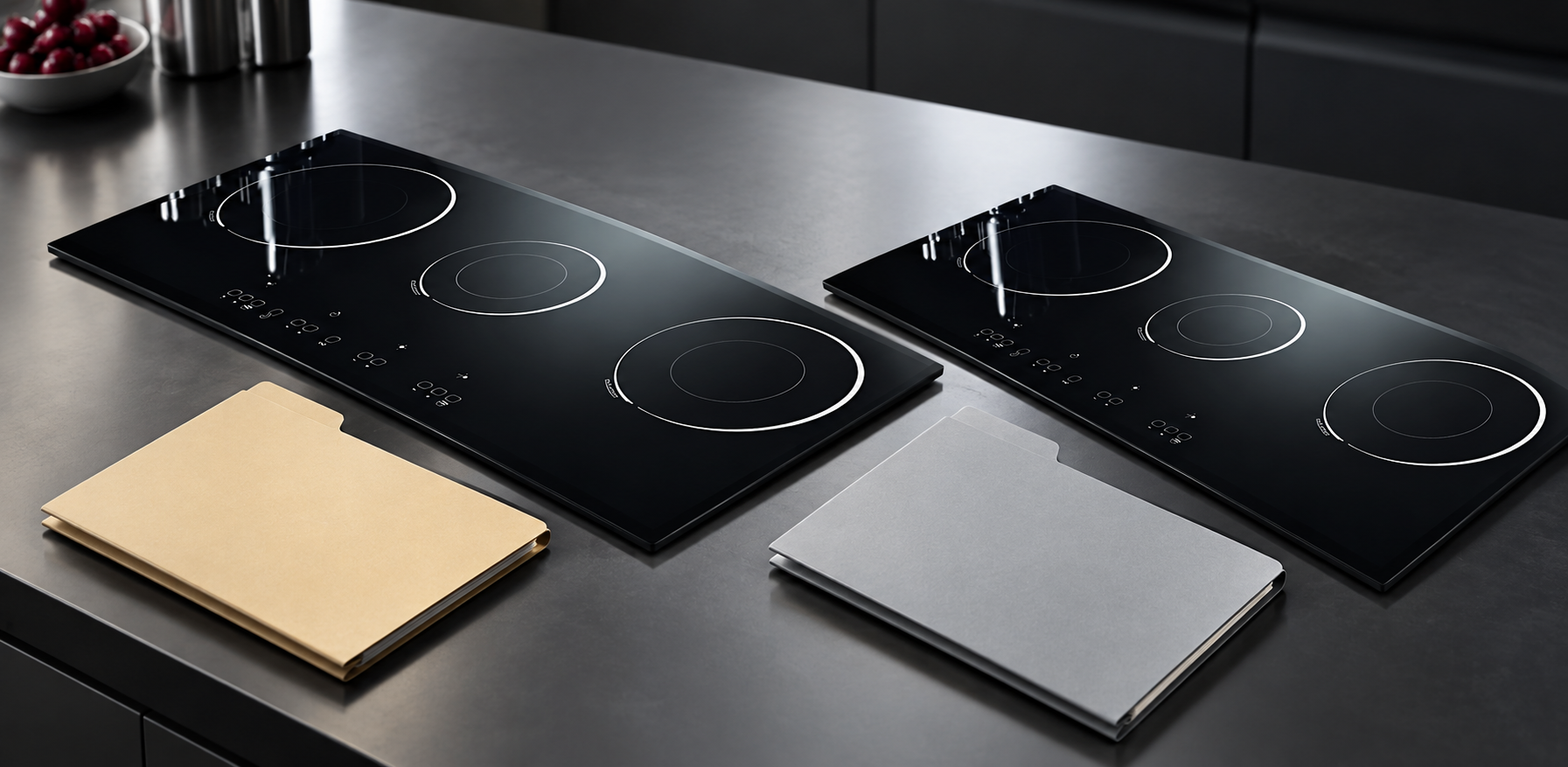
Base verification on change risk. Check affected dimensions, edge quality, flatness, artwork, color, opacity, surface, assembly fit, controls, heating, sealing, and representative cycles as applicable. Do not limit inspection to the redlined feature when downstream interfaces may change. Link samples, photographs, measurements, test reports, lot, and revision to the approval record.
Write the responsible owner, input source, acceptance evidence, and reaction to missing information. Review this point with design, quality, manufacturing, purchasing, and the glass supplier. Use production-intent parts and tolerance extremes when the risk cannot be resolved from nominal samples alone, and keep the outcome linked to the controlled lot and revision.
Audit production after implementation
After release, verify the first production lot and later records against the new baseline. Check labels, certificates, inspection forms, tooling, masters, and packaging. Trend any new defect mode. Periodically search production areas and shared folders for obsolete copies. If an old revision appears, contain affected material, trace its use, assess risk, and correct both the document route and physical controls.
Write the responsible owner, input source, acceptance evidence, and reaction to missing information. Review this point with design, quality, manufacturing, purchasing, and the glass supplier. Use production-intent parts and tolerance extremes when the risk cannot be resolved from nominal samples alone, and keep the outcome linked to the controlled lot and revision.
Working table
| Controlled item | Revision action | Release evidence |
|---|---|---|
| Drawing/CAD | Update geometry, datums and tolerances | Approved file and change comparison |
| Artwork | Update rings, icons, opacity and printed side | Separated artwork and master |
| Specifications | Update material, optical and inspection rules | Approved requirement set |
| Supplier process | Update tooling, traveler and quality plan | Written acknowledgement |
| Inventory | Segregate old and new revision | Disposition and effective lot |
RFQ, first-article, and serial-production workflow
At RFQ, provide controlled files, application, panel size, edge and surface details, graphic requirements, quantities, packaging, and validation conditions. Ask the supplier to identify feasibility limits, assumptions, and deviations in writing. Before first-article approval, verify document identity, geometry, edges, surface, artwork, packaging, and the topic-specific evidence in this guide. Assemble production-intent samples in the real frame, supports, seals, controls, and thermal system when those interfaces can influence the decision.
For serial production, translate the release into supplier and receiving instructions with named methods, equipment, sample identity, records, and reaction plans. Trend results by lot, material batch, tool, print screen, furnace position, package position, and supplier. When a nonconformity appears, contain related material, preserve the original condition before rework, compare it with the approved setup and masters, and verify corrective action on later lots.
Change control closes the loop. Reassess the method after changes to material source, thickness, panel size, cutouts, corner radius, edgework, graphics, printed side, tooling, frame, heater, sensor, seal, packaging, or supplier. Record the implementation lot and retain enough evidence to distinguish a design change, process drift, handling damage, and measurement variation.
Educational video
This neutral Corning Museum of Glass video gives useful background on color and glass processing; it does not replace the released drawing, inspection method, or appliance qualification.

Related Kanger resources
- Black glass-ceramic product page
- Glass-ceramic material overview
- Durable screen printing on glass ceramic cooktop panel
- Glass ceramic cooktop panel corner radius requirements
For a drawing-led quotation, send Kanger the application, controlled files, annual quantity, validation conditions, and target schedule. Technical review can identify missing information without converting this general guidance into an unsupported product guarantee.
Frequently asked questions
What files belong in the revision-controlled package?
Include the drawing, CAD, material specification, artwork, appearance master, inspection method, packaging instruction, approved deviations, and linked validation evidence.
Is a supplier email acknowledgement enough?
It should confirm receipt, feasibility, affected stock and tooling, implementation point, and exceptions, but it does not approve undocumented deviations.
Must every revision receive a full requalification?
The scope should follow documented risk; however, affected and downstream interfaces must be verified rather than checking only the redlined feature.
How should old-revision stock be handled?
Identify and segregate it, then issue an authorized disposition such as use-as-is, rework, return, scrap, or a time-limited concession.