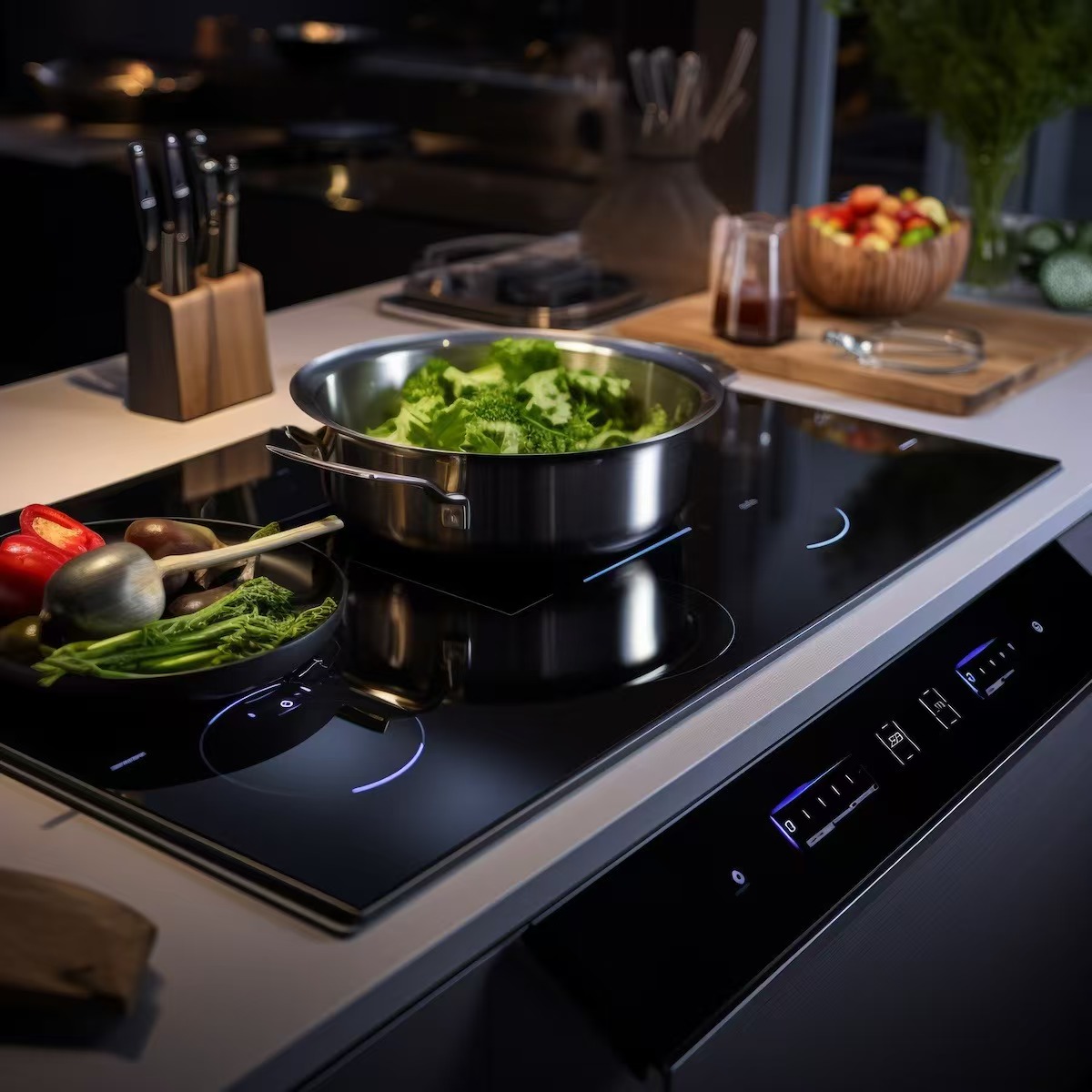
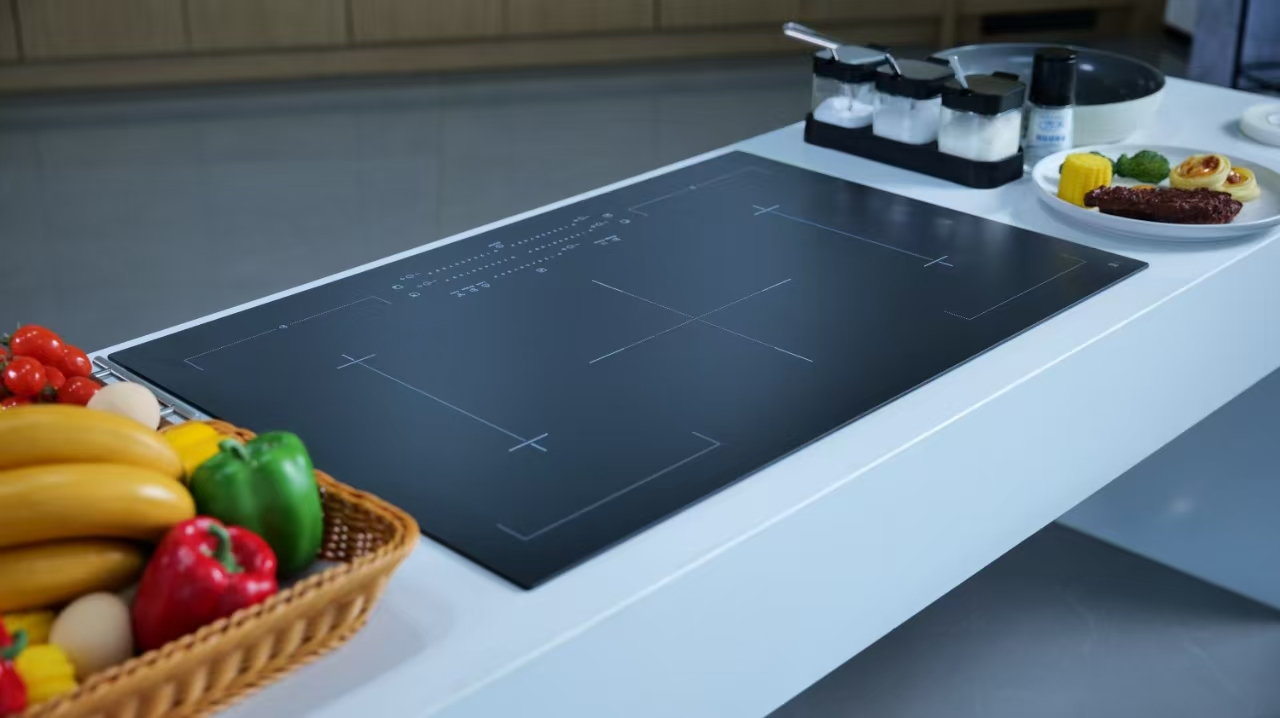
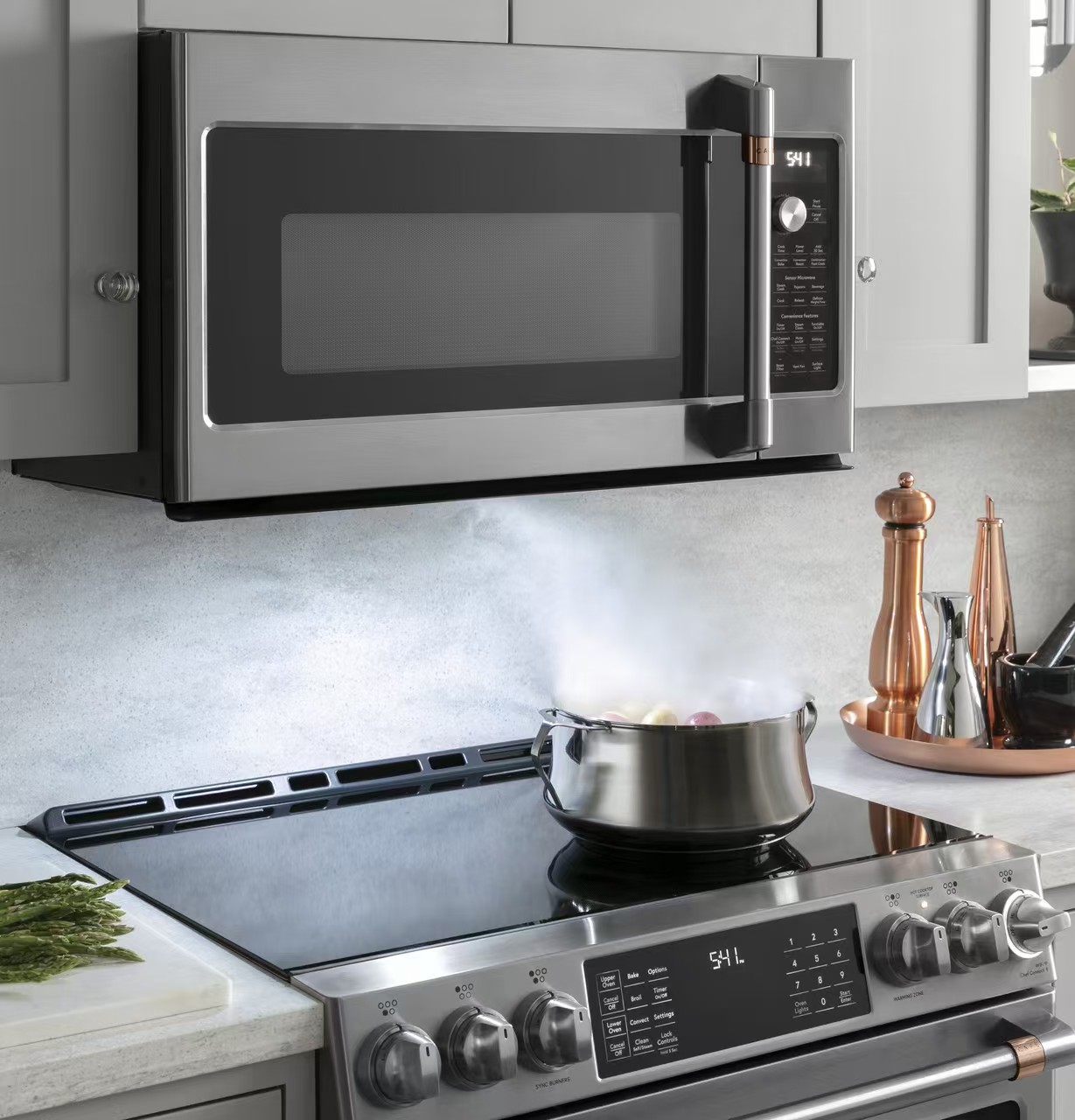
An induction hob stovetop popcorn popper needs more than an induction label: match the exact popper and cooking zone, inspect its crank and lid, keep the steam outlet clear, and prepare somewhere suitable to lift the hot vessel. A crank-operated popper can stir kernels without making pot shaking the default action on the glass. That does not make every popper suitable for every hob. Start with the current instructions for both appliances, rather than a recipe that assumes all stovetops behave alike.
This guide covers the equipment and workspace checks around a purpose-built popper. It does not prescribe a universal oil quantity, temperature, batch size or crank speed. Those settings belong to the identified product. The practical question is whether you can operate, remove and clean that particular vessel without improvising around a glass cooking surface.
A stovetop popcorn popper combines a cooking vessel with a lid-mounted stirring mechanism. The mechanism, lid engagement and handle positions create a different handling task from an open saucepan. Before buying, ask for photographs of the actual base, the lid underside and the assembled crank. A polished exterior alone says little about whether the base will be detected by your hob or whether the lid can be assembled correctly.
Do not group all stovetop poppers together. Some products are built for different heat sources; others have electrical components of their own. A product described as a popcorn maker may be a microwave bowl or a countertop machine. Those categories cannot be treated as interchangeable because their names appear beside each other in a search result.
For a named example, the Popsmith FAQ confirms induction use for its Popper and identifies a steam-release slit in the cover. Those are product-specific statements. They are not evidence that an unrelated crank pot has the same construction or that a particular Kanger panel approves the complete cooking setup.
Read the hob instructions for acceptable cookware and detection requirements. Then compare the popper documentation and the actual base. ENERGY STAR explains the relationship between induction and magnetic cookware; however, a magnet check is an initial material clue, not a substitute for the hob's size and operating instructions. A small or unusual base still needs an exact appliance match.
Inspect the underside cold, in good light, on a separate counter. Remove packaging according to the product instructions and check for dirt or damage that could affect contact with the cooking surface. Do not scrape unknown residues with a tool intended for another material. If the base is distorted or the vessel is unstable, resolve that problem before applying heat.
Place the cold vessel in the intended position and check the handle route. The long handle should not obstruct another cooking position or require someone to reach across the pot to use the controls. Keep the controls accessible for stopping the heat. Arrange the work area before loading ingredients, rather than discovering a clearance problem when the contents are already hot.
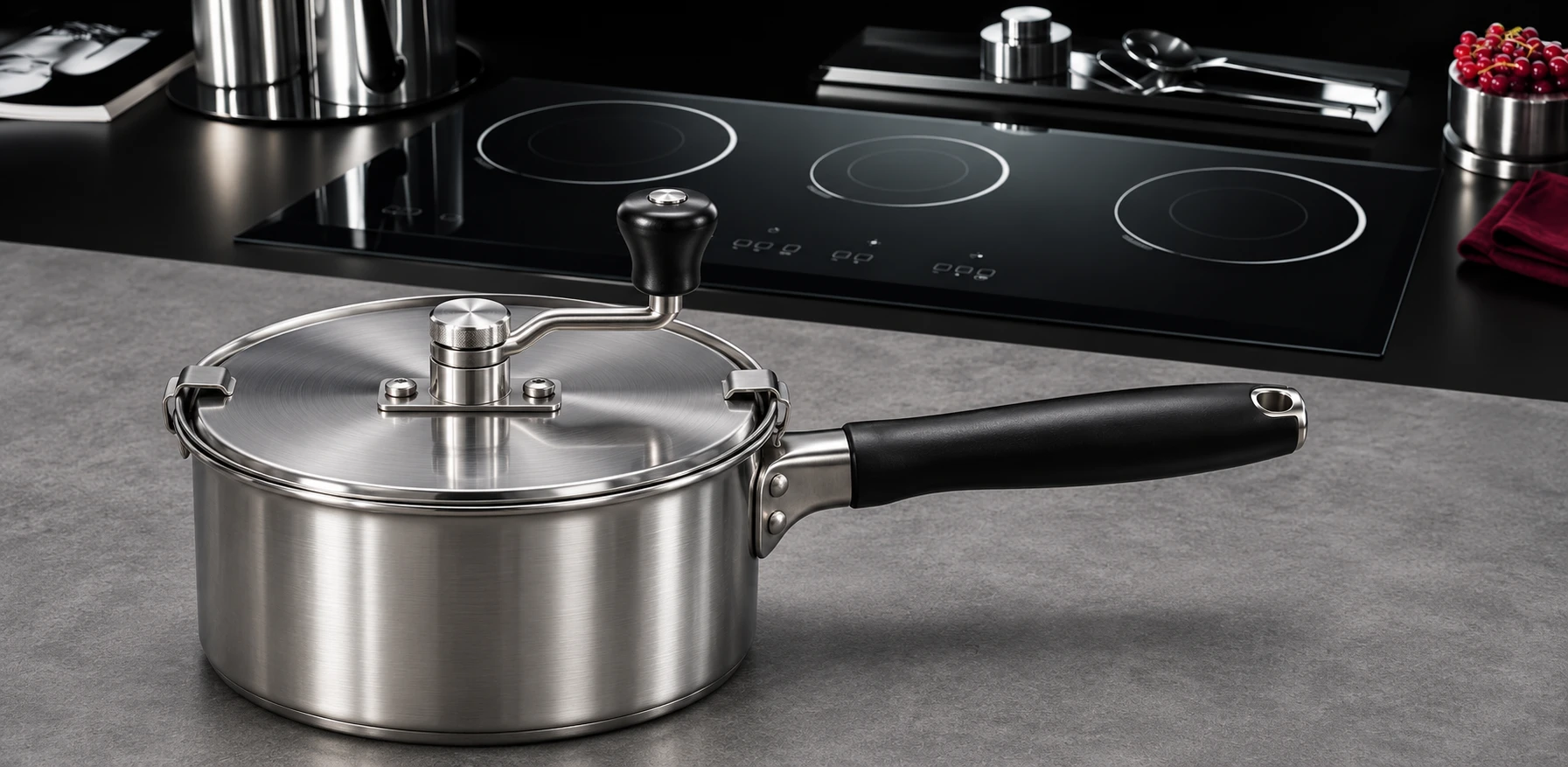
With the vessel empty and cold, follow the assembly instructions and check that the lid seats as intended. Move the crank only in the permitted direction and manner. Watch for unexpected contact, a loose fitting or a mechanism that catches. A smooth appearance in a shopping photo cannot establish that the actual parts are complete and correctly engaged.
A jam during cooking is not permission to force the handle, reach into the vessel or improvise a repair over a hot zone. Consult the exact troubleshooting procedure. If the available instructions differ between an older guide and the current product, ask the manufacturer which applies to your version. Keep the model and purchase details so that the question can be answered precisely.
This distinction matters because the same brand can publish several pieces of advice written for different contexts. Do not combine snippets into a new operating procedure. Use the current instruction set supplied for the product; where it is ambiguous, resolve the ambiguity before use rather than selecting the most convenient sentence.
Identify where steam leaves the lid and keep hands and face out of that route. A cover opening serves a function; covering it with a towel or an unrelated accessory changes the setup. Do not assume that a handle described as comfortable in one manufacturer's FAQ makes every surface safe to touch throughout cooking.
Prepare suitable dry handling protection and a destination approved for the hot vessel. The serving bowl is for the finished popcorn; it is not automatically a safe landing support for the pot. Keep the lid destination separate too, so that removing or replacing it does not require balancing it on the glass or leaning it against another object.
The U.S. Fire Administration emphasizes staying with cooking and controlling excessive heat. Apply that attended-cooking principle here. A crank does not make the process unattended, and a familiar sound does not replace observing the equipment. If smoke or a fault occurs, follow the appliance instructions and the relevant fire-safety guidance instead of continuing a trial batch.
| Check | What to verify cold | If uncertain |
|---|---|---|
| Product identity | Exact heat-source statement and matching manual | Obtain the actual model instructions |
| Base and zone | Cookware requirements for the hob | Resolve size or detection mismatch |
| Lid and crank | Complete engagement and permitted movement | Do not force a stiff mechanism |
| Steam route | Location of the intended outlet | Keep face and hands out of the path |
| Removal | Clear lifting route and suitable support | Prepare a separate landing area |
This qualitative checklist summarizes the manufacturer instructions cited below; it does not introduce new operating limits.
Use the specified ingredients and quantities for the identified popper. Capacity, oil amount, heating sequence and stirring method are separate details that should come from one applicable instruction set. A large vessel does not invite filling it to the rim with kernels. Search results that mix different models and recipes are particularly poor evidence for allowable loading.
The Popsmith material includes induction-specific operation notes, but settings on one hob cannot be copied as a measured temperature on another. A numbered power level is a control setting for a particular appliance. It should not be presented as a universal temperature or as proof that a glass component can tolerate every operating condition.
For a first use, organize the manual, ingredients, bowl and landing area before starting. Keep the test simple enough that you can observe what the equipment is doing. Record the exact model, zone and instruction version if you need help afterward. Changing the vessel, batch and power setting together makes a problem harder to explain.
Plan a clear lifting route rather than dragging the vessel across the glass. The weight and handle arrangement may differ from the saucepan you normally use. Do a cold rehearsal if necessary: check that you can reach the handles, lift without collision and place the vessel securely at its destination. Do not make a loaded hot pot the first test of an awkward reach.
Once everything has cooled as instructed, clean the popper and the appliance using their separate care directions. A dishwasher statement for one named popper does not approve dishwashing every crank assembly. Equally, an abrasive intended for a metal part is not automatically suitable for the glass cooking surface. Treat the vessel, mechanism and panel as different items with different care requirements.
For residue on the appliance, see surface-specific burnt food removal rather than transferring a cookware restoration method to the panel. For arranging equipment after washing, cookware drying-rack preparation covers a different task from cooking. These links complement the popper checks without turning this article into a general cleaning guide.
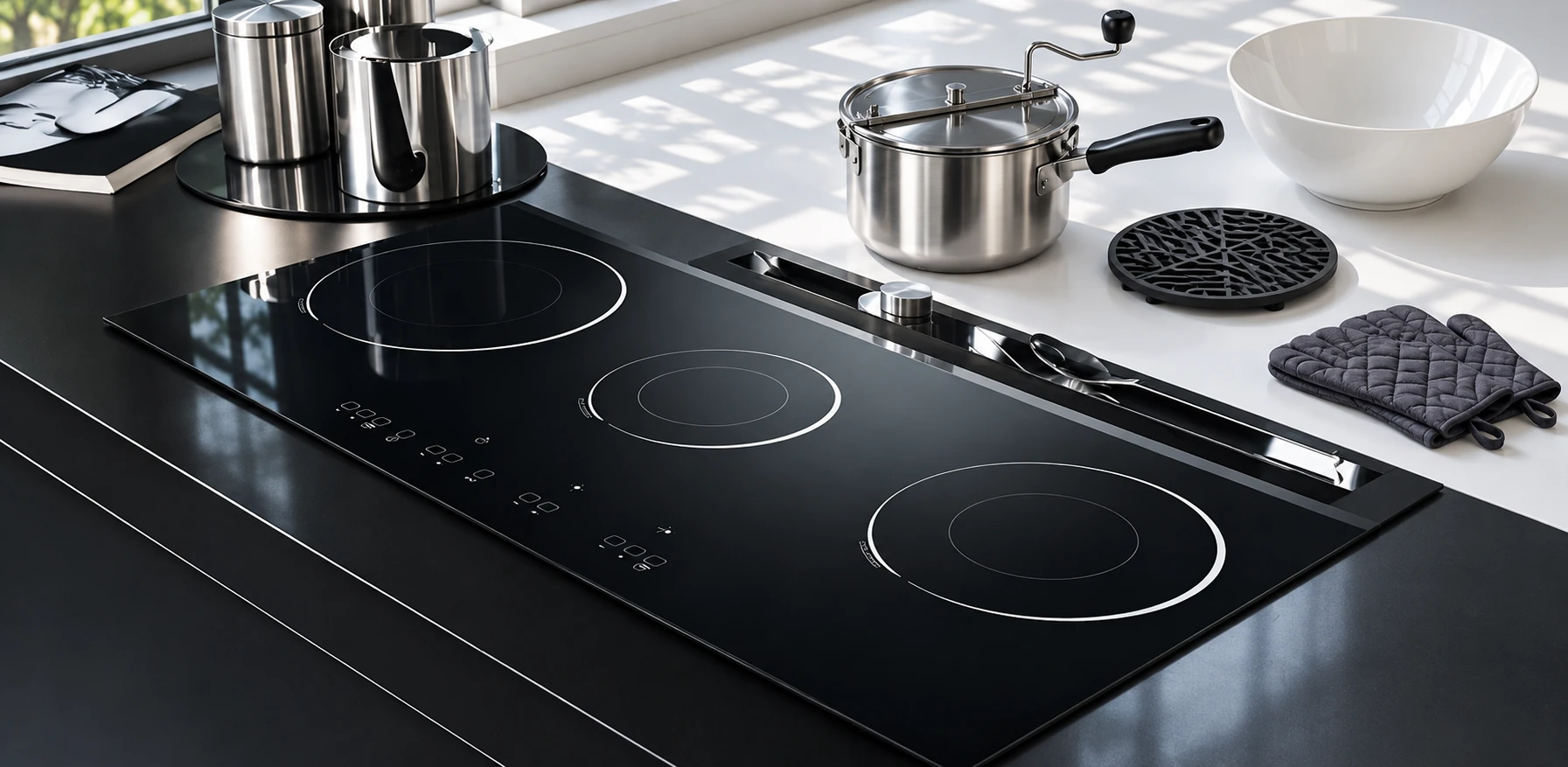
Kanger's black glass-ceramic cooktop panels belong to the appliance component side of this discussion. A panel supplier can discuss the component specification and drawing; it cannot establish the suitability of an unrelated popcorn vessel merely from a photograph. Complete appliance performance depends on the approved design, electronics, cookware and use conditions together.
When discussing a panel project, provide the appliance design, panel geometry, printing and edge requirements through the normal technical review. Keep cookware operating instructions in the appliance documentation. Do not advertise a panel as scratch-proof or universally compatible with poppers because an editorial image shows a vessel nearby. The illustrations here describe a cold preparation scene, not a validated operating test.
For the broader cookware relationship, consult stainless-steel cookware base guidance. If your main question is how much of a zone a base must cover, induction hob pan size addresses that general issue. Here, the additional checks are the popper's lid, crank, steam path and removal workflow.
The educational video below explains induction and cookware interaction. It is useful background for understanding why the base matters. It does not demonstrate this particular popper, approve its lid mechanism or replace its instructions. No automatic playback is enabled.
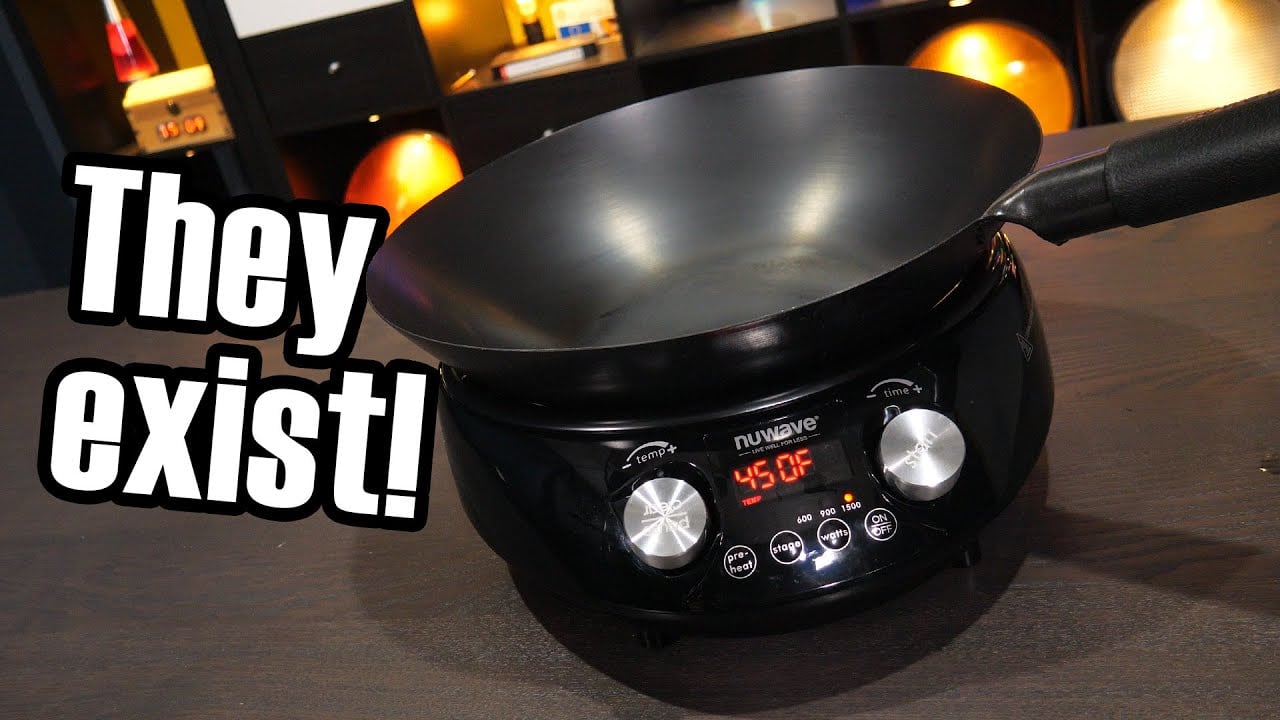
Video: Induction cooking – but what about woks?, Technology Connections. Open the educational video on YouTube.
No. Confirm the exact product's stated heat-source compatibility, then compare its base and instructions with the hob requirements. The existence of an induction-compatible example does not establish compatibility for the whole category.
Do not improvise that response. Follow the identified product's troubleshooting procedure and stop using equipment with an unresolved assembly or mechanism fault. Check the cold assembly before starting another batch.
No universal temperature follows from a number on the controls. Use the applicable equipment instructions and obtain model-specific advice if the operating guidance is unclear.
Do not assume it can. Prepare a separate suitable destination according to the lid, appliance and worktop instructions, and keep the cooking surface and controls clear.
These primary documents support their identified equipment and handling requirements. Distributor-hosted PDFs retain manufacturer authorship. They do not certify other models, Kanger components or complete installations.