Induction Hob Digital Thermometer Interference: Check the Reading Before Changing the Pan
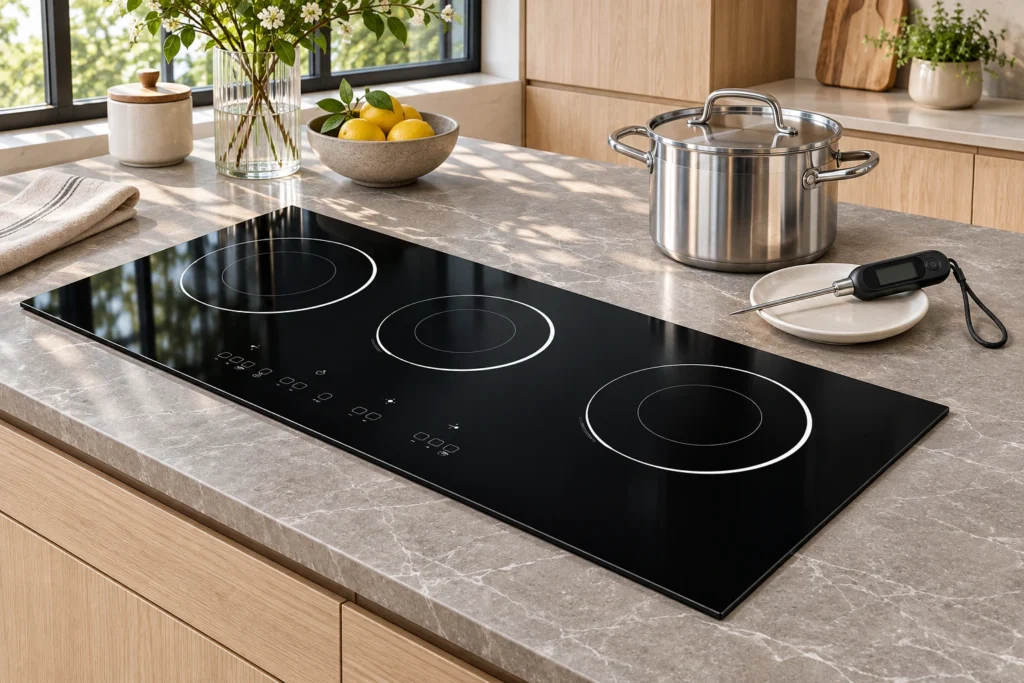
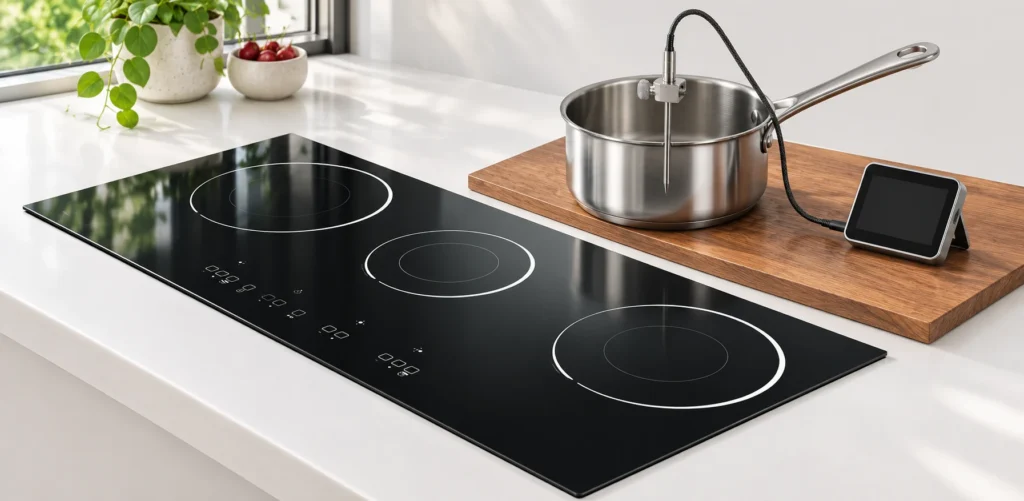
Check unstable thermometer readings near an induction hob without guessing a correction, changing the glass panel or confusing surface and food temperatures.
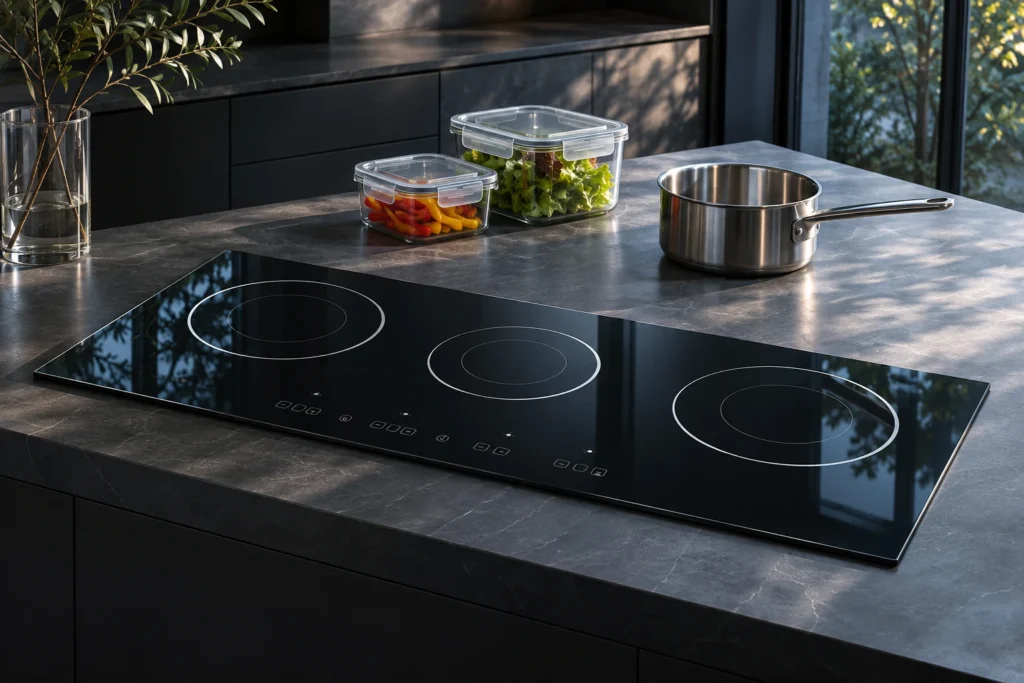
Check model-specific permission before storing food in cookware, distinguish storage lids from cooking lids, and follow separate food-safety guidance.
Prepare new induction cookware by identifying removable packaging, preserving product information and following the exact surface-specific first-use instructions.
Check dishwasher permission for the exact pan, lid and handle; choose model-specific care and keep the glass hob separate from cookware washing.
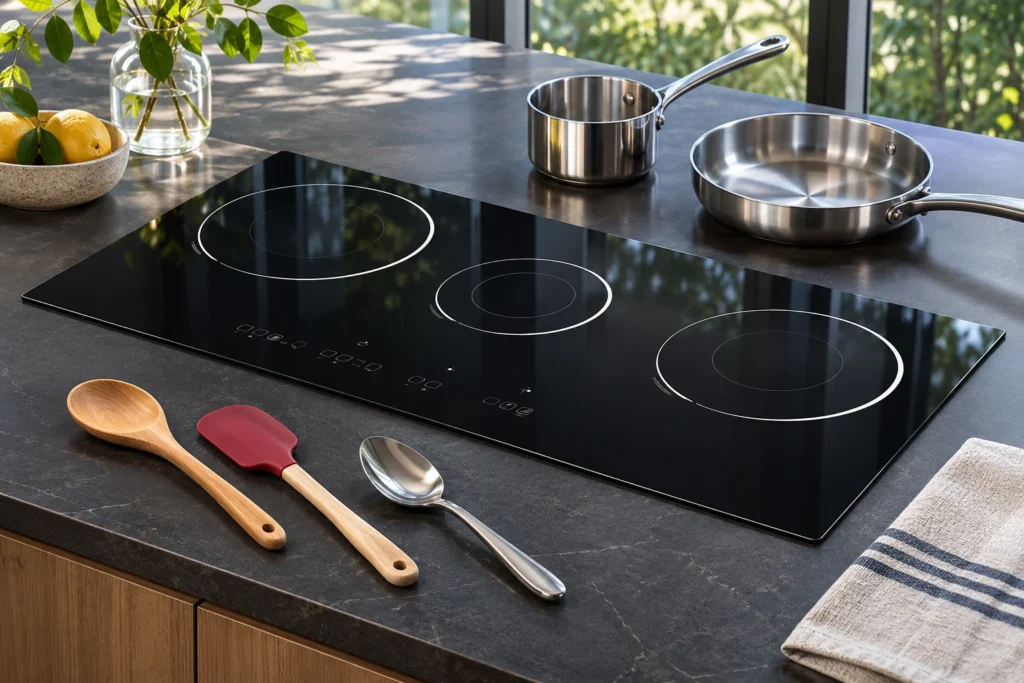
Choose utensils for the actual cookware interior, inspect contact edges and follow model-specific care; induction compatibility alone does not approve a tool.
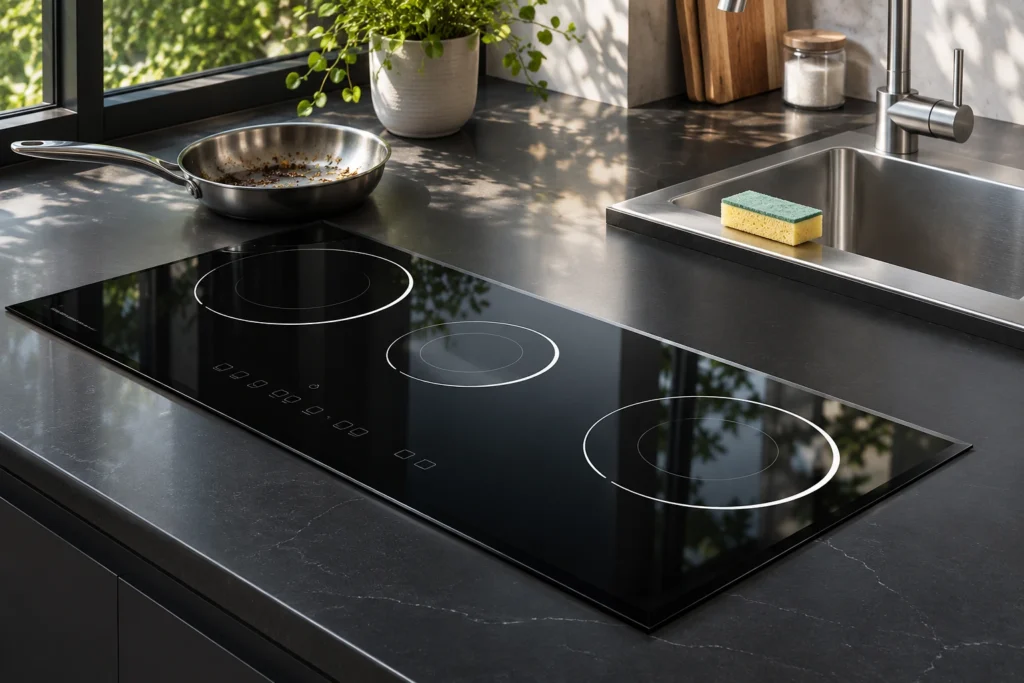
Plan burnt-food removal around the actual cookware finish, permitted care and cold inspection; keep pan cleaning separate from glass cooktop cleaning.
Separate removable deposits from suspected pits inside stainless cookware, follow model-specific care, and document unresolved marks for manufacturer assessment.
Choose a pot clip for the exact probe and vessel rim. Check sensing position, permitted immersion and cable routing before using a thermometer near an induction hob.
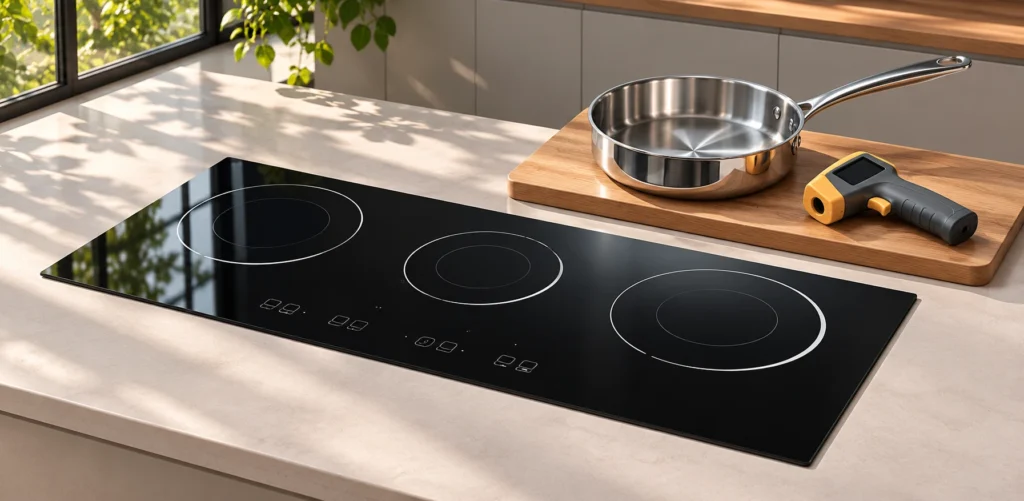
Interpret infrared pan readings by surface, emissivity and target size. Separate pan-surface measurements from food temperature and glass-panel condition.
Check a suspected warped pan base cold, compare its condition with model instructions, and seek service advice before using unstable or damaged cookware.