Kanger Glass-ceramic Co., Ltd.
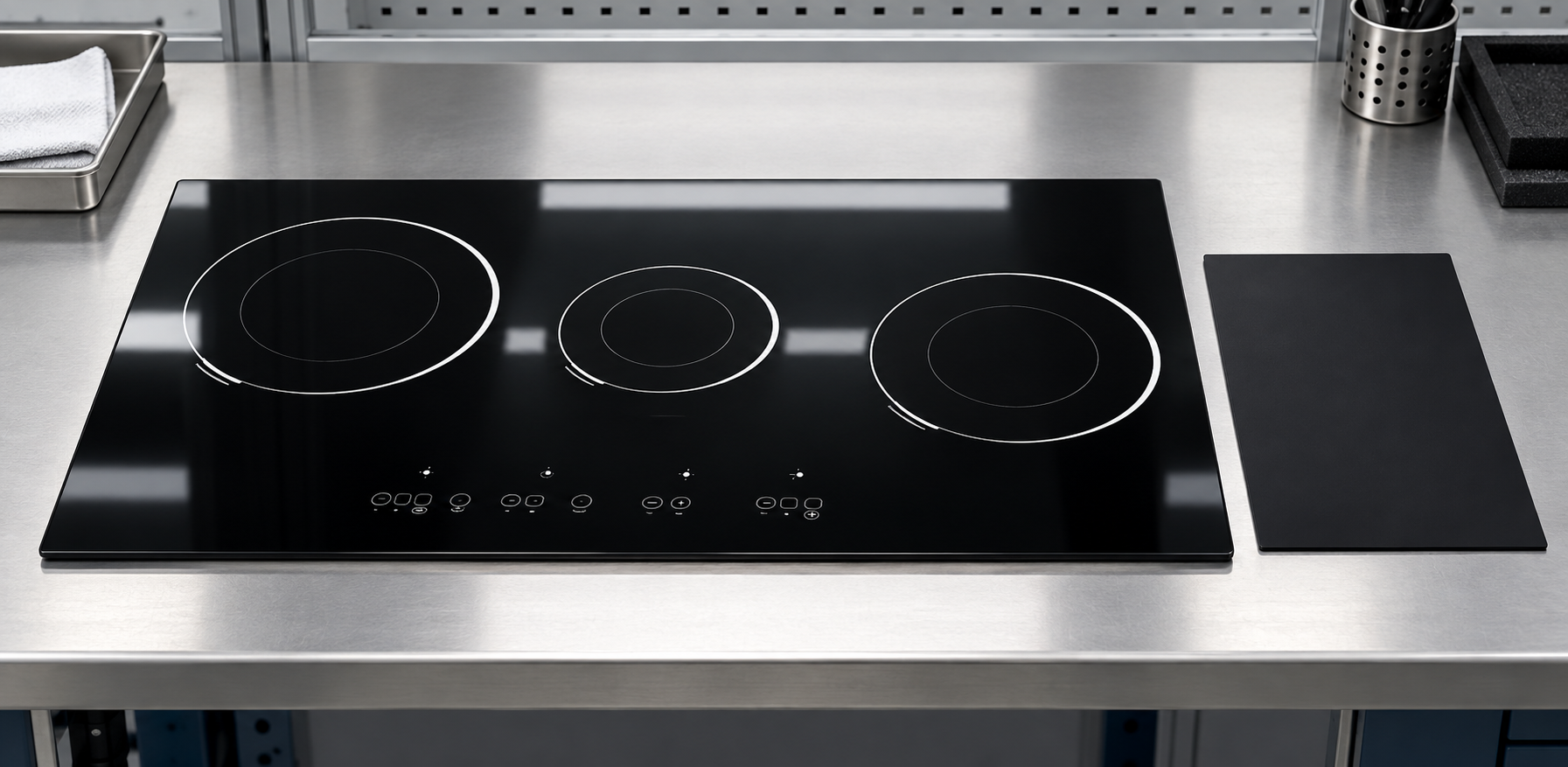
Glass ceramic cooktop panel screen printing durability depends on the substrate, ink or frit system, printed side, firing or curing route, coverage, registration, cleaning exposure, thermal cycling, and inspection method. “Durable print” is not a complete requirement. An OEM drawing should define every graphic zone, color target, opacity, line or ring geometry, viewing direction, edge clearance, protected controls, and acceptable visual variation. Qualification should use production-intent black glass-ceramic, artwork, process, and cleaners. The first article must prove that graphics remain legible and attached through representative heating, cooling, handling, and cleaning, while the supplier retains traceability to artwork and process revisions.
This guide turns the search intent behind glass ceramic cooktop panel screen printing durability into a drawing-led OEM workflow. It does not invent a universal limit or performance guarantee; the released appliance design, verified supplier data, applicable standard, and representative validation remain controlling.
Define the graphic function and viewing side
Start by separating safety, functional, and decorative graphics. A cooking-zone ring can guide pan placement, a touch symbol can support user interaction, and a border can hide an assembly gap. Each has a different contrast and registration risk. State which face is viewed by the user, which face receives print, and which areas may be covered by frame, adhesive, or protective film. A print that looks correct from one side can be reversed, muted, or exposed to a different cleaning environment from the other.
For this glass ceramic cooktop panel screen printing durability decision, write the owner, input source, drawing field, inspection method, and reaction to missing evidence. Review it with engineering, quality, manufacturing, purchasing, and the glass supplier so every team uses the same datums and service conditions. Where risk is high, test tolerance extremes rather than relying only on a nominal sample.
Specify the black glass-ceramic substrate
The substrate affects color contrast, gloss, firing compatibility, thermal response, and edge appearance. Identify the approved glass-ceramic family, nominal thickness and surface condition without inventing a universal parameter. Record whether the surface has a coating, texture, protective film, or prior decoration. The supplier should confirm that the ink, frit, or coating route is compatible with the actual panel process. A graphic qualification on ordinary glass does not automatically transfer to glass-ceramic.
For this glass ceramic cooktop panel screen printing durability decision, write the owner, input source, drawing field, inspection method, and reaction to missing evidence. Review it with engineering, quality, manufacturing, purchasing, and the glass supplier so every team uses the same datums and service conditions. Where risk is high, test tolerance extremes rather than relying only on a nominal sample.
Control artwork and registration
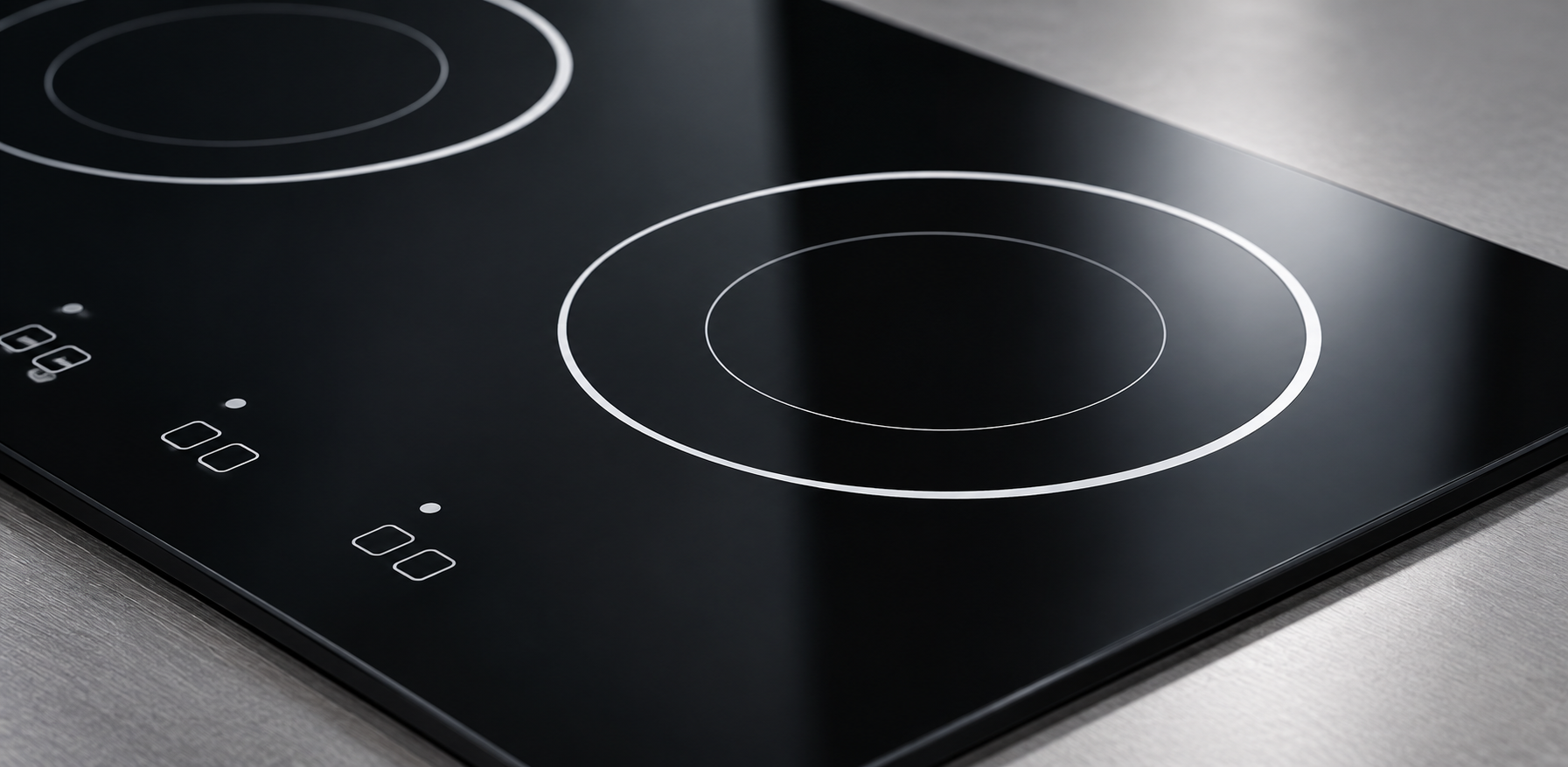
Release artwork as a controlled file linked to the dimensional drawing and revision. Define ring diameters, line widths, symbol position, spacing, exclusion zones, and the relationship to holes, cutouts, corners, and heating elements. Use datums that the printer and the final inspection fixture can reproduce. A graphic can be dimensionally correct in the artwork yet shifted on the panel by tooling, screen stretch, alignment, or part movement. Inspect registration against functional features as well as the panel edges.
For this glass ceramic cooktop panel screen printing durability decision, write the owner, input source, drawing field, inspection method, and reaction to missing evidence. Review it with engineering, quality, manufacturing, purchasing, and the glass supplier so every team uses the same datums and service conditions. Where risk is high, test tolerance extremes rather than relying only on a nominal sample.
Choose the print system and process window
Screen printing, fired ceramic enamel, glass frit, and other systems have different deposition, drying, firing, adhesion, and appearance behavior. The supplier should document the approved ink or frit family, screen or stencil, squeegee or deposition controls, drying, firing or cure, and rework restrictions. Avoid choosing a process only because a sample has attractive contrast. Process parameters and batch changes need change control, and a supplier should disclose deviations before shipping rather than hiding them in a visual result.
For this glass ceramic cooktop panel screen printing durability decision, write the owner, input source, drawing field, inspection method, and reaction to missing evidence. Review it with engineering, quality, manufacturing, purchasing, and the glass supplier so every team uses the same datums and service conditions. Where risk is high, test tolerance extremes rather than relying only on a nominal sample.
Define color, opacity, gloss, and visual zones
White graphics on black glass can show pinholes, edge feathering, streaks, shade changes, and gloss differences. Define a primary viewing zone and secondary zones, agreed illumination, distance, angle, background, and comparison method. An approved physical appearance master can be more useful than an isolated screen image. If a color instrument is used, identify the surface, geometry, calibration, and acceptance rule. Do not imply that one photographed sample defines all displays, lighting, or customer perception.
For this glass ceramic cooktop panel screen printing durability decision, write the owner, input source, drawing field, inspection method, and reaction to missing evidence. Review it with engineering, quality, manufacturing, purchasing, and the glass supplier so every team uses the same datums and service conditions. Where risk is high, test tolerance extremes rather than relying only on a nominal sample.
Validate adhesion and service exposure
Qualification should expose printed panels to representative thermal cycles, cleaning chemistry, wiping or abrasion, moisture, and handling. Define what is measured before and after: legibility, adhesion, color or gloss change, edge lifting, cracking, transfer, and contamination. Test complete graphics on actual geometry because curves, narrow lines, and transitions behave differently from a large coupon. The appliance cleaning instruction and applicable product safety requirements remain controlling.
For this glass ceramic cooktop panel screen printing durability decision, write the owner, input source, drawing field, inspection method, and reaction to missing evidence. Review it with engineering, quality, manufacturing, purchasing, and the glass supplier so every team uses the same datums and service conditions. Where risk is high, test tolerance extremes rather than relying only on a nominal sample.
Protect printed areas during fabrication and assembly
Cutting, edgework, washing, packaging, handling, and frame insertion can damage graphics even when the print process is sound. Define which face is protected, when film is applied and removed, separator materials, allowable contact, and inspection before assembly. Keep adhesive, gasket, and sealant away from graphic zones unless the design explicitly requires overlap and has been qualified. Record defects before rework; polishing or wiping can change gloss and make root-cause evidence disappear.
For this glass ceramic cooktop panel screen printing durability decision, write the owner, input source, drawing field, inspection method, and reaction to missing evidence. Review it with engineering, quality, manufacturing, purchasing, and the glass supplier so every team uses the same datums and service conditions. Where risk is high, test tolerance extremes rather than relying only on a nominal sample.
Link serial inspection to artwork revision
Incoming and in-process inspection should reference the same artwork and drawing revisions used by production. Check registration, ring completeness, touch symbols, opacity, surface defects, and orientation using written defect examples. Trend results by screen, tool, ink or frit batch, furnace position, and supplier lot. When artwork, substrate, firing route, cleaner, screen, or inspection lighting changes, run a documented impact review and first article instead of assuming that a familiar graphic remains equivalent.
For this glass ceramic cooktop panel screen printing durability decision, write the owner, input source, drawing field, inspection method, and reaction to missing evidence. Review it with engineering, quality, manufacturing, purchasing, and the glass supplier so every team uses the same datums and service conditions. Where risk is high, test tolerance extremes rather than relying only on a nominal sample.
Engineering table
| Requirement | Define | Verification |
|---|---|---|
| Graphic function | User, safety, decorative or assembly purpose | Functional review on production-intent panel |
| Artwork control | File ID, revision, datums, zones and exclusions | Compare printed part to released artwork |
| Appearance | Color/opacity/gloss, viewing side and lighting | Master comparison and agreed visual method |
| Durability | Thermal, cleaning, abrasion and handling exposure | Before/after legibility and adhesion checks |
| Process | Deposition, drying, firing/curing and traceability | First article plus lot records |
Supplier RFQ and first-article checklist
Send the supplier the controlled drawing and CAD or artwork files, material requirement, panel size, edge and surface details, annual quantity, lot pattern, packaging requirement, and appliance-level validation conditions. Ask for written deviations and feasibility limits. The quotation, production traveler, and inspection instruction should name the same released revision.
Before approving a first article, verify document identity, dimensions, edge quality, surface orientation, graphics, and the interface covered by this guide. Assemble the sample with production-intent frame, supports, seals, retention, and fixtures. Record photographs, measurements, equipment identity, exposure conditions, and the exact lot. Preserve approved masters and rejected evidence so later comparisons remain meaningful.
For serial production, inspect the characteristics that control function and trend them by lot, tool, material batch, supplier, and assembly station. When nonconformity appears, contain affected stock, preserve evidence before rework, compare with the approved setup, and verify corrective action on later lots. Requalification should follow material, geometry, process, tooling, or supplier changes according to documented risk.
Educational video
This neutral educational video from Corning Museum of Glass provides useful background on glass processing and stress. It does not replace engineering calculations, appliance instructions, or qualification.
Related Kanger resources
- Black glass-ceramic product page
- Glass-ceramic material overview
- White ceramic glass optical inspection
- Glass-ceramic cooktop panel corner radius requirements
For a drawing-led quotation, send Kanger the application, controlled files, quantities, and validation requirements. Technical review can identify missing information without converting this general guidance into an unsupported product guarantee.
Frequently asked questions
Is a crisp first sample proof of print durability?
No. Durability requires representative thermal, cleaning, abrasion, handling, and assembly exposure on production-intent material and geometry.
Should artwork be controlled separately from the drawing?
Artwork can have its own revision, but the released product package must identify the exact artwork and drawing combination used for production and inspection.
Can a screen-print color be judged from a website image?
No. Screens and lighting alter appearance. Use an agreed physical master, viewing condition, and measurement method when color or gloss matters.
What is a useful first-article record?
Record material and artwork revisions, process route, panel lot, measurements, photographs, exposure conditions, defects, approvals, and any deviations.