An induction hob boil over calls for a simple priority: stop cooking safely, keep away from hot liquid, and follow the appliance instructions before cleaning or restarting. Water across touch controls can produce beeps or a shutdown on some models; that response alone does not prove the glass has failed. A crack, liquid entering an edge, a repeated electrical trip, or controls that remain abnormal after permitted cleaning needs a different response: stop using the appliance and arrange qualified advice. Do not repeatedly restart it to find out what happens.
This guide separates an ordinary surface spill from signs that need service. It covers observations you can make without opening the hob, explains why a dry control area matters, and shows how appliance teams can turn a spill report into useful glass-panel requirements.
Reduce or stop heat using the normal controls only if you can reach them safely. Keep children and bystanders away from the counter. Do not reach through escaping steam, stretch over a pan, or grab a handle surrounded by hot liquid. If the controls cannot be operated safely, use only the isolation method identified in your appliance instructions and only when it is accessible without risk. Do not pull a built-in appliance out of the worktop or touch wiring.
If there is fire, electrical arcing, or another immediate danger, leave diagnosis to emergency responders. Never pour water onto an electrical appliance or an oil fire. For a routine spill without those warning signs, allow the situation to settle before deciding whether cookware can be moved safely. Use appropriate protection and a stable heat-resistant landing place; do not slide a heavy pan through spilled material across the glass.
Do not infer temperature from the absence of a red element. The Department of Energy explanation of induction cooking describes energy transfer into cookware. Heat from that cookware can still reach the glass and surrounding liquid. A dark surface and an unlit zone are not permission to touch it.
Once safe, describe the location rather than writing only “the hob got wet.” A shallow spill on an intact cooking area, water across touch controls, and liquid disappearing beneath a panel edge are different reports. Record whether the surface was level, whether a pan obscured the controls, and whether any residue remains near a seal. Do not probe a gap with a knife, remove trim, or lift the glass to inspect underneath.
The contents matter too. Plain water, pasta water, milk, sugary sauce and hot fat do not leave the same residue. Follow the exact manual for the substance and the surface condition. Some manufacturers give special instructions for sugar contamination; a general cool-surface cleaning routine must not override those instructions. If the specified method cannot be performed safely, obtain help rather than improvising.
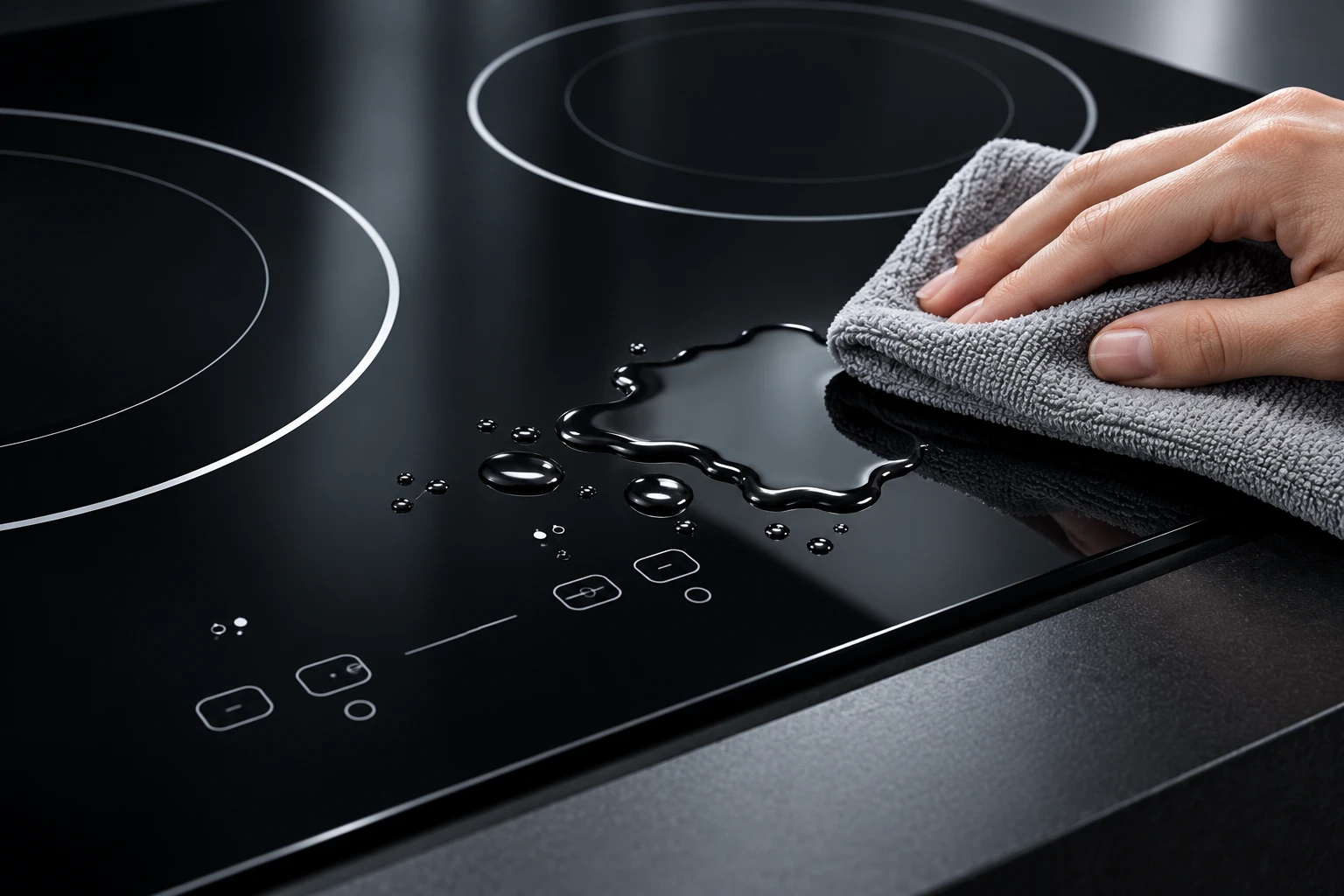
Electrolux guidance on beeping and switching off includes obstruction or liquid at the control area among circumstances to check. Treat that as model-specific support information, not a promise that every hob has the same protection. Your own manual determines what the sound or display means.
A shutdown records a control action; it is not a test certificate for the glass, seals or electronics. Conversely, a beep following a spill is not sufficient evidence that a new glass top is required. First establish what was visible before the event, what happened during it, and what remains after permitted cleaning and cooling. Keep interpretation separate from observation so a service technician can assess the sequence.
| Observation after a spill | Useful record | Next decision |
|---|---|---|
| Liquid only on intact surface | Substance, location and normal display | Follow the model’s spill and cleaning instructions |
| Beep or shutdown while controls are wet | Exact symbol and whether controls were covered | Clean and dry only as permitted; consult the matching manual |
| Crack, chip opening, or liquid at an edge | Photograph from a safe position; do not probe | Stop using and request qualified assessment |
| Repeated trip, smell, or persistent abnormal controls | Time, sequence and any code | Keep out of service; avoid repeated restart attempts |
| Deposit remaining after approved cleaning | Before-and-after photographs and cleaner name | Ask for the correct surface-care method before further treatment |
This is an observation and escalation checklist, not a universal fault-code chart. It draws on appliance support and the need to keep uncertain electrical conditions out of casual testing.
For the ordinary cleaning stage, let the hob and cookware reach the condition required by the manual. Use the approved cloth, cleaner and technique. Keep excess liquid away from edges and openings. Do not use a steam cleaner, flood the surface to rinse it, or force cleaner underneath a frame. Avoid abrasive improvisations that can change the surface while you are trying to diagnose it.
Dry the touch area thoroughly, including beneath any removable object that had been placed over it. Check that the cloth itself has not left a wet film. Do not leave a towel draped across controls or place a phone there while looking up instructions. Cleaning should return the interface to its normal uncovered state, not introduce a second obstruction.
Photograph a stubborn mark before further treatment. A dried food film is a different issue from missing material. Our guide to residue and glass-top pitting explains why those categories should stay separate. Do not keep scraping an uncertain mark merely to make it disappear.
If there are no warning signs and the manual permits normal operation after cleaning, follow its restart sequence once. Keep the controls dry and use suitable cookware with food or liquid appropriate to the recipe. Do not create another boil over to test the protection. Do not run an empty pan, leave heating unattended, or cycle the power repeatedly in the hope that an error will clear.
Observe what happens under the permitted conditions. A normal display and normal response are useful observations, but they do not establish hidden components are dry after suspected ingress. If liquid may have entered the appliance, visible dryness on top is insufficient justification to restart. Contact the manufacturer or a qualified service provider and explain where the liquid went.
If the hob shuts down again without another spill, record the new conditions separately. Our induction shutdown guide may help structure the report, but the exact model instructions remain the basis for action.
Choose cookware with sufficient usable capacity for the recipe and room for foaming. Match the pan to the zone according to the manual. Stay present as liquid approaches boiling, then reduce the setting as the recipe requires. A lid changes how a pan behaves; do not assume the same setting works equally well with it on and off. Adding food can change the foam and volume quickly.
Do not rely on an advertised sensor function unless your particular model provides it and its stated conditions are satisfied. The Whirlpool cooking-function guide illustrates that assisted functions can have cookware and quantity conditions and still require attendance. A timer, lock or automatic stop is not a substitute for watching cooking.
Keep lids, utensils and cloths off the touch controls. Set a stable landing area on the counter before cooking so you do not need to slide a heavy hot pan across the panel. If the issue is heating speed rather than overflow, use a consistent comparison such as our slow-boiling observation method; do not increase power indiscriminately.
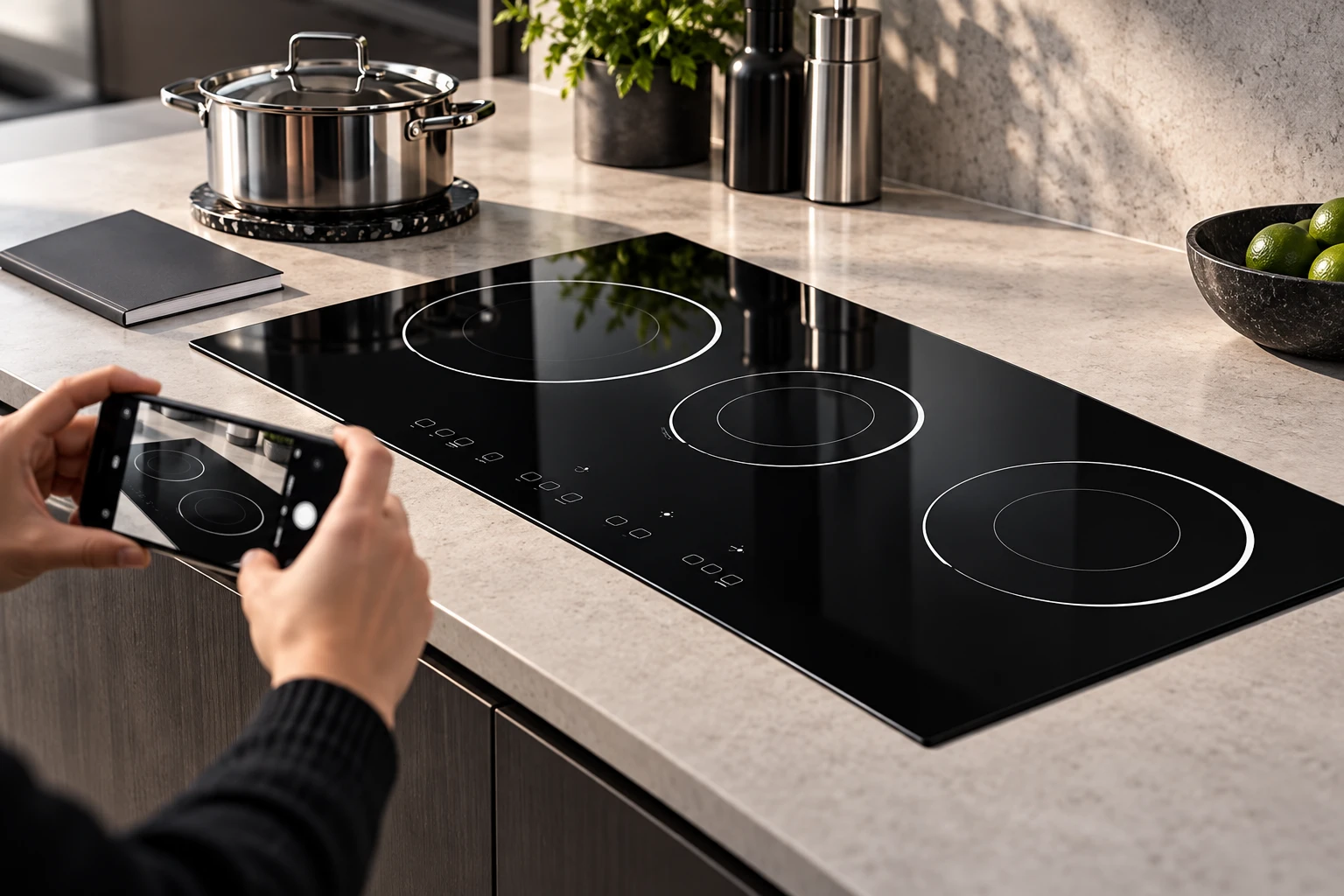
Write down the appliance model from existing paperwork or an accessible label without dismantling anything. Add the recipe stage, pan used, zone selected, approximate sequence, display symbols and cleaning products. Describe whether the controls were wet, whether the hob stopped itself, and whether any liquid reached an edge. Include photographs taken after the area became safe.
Separate what you know from what you suspect. “Water crossed the front controls and the hob beeped” helps more than “the glass shorted out.” A glass panel, sensor interface, seals and power electronics form a system; a surface observation does not identify which part needs replacement. Report any pre-existing damage rather than attributing every mark to the latest event.
For appliance buyers, black glass-ceramic cooktop panels should be discussed through drawings and a defined appliance configuration. Include edge treatment, decorative areas, control-zone layout, cleaning chemistry, support and sealing requirements. Ask which evidence belongs to the material, which to the panel assembly, and which to the finished appliance.
A decorative zone ring cannot establish spill protection, and a heat-resistant material description cannot certify control behavior. Use our black glass-ceramic overview to establish material context, then obtain project-specific confirmation. Do not convert one successful household clean-up into a general claim about chemical resistance or electrical safety.
The following educational video explains touchscreen sensing. It supports understanding why an interface is a system beneath a cover; it does not prescribe a reset sequence or diagnose liquid ingress in your hob.

Video: How Do Touchscreens Work?, Branch Education. Open the educational video on YouTube.
No such conclusion follows from a spill alone. The substance, location, panel condition and subsequent behavior matter. Follow the exact appliance instructions, and stop using it if there is suspected ingress, damage or an electrical warning sign.
Some models respond when the touch area is covered or wet. Check the matching manual for the display and response. A beep is not proof that the glass is defective or that the appliance is safe to restart.
Only follow the conditions in the manual. Visible dryness does not resolve suspected liquid entry, a crack, repeated trips or persistent abnormal behavior. Those situations need qualified advice before further use.
Replacement requires an assessment of the actual damage and appliance assembly. Do not order by appearance alone or assume a new panel will solve a control or sealing issue. Provide the service team with the model and event record.



