An induction hob bridge function links designated cooking zones so suitable larger cookware can be used according to the appliance instructions. It does not mean every point between printed circles becomes an identical heat source, and it does not make any rectangular griddle compatible. Before buying a long pan, confirm that your exact hob supports the function, identify the permitted zone pair, and check cookware-base requirements. Bridge control, flexible cooking areas and power sharing describe different aspects of the appliance; similar-looking glass layouts can conceal different systems.
This guide focuses on matching a long vessel to a documented bridge function. It does not provide a universal activation sequence, and the reference-based illustrations show cookware review beside a glass-ceramic surface rather than proof that the pictured model includes bridge hardware.
Find the model number in existing paperwork or an accessible label without removing the hob. Then locate the manual section describing bridge, combined zones, griddle mode or the manufacturer’s equivalent term. Note which zones can be linked, the control sequence and the specified cookware placement. A symbol printed between zones is meaningful only within that model’s instructions.
Do not assume that two adjacent controls can be synchronised because the zones look alike. Some appliances link controls for a designated pair; others use a more flexible arrangement of heating elements and pan detection. A setting that looks similar on a different model may perform a different job. Product photographs and retailer summaries are useful starting points, but the manual needs to resolve the actual configuration.
Record whether the function appears in the manual for your full model suffix and market. A feature offered elsewhere in a product family may be absent from the appliance you own. If the documentation is unclear, ask the manufacturer before ordering cookware or experimenting with two independently controlled zones.
A bridge feature concerns how designated cooking areas are used together. A flexible zone concerns the cookware area and detection arrangement provided by that appliance. Power sharing concerns how available power is allocated among zones. They may coexist, but one does not imply the others. Our power-sharing explanation covers the separate case where activating another zone changes available settings or heating behavior.
The Whirlpool cooking-function reference illustrates why functions need model-specific descriptions rather than generic button advice. Its listed options and conditions should not be treated as specifications for another brand, or even every model from the same brand.
| Term or observation | Question it answers | What still needs confirmation |
|---|---|---|
| Bridge or linked-zone mode | Can designated zones operate together? | Permitted pair, placement and cookware requirements |
| Flexible cooking area | What supported area can accept cookware? | Detection boundaries and permitted vessel geometry |
| Power sharing | How is available input allocated? | Limits when other zones are active |
| Printed zone outlines | Where does the user position cookware? | Actual heating and sensing arrangement underneath |
| A magnetic griddle base | Is some base material magnetically responsive? | Effective base coverage, flatness and appliance permission |
This table separates buying questions; it does not set universal zone dimensions or claim equivalent performance between appliance designs.
The Department of Energy introduction to induction explains that the cookware receives energy through electromagnetic interaction. Heat distribution across a long vessel therefore depends on both the appliance arrangement and the vessel. The glass drawing is not a temperature map, and a common control setting does not promise an identical cooking result at every location.
Long cookware may extend across areas with different relationships to the coils. Its construction influences how heat spreads away from the directly heated regions. Do not assume a connected mode creates a continuous conventional burner under the entire rectangle. Equally, do not assume every difference across a griddle indicates defective glass. First confirm the design and permitted cookware with the appliance manufacturer.
Our induction and infrared panel comparison explains why superficially similar glass tops can belong to different heating systems. This article concerns the additional choice of using a long vessel across a documented combined area.
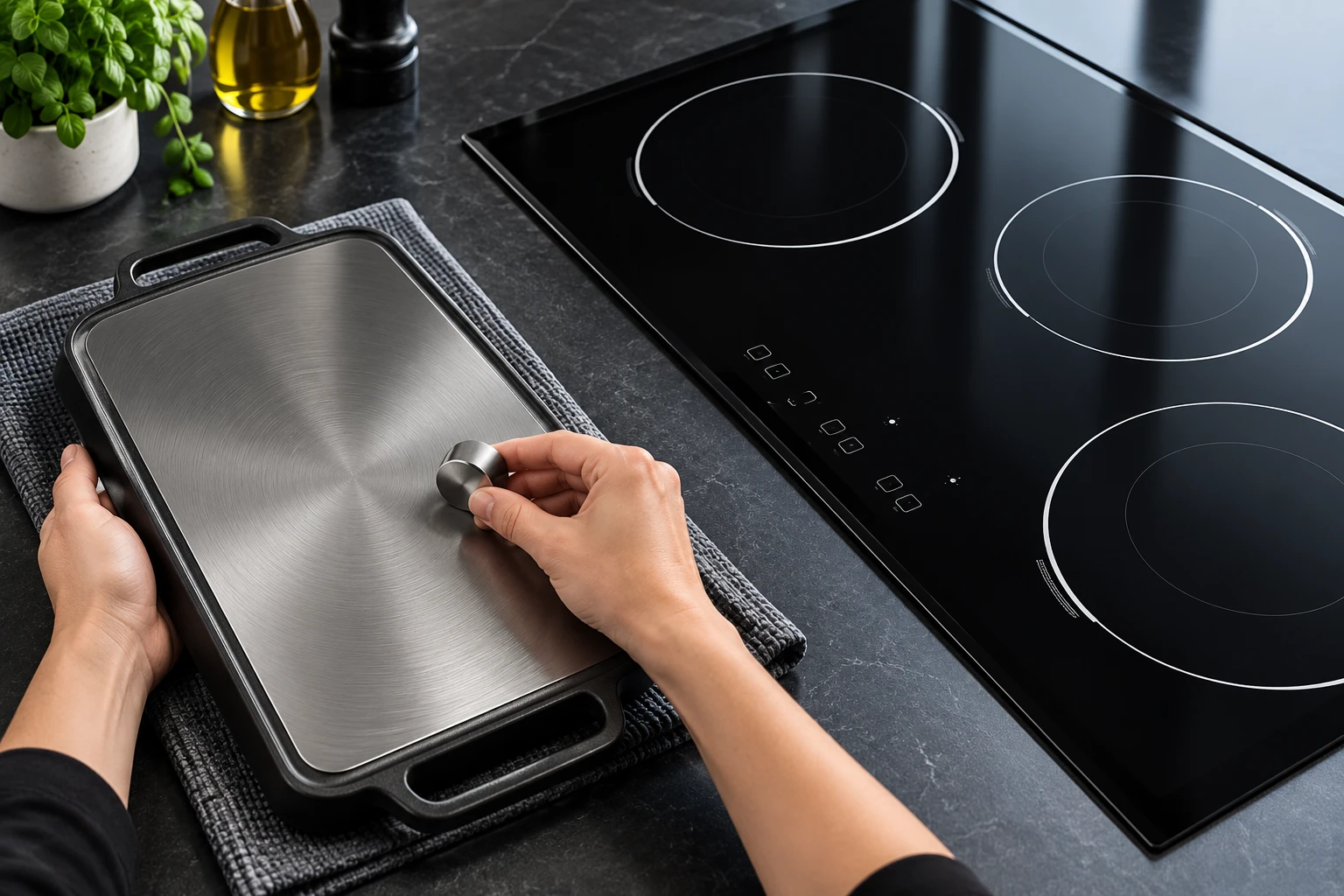
Measure or obtain the flat base dimensions when the cookware is cool. A wide rim can overhang a much smaller effective base. Some vessels incorporate a separate magnetic plate; the outside silhouette does not show its coverage. Ask the cookware maker for induction suitability and intended use on bridged or flexible zones, rather than relying on the shape alone.
A small magnet can help identify magnetic response at accessible locations on a cool base, but it cannot certify the entire vessel or its heating distribution. Keep it away from the appliance controls and do not drag it across the glass. Record what was checked, including any areas that could not be assessed. The result is a screening observation, not a substitute for the manufacturer’s compatibility statement.
Inspect stability on a suitable flat surface according to the cookware guidance. A warped base, feet or raised sections can change placement and detection. Do not force a heavy vessel flat, grind the base, or add a metal plate to compensate. Any accessory changes the arrangement and needs explicit permission from the appliance manufacturer.
Check whether a permitted vessel covers the touch area, protrudes beyond the allowed cooking region, or interferes with another pan. Include handles in the layout review. A long handle positioned over a neighbouring zone can create a handling problem even if the cooking base is acceptable. Keep controls accessible and follow required clearances from the manual.
Consider the filled vessel rather than only its empty weight. A griddle with food, or a long pot with liquid, can be difficult to lift evenly. Prepare a heat-resistant landing area before cooking. Lift cookware as directed; do not slide a heavy rough base across glass to align it. Our glass cooktop weight guide explains why an unsupported universal load rating is not a reliable purchasing answer.
Dry the base and check for debris before placement. Do not trap grit between the vessel and glass or use a towel beneath cookware during heating. A cold protective mat, a trivet for the counter and an accessory permitted during cooking are different products with different jobs. Permission for one cannot be transferred to another.
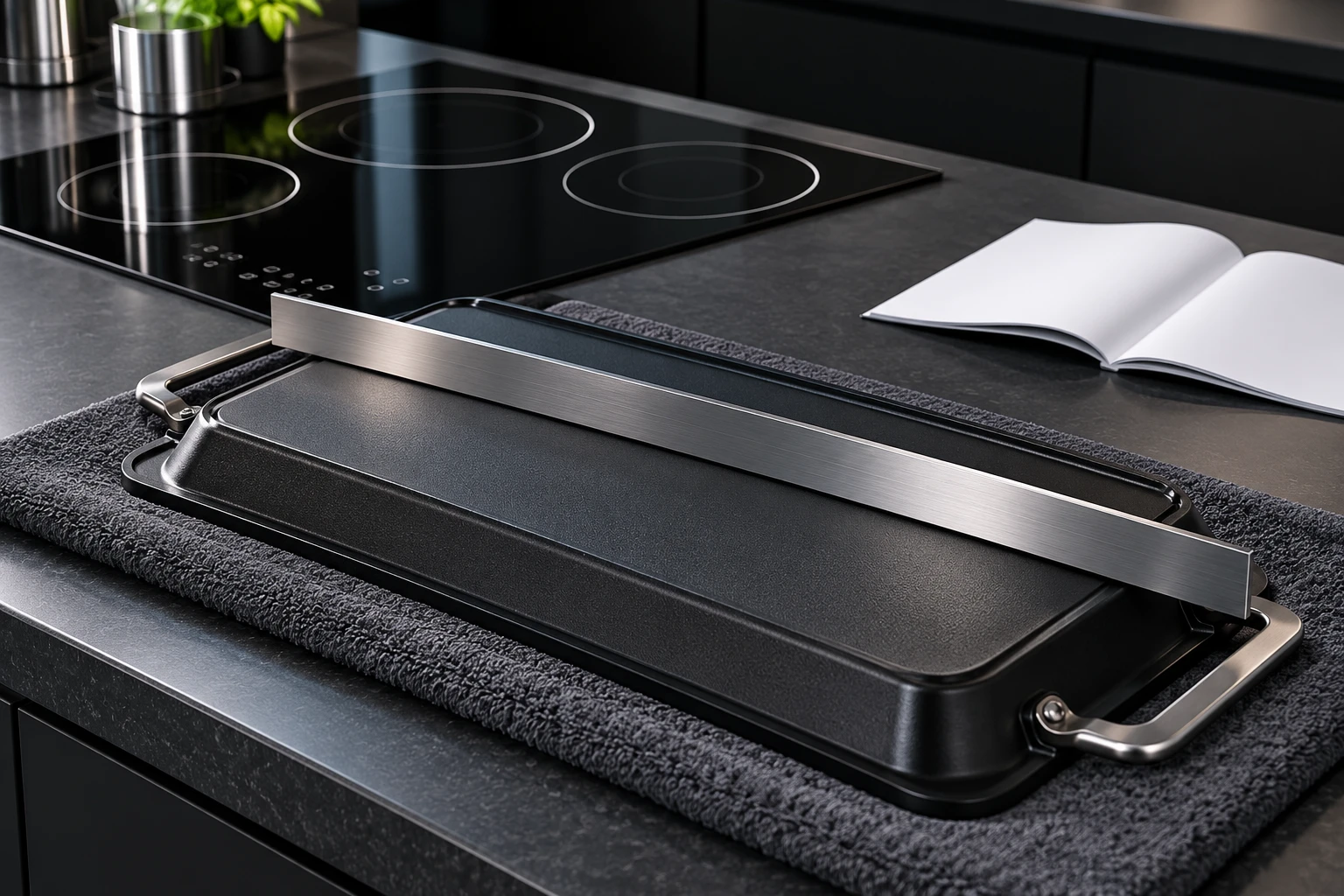
Once compatibility is confirmed, position the vessel and activate the feature exactly as the manual specifies. Use food or liquid appropriate to the cooking task and stay present. Do not heat an empty griddle aggressively to discover the zone pattern. Select a setting and preheating method permitted by both manufacturers, resolving any contradictory instructions before use.
Observe the actual display response. If detection fails, switch off and check the documented placement conditions when safe. Do not repeatedly move a hot vessel to chase a symbol, bridge unrelated zones by improvisation, or defeat protection. A pan that works on one area may still be unsuitable for the combined mode. Record the configuration rather than assuming the glass is at fault.
A useful normal-use comparison keeps the vessel, contents and intended cooking method consistent. Note which other zones are active because power allocation can influence the experience. Record any difference as an observation, not a measured temperature result. Do not use splashing water, scattered flour or smoking oil as an improvised heat-map test.
If the prescribed setup repeatedly fails detection, gives an unexplained code or behaves abnormally, stop experimenting and ask the appliance manufacturer for the next step. Supply the model, cookware make, base dimensions, feature selected and display sequence. Photographs of the cool placement can help. Do not open the hob to inspect coil positions or alter electrical settings beyond the user instructions.
Cracked glass, damaged cookware, a persistent smell, electrical trips or unsafe instability require a more immediate stop. A linked control feature does not remove those limits. An engineer may need to assess the assembly, and ordering a replacement panel solely because a griddle heats unevenly is premature.
For appliance developers, black glass-ceramic cooktop panels should carry artwork that matches the verified appliance system. Zone boundaries, control graphics and any bridge symbol need coordination with the controller, sensing arrangement, cookware instructions and user interface. The panel supplier should work from approved drawings, not infer heating features from a sample photograph.
Define decoration location, alignment tolerances and the intended control area in the project documents. Separate the material and panel information from finished-appliance functional verification. The black glass-ceramic overview gives material context, but it does not establish bridge support, a cookware size range or cooking uniformity for an assembled product.
When reporting field feedback, distinguish an artwork misunderstanding, an incompatible vessel, a power-limit interaction and a persistent appliance fault. This makes the next action more precise and avoids changing glass decoration to address a problem that belongs elsewhere in the system.
The following neutral educational video explores induction and cookware geometry. It helps explain why vessel shape matters, without providing a compatibility approval for a particular griddle or hob. Follow your own equipment instructions rather than copying demonstrations.
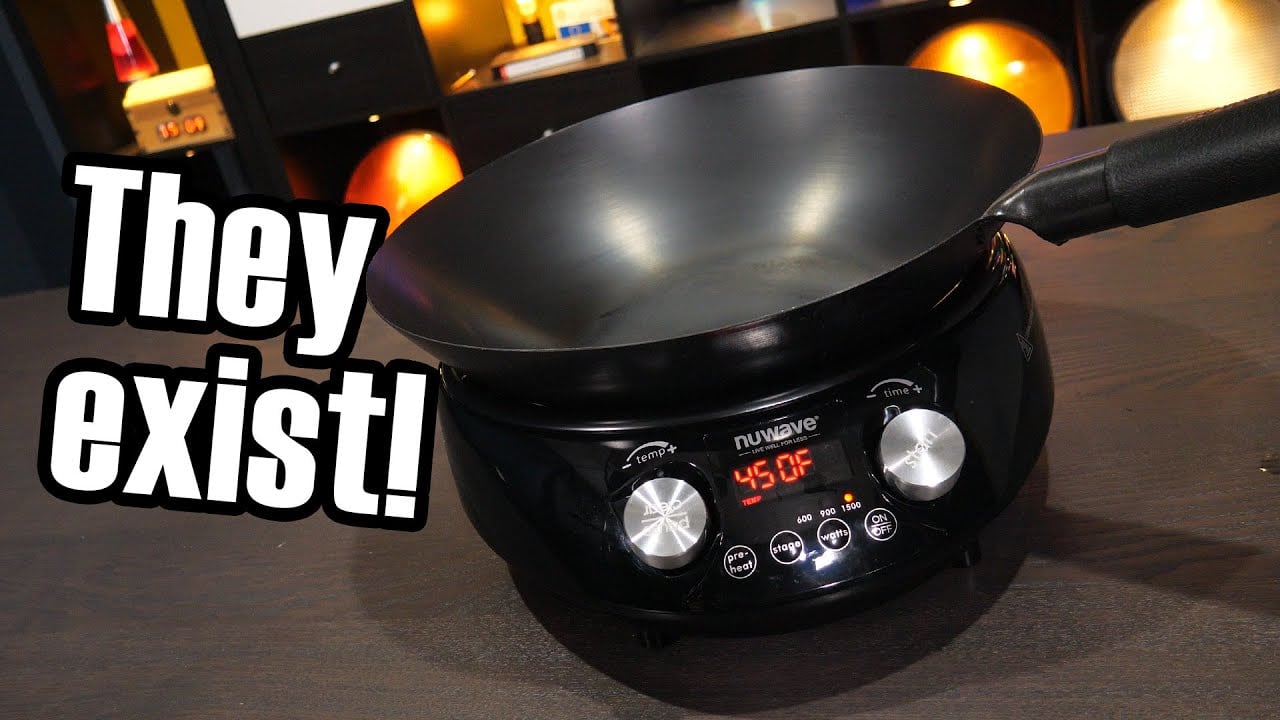
Video: Induction cooking – but what about woks?, Technology Connections. Open the educational video on YouTube.
Do not assume identical heating at every point. The coil arrangement, cookware base and heat spreading all matter. Consult the model’s description and use cookware approved for the intended combined area.
Only use the arrangement permitted by the appliance instructions. Adjacent circles do not establish bridge support. Confirm the designated zone pair, base dimensions and cookware suitability before use.
No. It can show a local magnetic response on a cool base, but it does not establish effective coverage, stability, size permission or cooking performance. Obtain the cookware and appliance requirements.
That observation alone cannot identify a glass defect. Review the documented feature, placement and cookware construction. Stop using damaged or abnormal equipment and request qualified assessment when needed.



